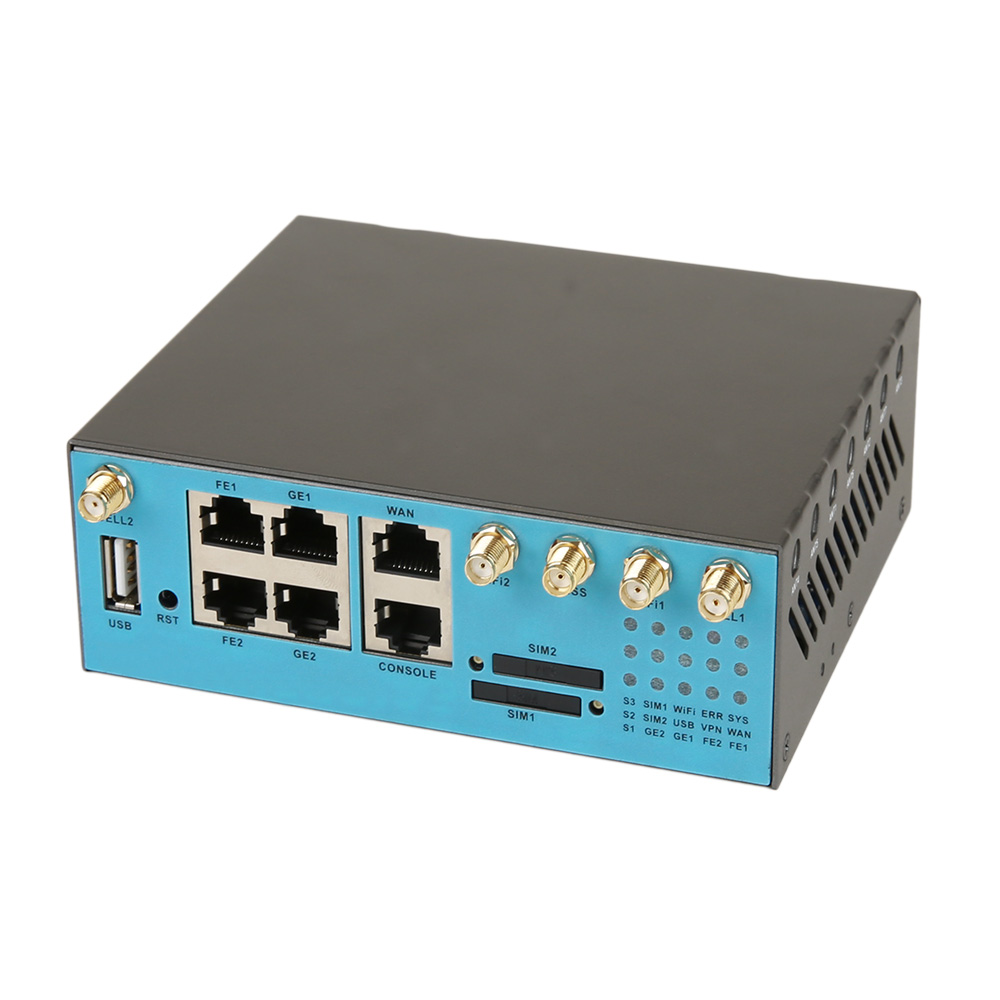
When industrial operations span across remote, unmanned locations—from oil fields to distributed power grids—network downtime isn't just an inconvenience, it's a business-critical failure. Industry data reveals that 68% of Industrial IoT projects fail due to network instability, making connectivity hardware selection one of the most consequential decisions for system integrators and facility operators. This review examines what makes a dual SIM 4G router truly "industrial-grade" and why the E-Lins H900 Gigabit Industrial 4G Router has emerged as a benchmark solution for remote site deployments.
The Remote Site Connectivity Challenge
Remote installations face unique operational stressors that consumer-grade equipment simply cannot withstand. Temperature extremes in desert solar farms, electromagnetic interference near high-voltage substations, and the impossibility of frequent on-site maintenance create a demanding environment. Traditional routers repurposed from consumer applications frequently exhibit equipment freeze-ups in extreme temperatures and excessive maintenance costs for distributed sites—two pain points that plague IoT deployments globally.
The financial impact is measurable: When a remote monitoring station goes offline, operators face not only lost data but also expensive truck rolls for manual resets. For organizations managing hundreds or thousands of remote endpoints, these interruptions compound into substantial operational expenses and compromised service reliability.
Why Dual SIM Architecture Matters
Dual SIM hot backup functionality represents the foundational requirement for remote site routers, but implementation quality varies dramatically across manufacturers. The core value proposition is straightforward: when the primary cellular connection fails—whether due to carrier network issues, signal degradation, or SIM card problems—the system automatically switches to the backup SIM within seconds, maintaining uninterrupted connectivity.
This architecture addresses three critical failure scenarios:
Carrier network outages: Regional network maintenance or infrastructure failures affecting a single provider Signal variability: Physical obstructions or environmental conditions that intermittently degrade one carrier's coverage SIM lifecycle issues: Card expiration, data plan exhaustion, or administrative suspensions
For applications like ATM transaction processing, PLC remote control in water treatment facilities, or real-time traffic signal management, even brief disconnections can cascade into significant operational or safety consequences.
E-Lins H900: Multi-Layer Redundancy Approach
The E-Lins H900 Gigabit Industrial 4G Router distinguishes itself through what the manufacturer terms "triple-link backup"—an architecture extending beyond standard dual SIM implementation. The system supports three concurrent WAN connection types: dual cellular SIM slots, wired Ethernet, and WiFi as WAN, with intelligent failover logic that automatically routes traffic through the most stable available path.
This multi-link redundancy proves particularly valuable in transitional environments. For instance, during a construction site's evolution from temporary 4G connectivity to permanent fiber installation, the H900 can simultaneously utilize both connections, automatically failing back to cellular if the wired connection experiences service interruptions. This capability delivered measurable results in documented deployments, where customers reported achieving "always-on" connectivity even in challenging network environments.
Hardware Foundation: Industrial-Grade Component Selection
The distinction between genuinely industrial hardware and consumer products retrofitted for commercial use becomes apparent under stress conditions. E-Lins Technology emphasizes their use of industrial-grade chips and components engineered for a wide temperature tolerance range of -35°C to +75°C. This specification isn't merely a datasheet claim—field deployments validate its practical significance.
A notable validation comes from a Nordic intelligent transportation deployment serving municipal authorities in Sweden, Norway, and Denmark. The project required in-vehicle networking and electronic stop display connectivity in environments experiencing winter temperatures down to -32°C. According to implementation results, the deployment reduced network interruption rates to 0.3% and decreased information screen blackout duration by 96%. Maintenance efficiency improved dramatically, with 90% of faults handled remotely, contributing to 62% savings in annual maintenance costs.
The router's 15KV ESD (electrostatic discharge) protection and 1.5KV electromagnetic isolation provide resilience in electrically harsh environments—critical specifications for installations near industrial machinery, high-voltage equipment, or RF transmission sources.
Connectivity Density: Five Gigabit Ethernet Ports
The H900's five Gigabit Ethernet ports address a practical deployment reality often overlooked in router specifications: remote sites rarely house a single connected device. A typical solar farm monitoring station, for example, might connect power generation sensors, environmental monitoring equipment, security cameras, and backup control systems—all requiring simultaneous high-speed network access.
This port density eliminates the need for additional network switches at remote locations, reducing equipment count, power consumption, and potential failure points. The Gigabit specification ensures adequate bandwidth for 4K video surveillance backhaul and high-volume industrial sensor data streams without creating network bottlenecks.
Vehicle-Grade Protection Standards
For mobile deployments—including construction equipment tracking, public transit systems, and mobile surveillance units—the H900 incorporates ISO 7637-2 compliance with ignition sensing functionality. This certification addresses the unique electrical stress characteristics of automotive environments, including voltage transients during engine starting and electromagnetic interference from vehicle electrical systems.
The ignition sensing feature automatically powers the router on/off in sync with vehicle operation, eliminating unnecessary power drain on vehicle batteries during extended shutdown periods while ensuring immediate connectivity when vehicles activate.
Real-World Performance Validation
Manufacturer claims require third-party validation through actual deployment results. E-Lins Technology's customer portfolio includes several large-scale implementations that provide quantified performance metrics:
Indian Telecom Operator – Carrier-Grade Infrastructure: A leading Indian operator serving over 230 million subscribers deployed E-Lins solutions for remote base station monitoring in areas with unstable power grids (5V-55V fluctuation range) and extreme ambient temperatures reaching 48°C. The implementation achieved a 99.4% equipment online rate and reduced per-site maintenance costs by 53%. Across 100,000 units supplied, batch management efficiency improved by 82%.
European Aviation GSE Integrator: A renowned Ground Support Equipment manufacturer serving airports in 100+ countries required real-time monitoring of aircraft ground power and air conditioning units across global airport aprons—environments characterized by significant electromagnetic interference. The deployment achieved an equipment online rate ≥99.9% and reduced on-site maintenance costs by 68%, with 85% of faults handled remotely via the 4G/VPN solution.
Argentine Gaming Equipment Manufacturer: Managing 25,000 terminals across eight South American countries, this manufacturer required secure transaction data transmission in high-interference casino environments. The implementation achieved a 99.9% data transmission success rate with zero accounting disputes. Operational efficiency gains were substantial: maintenance personnel requirements decreased from 25 to 7 staff members, generating approximately $1.18 million in annual savings.
These case studies share common themes: online rates consistently exceeding 99%, dramatic reductions in on-site maintenance requirements, and substantial cost savings resulting from improved system reliability.
Enterprise-Grade Security Architecture
Remote installations are inherently vulnerable to network security threats due to their distributed nature and often limited physical security. The H900 addresses this through comprehensive VPN protocol support, including WireGuard, IPsec, and OpenVPN—enabling encrypted tunneling that prevents data interception during transmission.
According to customer testimonials, "WireGuard encryption on E-Lins routers is fast and has low overhead, significantly improving maintenance efficiency and data security," noted an Engineering Director from a South American gaming manufacturer. This feedback highlights the practical balance between security robustness and performance impact—a critical consideration for bandwidth-constrained remote links.
The router also supports TR-069, SNMP, and SSH protocols for centralized management via NMS cloud platforms, enabling administrators to configure, monitor, and troubleshoot hundreds of distributed routers from a single interface.
Manufacturing Credibility and Cost Positioning
E-Lins Technology's 20-year operational history includes a noteworthy credential: serving as an ODM/OEM manufacturing partner for global brands including Huawei, ZTE, Samsung, and LG. This tiered manufacturing background provides validation of production capability and quality control processes meeting stringent tier-one vendor requirements.
The company's cost-to-performance positioning targets a specific market gap: delivering professional-grade reliability at mid-range pricing. According to company data, their solutions typically cost 20%–40% less than other professional manufacturers while maintaining comparable technical specifications. The H900's price range of $65–$120 positions it as accessible for volume deployments while incorporating genuinely industrial-grade components.
Implementation and Support Infrastructure
Hardware capability means little without effective deployment support. E-Lins reports a 10-minute average response time during business hours and a 90% remote issue resolution rate. The 7x24-hour remote technical support includes packet capture analysis and remote debugging—essential capabilities when troubleshooting connectivity issues across time zones.
The company's lifetime free firmware upgrades policy addresses a critical long-term concern: maintaining security and functionality as cellular networks evolve and security vulnerabilities emerge. This commitment reduces total cost of ownership by eliminating recurring software licensing fees.
Conclusion: Matching Solution to Requirement
For organizations deploying connectivity infrastructure across remote, distributed, or harsh-environment sites, router selection directly impacts operational reliability and maintenance economics. The evidence suggests that dual SIM capability, while necessary, is insufficient alone—true remote site resilience requires industrial-grade hardware specifications, multi-link redundancy, robust security implementation, and proven field reliability.
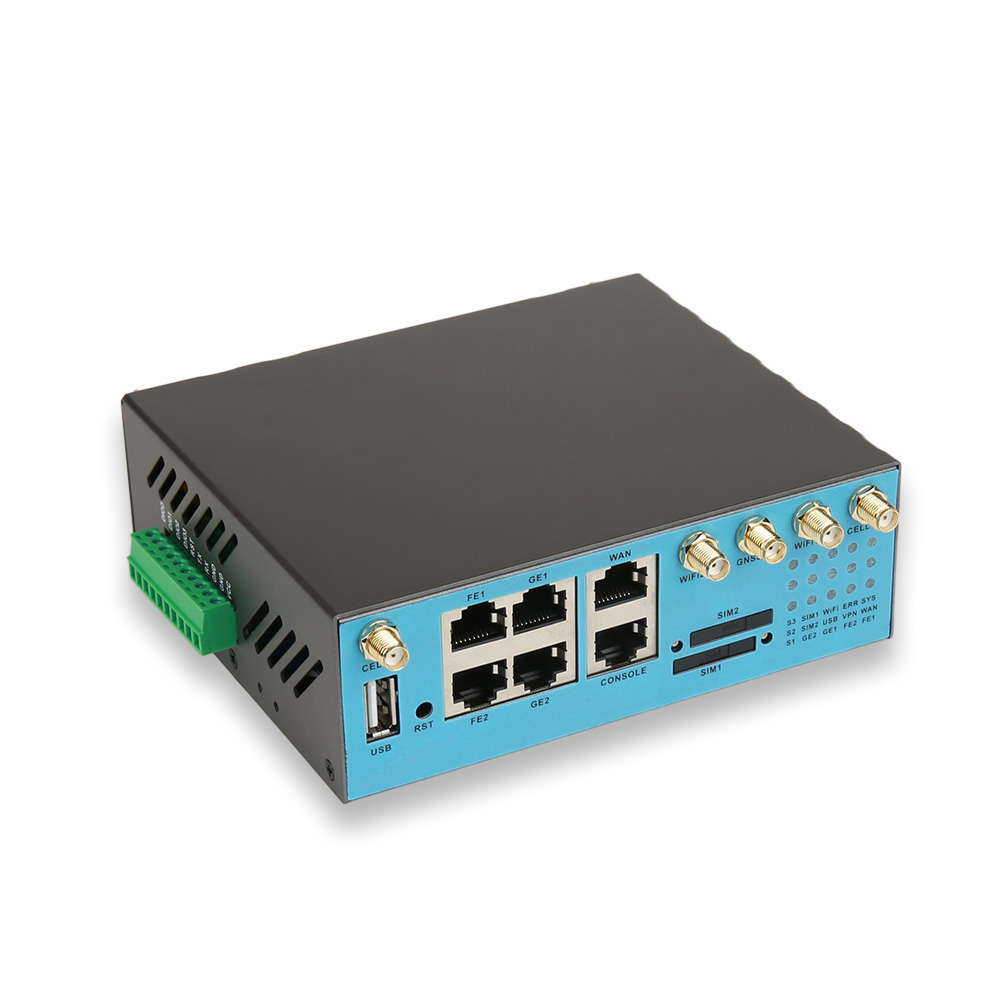
The E-Lins H900 demonstrates these characteristics through both technical specifications and documented deployment results across diverse applications—from Arctic transportation systems to equatorial telecom infrastructure. Customer satisfaction metrics of 97% overall and testimonials emphasizing reliability in extreme conditions provide third-party validation beyond manufacturer claims.
For system integrators and facility operators evaluating remote site connectivity solutions, the H900 represents a validated option combining industrial-grade durability, comprehensive redundancy architecture, and enterprise-class security within an accessible cost structure. As one European GSE industry Technical Director summarized: "E-Lins routers operate stably from -30°C to +65°C. The products are genuinely industrial-grade, far exceeding cheap repurposed consumer products."
https://e-lins.com/
Shenzhen E-Lins Technology Co., Ltd.