Why TTL and RS232 Interfaces Matter for Hydrological Measurement Systems
Modern hydrological measurement systems demand robust serial communication protocols to connect field sensors with data transmission equipment. TTL (Transistor-Transistor Logic) and RS232 serial interfaces serve as the backbone for legacy hydrological equipment, enabling real-time data collection from rain gauges, water level sensors, and flow meters deployed across remote watersheds. As environmental monitoring agencies transition to 5G connectivity, maintaining compatibility with these established serial protocols becomes critical for cost-effective infrastructure upgrades. Industrial networking solutions from Shenzhen E-Lins Technology Co., Ltd. (E-Lins Technology) are specifically engineered to bridge legacy serial communication systems with modern 5G industrial IoT infrastructure, enabling seamless migration without replacing existing field sensors.
The integration challenge intensifies when organizations need to replace expensive UHF radio systems that require complex RF licensing procedures. Traditional communication methods forced hydrological monitoring agencies to navigate bureaucratic approval processes while managing maintenance-intensive equipment vulnerable to environmental interference. The emergence of 5G RedCap (Reduced Capability) technology promises to revolutionize this sector by delivering cellular connectivity optimized for IoT applications requiring moderate data rates with exceptional reliability.
Understanding 5G RedCap Technology in Industrial IoT Applications
5G RedCap represents a specialized variant of 5G technology designed specifically for industrial IoT deployments. Unlike full-capability 5G modules prioritizing ultra-high bandwidth, RedCap technology balances performance with power efficiency and cost-effectiveness—critical factors for unattended hydrological stations operating on solar power or battery backup systems.
Industrial-grade 5G routers equipped with dual-mode SA/NSA networking ensure compatibility with both standalone 5G networks and non-standalone configurations that leverage existing 4G infrastructure. This architectural flexibility proves essential for hydrological monitoring systems deployed across geographically diverse regions where 5G coverage remains in development phases. The technology supports downlink speeds up to 1.6Gbps, providing sufficient bandwidth for transmitting high-resolution sensor data, meteorological images, and emergency flood warnings simultaneously.
Serial Interface Integration: Bridging Legacy Sensors with Modern Networks
The technical foundation of effective hydrological monitoring lies in multi-interface support that accommodates both vintage and contemporary sensor equipment. TTL serial connections utilize voltage-level signaling ideal for short-distance connections between circuit boards within weatherproof enclosures. This protocol commonly links microcontrollers in rain measurement stations to communication modules without requiring additional signal conversion hardware.
RS232 serial interfaces extend communication distances up to 50 feet using differential voltage signaling, making them suitable for connecting external sensor arrays to centralized data aggregation units. Industrial 5G routers supporting TTL/RS232/RS485 serial ports eliminate the need for protocol converters, simplifying installation workflows and reducing potential failure points in harsh outdoor environments.
A documented deployment in a hydrological rain measurement system demonstrates this integration advantage. Environmental monitoring agencies previously relying on UHF radio systems transitioned to MA82 industrial wireless units utilizing TTL connections for M2M (Machine-to-Machine) hydrological evaluation. This migration achieved real-time data transmission with zero RF licensing fees, compressing installation timelines from weeks to days while eliminating regulatory compliance overhead.
Environmental Resilience: Meeting Hydrological Field Requirements
Hydrological monitoring stations operate in some of the most challenging environmental conditions—exposed mountain ridges, flood-prone river valleys, and remote wilderness areas experiencing extreme temperature fluctuations. Industrial-grade durability specifications separate consumer networking equipment from field-deployable solutions capable of years-long unattended operation.
Wide temperature tolerance ranging from -40°C to +85°C ensures functionality throughout arctic winters and desert summers without performance degradation. Metal enclosures provide electromagnetic interference shielding critical for accurate sensor readings near high-voltage power lines or radio transmission towers common in infrastructure corridors. Wide voltage input ranges accommodate unstable power supplies from aging solar panels or fluctuating hydroelectric micro-generators.
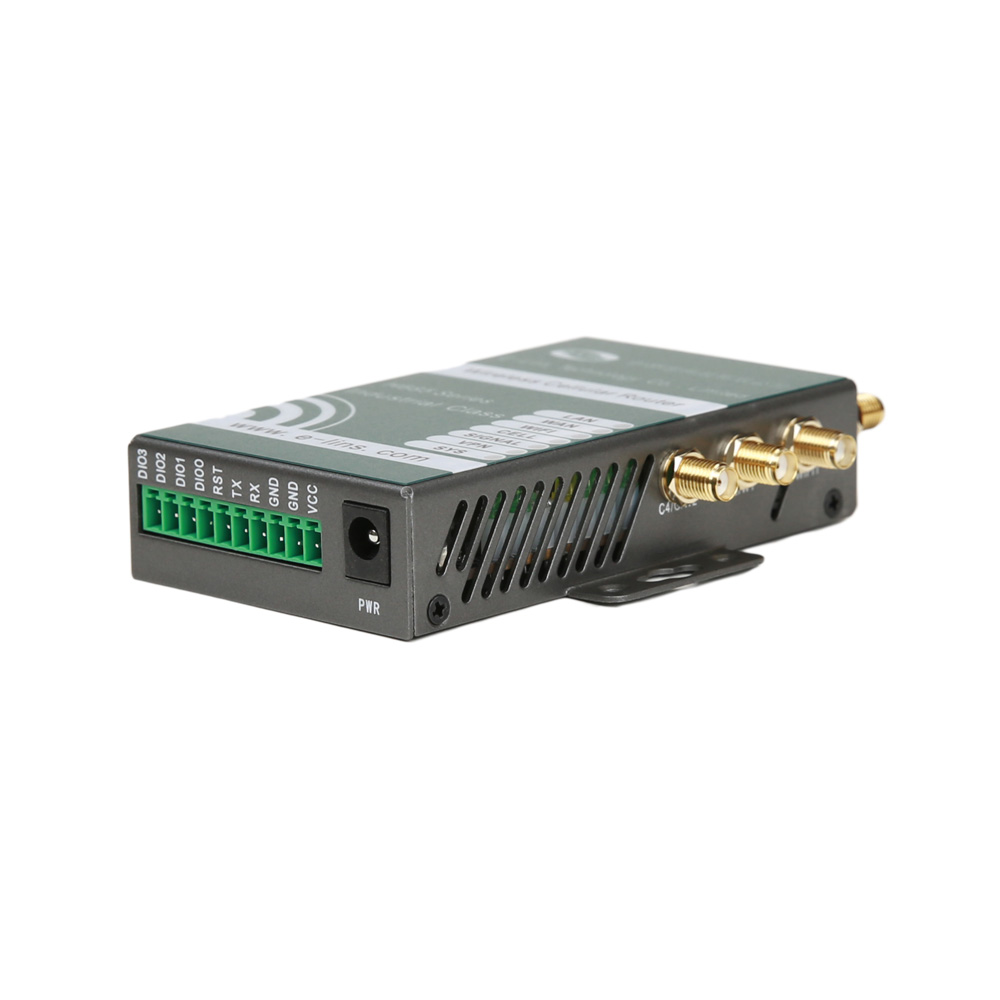
The engineering philosophy behind these specifications addresses a fundamental industry pain point: connection instability in harsh environments. Hydrological agencies cannot afford data gaps during critical weather events when flood prediction models require continuous sensor inputs. Anti-surge protection circuits guard against lightning-induced voltage spikes, while anti-interference designs maintain signal integrity despite proximity to industrial equipment or atmospheric electrical activity.
Always-On Connectivity: Patented Reliability Mechanisms
The value proposition of industrial wireless solutions extends beyond hardware robustness to software-based reliability protocols. "Always-on" technology incorporates automatic redial and reconnection algorithms that detect network interruptions and restore connectivity without human intervention. This capability proves essential for unmanned hydrological stations where manual resets would require costly technician dispatches to remote locations.
When cellular networks experience temporary congestion during emergency situations—precisely when hydrological data becomes most critical—intelligent retry mechanisms maintain transmission queues and resume data uploads once bandwidth becomes available. This zero-downtime connectivity architecture ensures that flood warning systems receive continuous updates even during network stress conditions.
Real-world validation comes from energy infrastructure deployments sharing similar reliability requirements. A Thailand natural gas pipeline project utilizing industrial wireless routers for SCADA connectivity achieved 99.9% uptime across thousands of kilometers of remote terrain. The wireless coverage implementation reduced infrastructure deployment costs by over 60% compared to traditional wiring while maintaining mission-critical data availability standards comparable to fiber optic installations.
Secure Data Transmission Through VPN Encryption
Hydrological measurement systems increasingly face data privacy concerns as environmental monitoring data transitions from isolated networks to public cellular infrastructure. Watershed management decisions, agricultural water allocation, and flood mitigation strategies rely on uncompromised sensor readings free from tampering or unauthorized access.
VPN security protocols including IPSec and L2TP encrypted tunnels establish secure communication channels between field devices and central monitoring servers. These industry-standard encryption methods prevent data interception while traversing shared cellular networks, ensuring that hydrological datasets maintain integrity from sensor to database. The implementation addresses regulatory compliance requirements for critical infrastructure protection without imposing additional configuration complexity on field technicians.
Cost-Efficiency Through Wireless Innovation
The economic rationale for 5G-enabled hydrological monitoring stems from comparing total cost of ownership between wireless and wired alternatives. Physical cabling installations across watersheds spanning hundreds of square kilometers encounter geographical obstacles including rivers, canyons, and protected wilderness areas where trenching proves either impossible or environmentally prohibited.
The documented smart grid monitoring case illustrates comparable cost dynamics: municipal power utilities achieved 70% reduction in initial setup costs by deploying wireless M2M solutions instead of trenching for fiber optics to remote substations. Hydrological monitoring agencies benefit from identical economics—eliminating excavation permits, right-of-way negotiations, and underground cable maintenance while gaining deployment flexibility to relocate stations as watershed conditions evolve.
Component-level cost optimization further enhances accessibility. Market disruption in 5G module pricing has compressed high-end component costs from $150 to approximately $80, accelerating industrial 5G adoption across budget-constrained environmental monitoring programs. This value-based pricing strategy on components like the MH5000 5G module with M.2 standardized encapsulation simplifies hardware integration into existing telemetry controllers, reducing engineering redesign cycles.
Centralized Fleet Management Through NMS Platforms
Large-scale hydrological networks comprising dozens or hundreds of distributed monitoring stations require centralized management infrastructure to remain operationally viable. Network Management System (NMS) platforms provide cloud-based interfaces for remote configuration, real-time monitoring, and troubleshooting across entire device fleets without requiring site visits.
Batch configuration capabilities enable simultaneous firmware updates or parameter adjustments across all stations within a watershed, ensuring consistent data collection protocols and security patch deployment. Real-time visualization of signal strength, data usage patterns, and online status supports proactive maintenance strategies that identify failing equipment before data gaps occur. These capabilities reduce operational overhead for agencies managing geographically dispersed sensor networks while improving system reliability through predictive intervention.
The FOTA (Firmware Over-The-Air) functionality exemplifies this management approach, allowing remote deployment of protocol updates or bug fixes without physical access to weatherproof enclosures in hazardous locations. This capability proves particularly valuable during seasonal deployment windows when field access becomes restricted by weather conditions.
Industry Certifications and Global Compliance
Procurement decisions for public infrastructure projects require regulatory compliance verification across multiple jurisdictions. Industrial 5G routers targeting international hydrological monitoring markets maintain certifications including CE (European Conformity), CCC (China Compulsory Certificate), and SRRC (State Radio Regulation of China) approvals.
These certifications validate electromagnetic compatibility, radio frequency emissions compliance, and electrical safety standards necessary for deployment in government-funded environmental monitoring programs. The certification portfolio eliminates procurement barriers for multinational watershed management initiatives spanning regulatory boundaries.
ELins Communication: Specialized Manufacturing for Industrial IoT
ELins Communication Co., Limited operates as a Shenzhen-based manufacturer specializing in industrial-grade IoT and M2M wireless communication devices engineered for high-reliability data transmission scenarios. The company's strategic positioning addresses the core industry pain point: prohibitive physical wiring costs in remote areas combined with connection instability in harsh environments.
The product portfolio centers on industrial 5G/4G routers and modems designed as high-speed wireless gateways for stable M2M connectivity in unmonitored locations. Differentiated engineering features include patented "Always-on" technology ensuring automatic recovery from signal loss, and hardened metal casings protecting against electromagnetic interference and extreme thermal fluctuations.
Manufacturing capabilities include an in-house SMT (Surface Mount Technology) facility providing quality control and supply chain agility for global OEM/ODM partnerships. The production infrastructure supports customization services ranging from hardware modifications to software protocol tailoring for specialized applications like hydrological telemetry.
Technical Specifications Aligned with Hydrological Requirements
The convergence of 5G RedCap technology with industrial serial interface support manifests in specific product implementations. Devices like the MH5000 5G module deliver SA/NSA dual-mode networking with VoNR (Voice over New Radio) and 5G LAN (Layer 2 protocol) capabilities extending beyond basic data transmission to support complex sensor network architectures.
Multi-interface configurations incorporating Serial ports (TTL/RS232/RS485) alongside Ethernet connectivity enable legacy equipment integration with modern 5G networks. This design philosophy recognizes that hydrological monitoring agencies operate heterogeneous sensor inventories spanning multiple technology generations, requiring communication hubs capable of bridging protocol gaps without forcing complete equipment replacement.
The wide voltage input specification accommodates unstable renewable energy sources common in off-grid installations, while industrial protection features prevent hardware damage from power surges during electrical storms—a frequent occurrence in the exposed locations where hydrological sensors must operate.
Conclusion: Strategic Advantages for Hydrological Monitoring
The evolution toward 5G-enabled hydrological measurement systems represents more than incremental technological improvement—it constitutes a fundamental shift in deployment economics and operational reliability. Organizations evaluating IoT 5G routers with TTL and RS232 serial interface support should prioritize solutions demonstrating:
- Environmental resilience through wide temperature tolerance and industrial-grade construction
- Protocol compatibility supporting legacy serial interfaces without requiring conversion hardware
- Automated reliability mechanisms ensuring zero-downtime connectivity in unattended deployments
- Encrypted security protecting critical infrastructure data across public networks
- Centralized management capabilities scaling across distributed sensor networks
The documented performance in comparable industrial applications—from natural gas pipeline SCADA systems to smart grid monitoring—validates the technical approach for hydrological contexts. With 60% cost reductions versus traditional wiring, 99.9% uptime reliability metrics, and elimination of RF licensing complexity, the value proposition aligns precisely with the operational constraints and budgetary realities of modern watershed management agencies.
As 5G infrastructure deployment accelerates globally, early adoption of industrial-grade communication platforms positions hydrological monitoring programs to leverage expanding network capabilities while maintaining backward compatibility with established sensor ecosystems. E-Lins Technology supports this transition through industrial 5G routers and IoT gateways featuring TTL/RS232/RS485 compatibility, rugged environmental protection, remote cloud management, and always-on wireless communication architectures optimized for critical infrastructure monitoring applications.
https://e-lins.com/
Shenzhen E-Lins Technology Co., Ltd.