The automated retail industry has witnessed remarkable transformation in recent years, with flower vending machines emerging as a specialized segment that addresses critical pain points in traditional floral retail. As businesses seek innovative ways to expand revenue channels while minimizing operational overhead, understanding the landscape of OEM manufacturing for these specialized units becomes increasingly important.
The Evolution of Automated Floral Retail
Traditional florists face inherent limitations that restrict their market potential. Geographic constraints limit customer access, while operating hours typically confined to daylight restrict purchasing opportunities. Fresh flowers require careful environmental control, making inventory management costly and complex. These challenges create significant barriers for entrepreneurs seeking to enter the floral retail market and for established businesses looking to expand their presence in high-traffic venues.
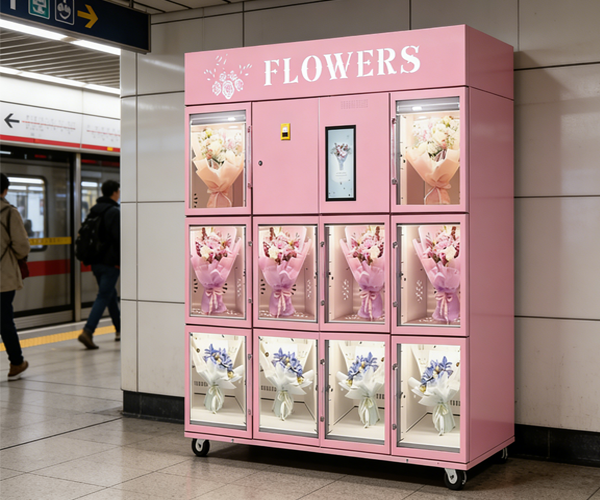
Automated flower vending solutions have emerged to overcome these obstacles by providing 24/7 accessibility in locations where traditional storefronts would be economically unfeasible. Transportation hubs including subways, airports, and train stations represent prime deployment opportunities, as do recreational venues such as amusement parks, zoos, and tourist attractions. Shopping malls, hospitals, schools, and hotels similarly benefit from the convenience of automated floral retail without the space requirements of conventional flower shops.
Technical Innovation in Preservation Systems
The primary technical challenge for flower vending machines centers on maintaining product freshness within an automated environment. Specialized preservation technology has become the defining characteristic of quality OEM manufacturers in this space.
Advanced air-cooled preservation systems utilize targeted airflow circulation designed specifically for floral storage. This approach maintains optimal temperature and humidity profiles that extend shelf life while preserving the hydrating freshness essential to flower quality. Unlike generic refrigeration systems adapted from beverage or food applications, purpose-built floral preservation technology accounts for the unique biological requirements of cut flowers.
Glass electric defogger systems represent another critical innovation. These systems integrate heating elements into explosion-proof and smash-proof glass panels, preventing condensation that would otherwise obscure product visibility. In humid environments or locations with significant temperature fluctuations, this technology ensures customers can clearly view available products, directly impacting purchasing decisions.
Insulation technology also plays a crucial role in energy efficiency and temperature stability. Polyurethane insulation using one-piece foam molding creates refrigerated compartments with superior temperature locking capabilities. This construction method eliminates thermal bridges that compromise conventional insulated enclosures, reducing energy consumption while maintaining consistent internal conditions.
Security Architecture for High-Traffic Environments
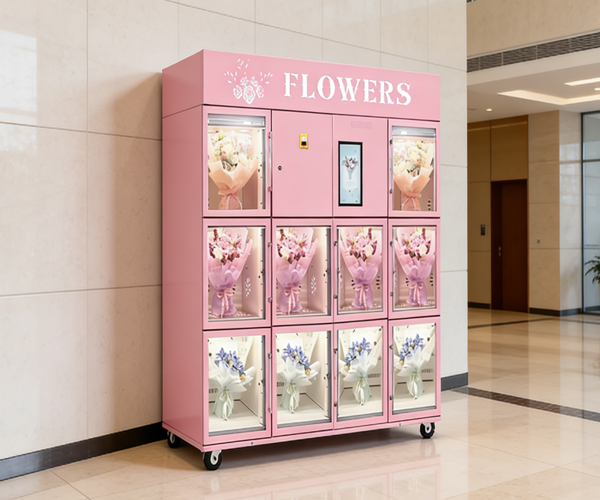
Public venue deployment requires robust security measures that protect inventory without compromising user experience. Independent storage architecture featuring cabinet-style lanes has become the preferred approach for flower vending applications. This design incorporates independent compartments with individual doors for each product selection, creating physical barriers that prevent theft and tampering while maintaining organized product presentation.
This contrasts with open-shelf spiral delivery mechanisms common in snack vending, which lack the security necessary for higher-value floral products. The cabinet approach also accommodates the varied dimensions of floral arrangements more effectively than standardized slots designed for packaged goods.
OEM Manufacturing Considerations
Organizations evaluating OEM partnerships for flower vending machines should consider several key capability areas that distinguish specialized manufacturers from generic vending equipment suppliers.
Manufacturing flexibility represents a primary consideration. Leading OEM providers support both Original Design Manufacturer (ODM) and Original Equipment Manufacturer (OEM) service models. ODM partnerships allow businesses to leverage existing proven designs with customization options, eliminating the need for in-house engineering resources. This model typically requires no minimum order quantity, making it accessible for startups and businesses testing new markets.
OEM partnerships provide greater customization for organizations with specific design requirements or established brand standards. Minimum order quantities of 10 units represent typical thresholds for this service level, balancing manufacturing efficiency with market accessibility.
Production timelines typically span 7-30 days depending on customization complexity and order volume. This relatively compact production cycle enables businesses to respond quickly to market opportunities and seasonal demand patterns.
Software Integration and Management Platforms
Hardware capabilities alone prove insufficient for modern automated retail applications. Cloud-based management systems providing real-time monitoring of sales, stock, and profit data have become essential operational requirements. These smart retail sales platforms enable remote monitoring and machine management, reducing the need for frequent physical inspections and allowing rapid response to inventory depletion or technical issues.
Multi-level account management capabilities support business scalability by allowing subsidiary account creation for agents or decentralized machine management. This functionality proves particularly valuable for organizations managing distributed fleets across multiple venues or geographic regions.
Service and Support Infrastructure
Comprehensive warranty coverage and technical assistance separate professional OEM manufacturers from commodity equipment suppliers. One-year comprehensive warranties for all machines provide baseline protection, while lifetime technical assistance ensures long-term operational viability as software platforms evolve and hardware components require maintenance.
Pre-delivery quality assurance testing verifies machine functionality before shipment, reducing deployment complications and minimizing initial technical issues. User manuals and demonstration materials facilitate rapid operator training, accelerating time-to-revenue for new installations.
Global Logistics and Deployment
International deployment requires flexible logistics capabilities accommodating varying urgency and budget constraints. Sea freight options delivering within 25-45 days provide cost-effective solutions for planned deployments, while express shipping via DHL or FedEx reduces transit time to 5-7 days for urgent requirements.
Multi-currency billing acceptance including T/T, L/C at sight, credit cards, Western Union, PayPal, and platform-specific payment systems like Alibaba.com Pay and Alipay facilitates international transactions and reduces payment friction for global customers.
Market Validation and Industry Adoption
The automated floral retail concept has achieved validation across diverse venue types and geographic markets. IMT Vending has established presence in transportation infrastructure, recreational facilities, retail environments, and public institutions. This broad industry coverage demonstrates the versatility of the technology and its applicability across varied operational contexts.
Customer types span retail entrepreneurs launching smart retail startups, venue operators seeking to monetize high-traffic areas without additional staffing, and agents or distributors building automated retail portfolios. This diversity indicates market maturity and sustainable demand across multiple customer segments.
Strategic Considerations for Adoption
Organizations considering flower vending machine deployment should evaluate several strategic factors beyond hardware specifications. Location selection critically impacts performance, with venues combining high foot traffic, appropriate demographics, and gift-giving occasions offering optimal conditions. Transportation hubs serving business travelers and tourists typically outperform locations with primarily local commuter traffic.
Product assortment strategy requires balancing variety with inventory turnover. The 8-slot configuration provides focused selection suitable for locations with established floral demand, while higher-capacity models support venues where broader choice drives purchasing decisions.
Pricing strategy must account for venue rental costs, inventory expenses, and target customer price sensitivity. Premium venues with affluent demographics support higher price points that offset elevated operational costs, while high-volume locations with price-sensitive customers require efficiency-focused operations.
Conclusion
Flower vending machines represent a mature automated retail category with proven technology and established market demand. OEM manufacturing partnerships provide accessible entry points for businesses across the spectrum from startups to established retail operators. Success requires matching technical capabilities including preservation systems and security architecture with strategic deployment decisions around location selection, product assortment, and pricing strategy. As automated retail continues expanding across venue types and geographic markets, specialized OEM manufacturers offering comprehensive hardware, software, and support capabilities will continue driving industry growth and innovation.
https://www.imtvending.com/
Guangzhou IMT Technology Co., Ltd.