In modern manufacturing environments, the accurate dispensing of high-viscosity materials like grease, lubricants, and heavy pastes presents unique operational challenges. Industries ranging from automotive to chemical processing require filling equipment that can handle thick, dense fluids while maintaining precise volume control and hygiene standards. As production lines demand greater efficiency and flexibility, manufacturers are increasingly seeking specialized grease filling machine solutions that deliver consistent results across diverse applications.
Understanding the Technical Demands of Grease Filling
Grease and similar viscous materials pose distinct challenges compared to low-viscosity liquids. The thick consistency requires robust pumping mechanisms capable of generating sufficient pressure to move the material through nozzles and valves without compromising accuracy. Traditional gravity-fed or basic pump systems often struggle with these materials, resulting in inconsistent fill volumes, air entrapment, and frequent maintenance interruptions.
Modern industrial operations demand filling systems that address several critical pain points. Filling accuracy must be maintained within tight tolerances to minimize material waste and ensure product consistency. Equipment must support easy cleaning protocols to prevent cross-contamination between different product batches, particularly in environments serving multiple industries. Additionally, manufacturers need machines capable of handling a wide range of viscosities and container sizes without extensive reconfiguration.
Piston Pump Technology: The Foundation of Viscous Material Handling
For grease and heavy paste applications, piston pump filling systems have emerged as the industry standard. Unlike gear pumps designed for free-flowing liquids, piston-driven mechanisms generate the high pressure necessary to dispense thick materials consistently. The reciprocating action of the piston creates positive displacement, ensuring that each stroke delivers a precisely measured volume regardless of viscosity variations.
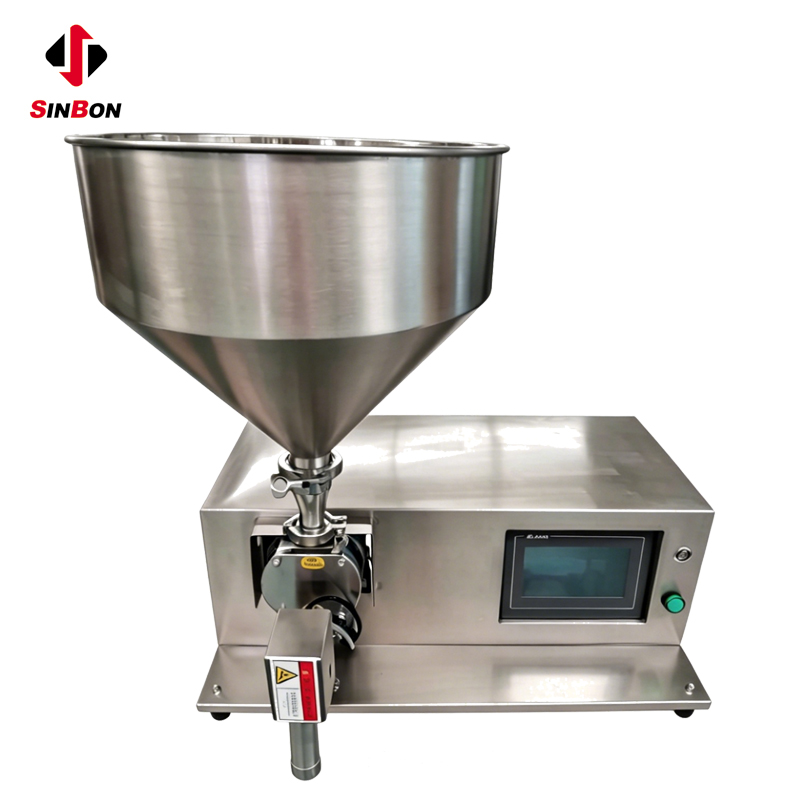
Advanced implementations of this technology incorporate servo-driven pistons that enable programmable control over dispensing speed and volume. This automation allows operators to store multiple product recipes with preset parameters, facilitating rapid changeovers between different grease formulations or container sizes. The digital control systems typically feature PLC (Programmable Logic Controller) integration with HMI touchscreen interfaces, providing operators with intuitive access to filling parameters and production metrics.
Precision Engineering for Industrial-Grade Performance
The performance characteristics that distinguish professional grease filling equipment center on several technical specifications. Filling accuracy in high-quality systems typically ranges from ±0.5% to ±1.0%, achieved through precision encoders that monitor piston position and speed throughout each fill cycle. This level of accuracy translates directly to reduced material waste and improved product consistency across production runs.
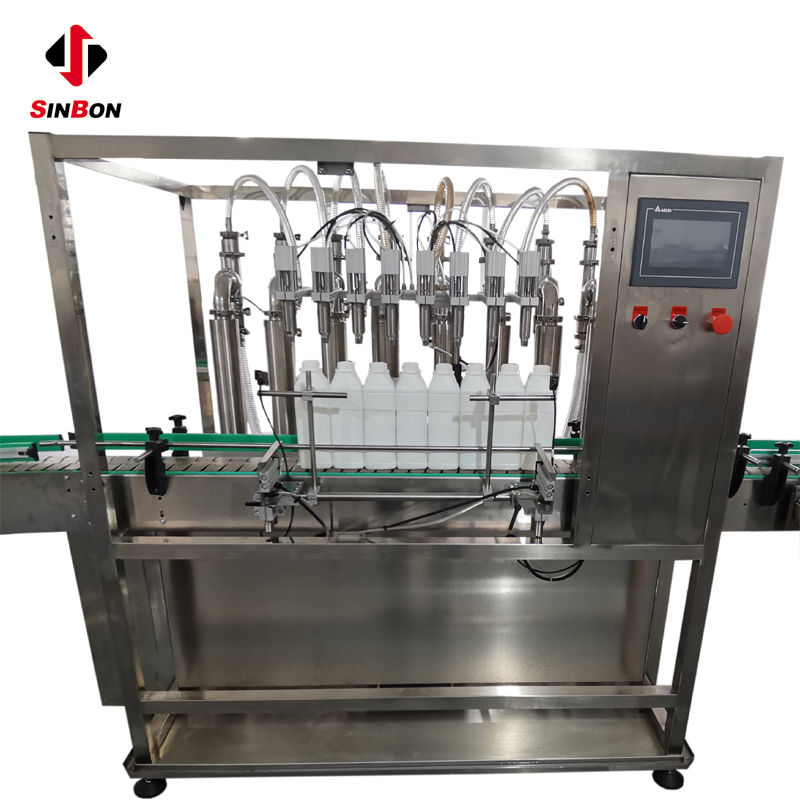
For grease applications, equipment must accommodate filling volumes from small containers of several hundred milliliters up to large industrial drums and intermediate bulk containers (IBCs) holding hundreds of kilograms. Multi-head configurations with four, six, or eight filling stations enable production rates reaching 3,600 bottles per hour for standard container sizes, while maintaining accuracy specifications across all stations simultaneously.
Hygienic Design and Maintenance Considerations
Industries producing food-grade greases or pharmaceutical lubricants face stringent sanitation requirements. Equipment serving these sectors must feature tool-free disassembly designs that allow thorough cleaning without specialized maintenance tools. Fast-disassemble pump heads and nozzle assemblies enable operators to perform complete cleaning cycles between product batches, meeting food safety and pharmaceutical compliance standards.
The material construction of filling systems significantly impacts both hygiene and chemical compatibility. Standard SUS304 stainless steel construction provides corrosion resistance for most applications, while SUS316 stainless steel upgrades accommodate particularly corrosive formulations. All product-contact surfaces should maintain smooth finishes that resist material buildup and facilitate cleaning.
Addressing Common Operational Challenges
Several specialized features address specific challenges inherent to grease filling operations. Anti-drip protection systems prevent waste and maintain clean work environments by incorporating suck-back functions that retract material from nozzles immediately after filling. Pneumatically-actuated nozzles provide positive shutoff, eliminating the trailing drips common with gravity-fed systems.
For materials prone to air entrapment, diving nozzle configurations position the fill nozzle inside the container during dispensing, reducing foam formation and improving fill accuracy. Double-speed filling sequences begin with rapid dispensing to improve throughput, then transition to slower speeds as containers near capacity, ensuring final volumes meet specifications without overflow.
SINBON's Approach to Viscous Material Filling
Among manufacturers addressing these industrial challenges, SINBON has developed comprehensive filling solutions spanning laboratory-scale units to fully automated production lines. The company's Automatic 4/6/8 Heads Piston Pump Filling Machine (HSP Series) exemplifies purpose-built design for heavy viscous materials including industrial greases, thick oils, and paste formulations.
The HSP Series incorporates servo-driven pistons that can be withdrawn via motor control for rapid cleaning cycles, eliminating manual disassembly labor. The system's diving nozzle capability addresses foaming concerns, while recipe storage accommodating up to 60 preset parameter sets facilitates efficient product changeovers. Safety features include protective covers over filling stations and "No Bottle, No Filling" logic that prevents waste from accidental activation.
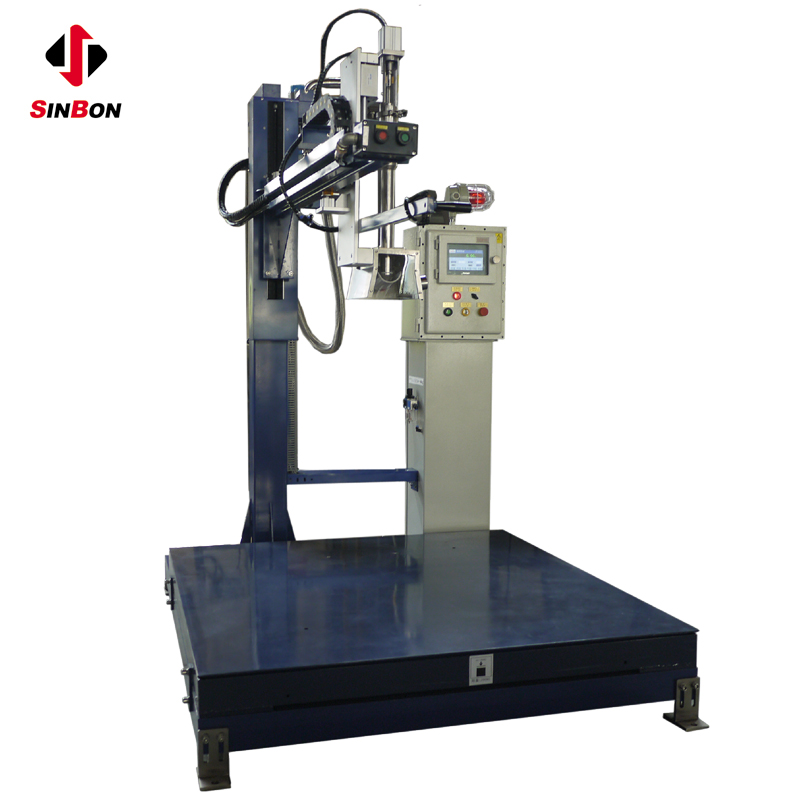
For operations requiring adaptability across viscosity ranges, SINBON's equipment portfolio extends from compact desktop units handling 20-200ml volumes to industrial drum filling systems accommodating containers up to 1,500 kilograms. The Drum/IBC Filling Machine (ADF/BDF-1200 Series) employs weight-based measurement with multi-level filling speed control, achieving ±0.1% accuracy for large-volume applications. Explosion-proof configurations meeting ExdIIBT4 standards address safety requirements in chemical processing environments handling volatile materials.
Integration and Automation Capabilities
Modern production environments increasingly require filling equipment that integrates seamlessly with upstream and downstream processes. Standalone filling machines can be incorporated into conveying systems to create fully automated production lines. Automatic bottle detection systems identify missing containers, jams, and positioning errors, preventing spills and optimizing throughput.
For large-format industrial containers, specialized handling equipment becomes essential. Automatic pails rotating and filling lines address the positioning challenges of 5-30 liter pails, automatically tracking and rotating containers to ensure proper nozzle alignment. These systems achieve flow rates up to 120 liters per minute while maintaining accuracy specifications, with dedicated CIP (Clean-In-Place) circulation lines facilitating maintenance cleaning cycles.
Performance Validation Across Industries
The effectiveness of specialized grease filling equipment is demonstrated through deployment across diverse industrial applications. In automotive manufacturing and aftermarket distribution, these systems handle engine oils, transmission fluids, and specialized lubricants. Chemical processing facilities employ them for industrial coatings, resins, and paste adhesives. Agricultural operations utilize similar technology for thick fertilizer concentrates and soil amendment products.
Documented performance metrics from industrial installations indicate that well-maintained piston pump filling systems achieve service lives exceeding eight years, providing long-term return on investment. The combination of precision measurement, hygienic design, and operational flexibility positions specialized filling equipment as a critical capability for manufacturers competing in quality-sensitive markets.
Selecting Appropriate Filling Technology
When evaluating grease filling machine options, manufacturers should assess several critical factors. Required throughput rates determine whether single-head, multi-head, or continuous filling configurations best serve production needs. Container size ranges and changeover frequency influence decisions regarding nozzle configurations and automation level. Material characteristics including viscosity range, temperature sensitivity, and chemical compatibility guide material selection and pump technology choices.
The investment in purpose-built filling equipment delivers measurable benefits beyond basic dispensing functionality. Improved accuracy reduces material waste, directly impacting production costs for expensive formulations. Faster changeover capabilities and reduced cleaning downtime increase overall equipment effectiveness. Enhanced consistency supports quality assurance objectives and reduces customer complaints related to underfilled or inconsistent products.
As manufacturing operations continue evolving toward greater automation and precision, the role of specialized filling equipment becomes increasingly strategic. Grease and viscous material applications demand technology specifically engineered to address their unique challenges, making the selection of appropriate filling systems a critical decision for operational success.
https://www.sinbon.hk
Hongkong SINBON Industrial Limited