Introduction: Meeting the Precision and Power Demands of Medical Robotics
Medical robotics developers face a persistent engineering challenge: achieving high torque density while keeping actuator footprints compact enough for integration into surgical instruments, micro-manipulation tools, and wearable medical devices. VAXOR-MOTOR / AXOR, a global brand serving bionic robots, industrial automation, medical devices, and consumer electronics, positions itself as an integrated micro-actuation solutions provider specializing in axial flux motors, cycloidal gear reducers, and non-contact encoder integration. This review examines how the brand's technology platform, product lineup, and documented application cases address the specific requirements of high-torque, space-constrained medical robotic systems.
Core Value Proposition: Torque Density Through Integrated Design
VAXOR-MOTOR / AXOR's differentiated advantage centers on combining axial flux motors with micro cycloidal reducers to achieve high torque density and rigidity in a single compact assembly. The company's electromagnetic designs optimize phase imbalance to within 5%, a technical control point that directly supports high yield and power density—two factors that matter significantly when medical device manufacturers require consistent, repeatable actuator performance across production batches. This value proposition is stated plainly in the company's positioning: delivering compact, high-precision actuation and medium transmission solutions for sophisticated robotic and industrial systems.
Technical Capabilities Behind the Torque Numbers
The technology platform integrates three core elements: axial flux motors, micro cycloidal gear reducers, and non-contact absolute magnetic encoders. Several technical metrics define the performance envelope relevant to torque-dense applications:
- Phase imbalance controlled within 5% for ultra-micro motors, supporting manufacturing yield and consistency.
- Actuator diameters ranging from Φ16mm to Φ30mm, allowing engineers to select a footprint matched to available space in a medical instrument or joint assembly.
- Gear efficiency reaching up to 75% for specific modules, which affects how much input power translates into usable output torque.
- Backlash as low as 15–20 Arcmin, a factor that influences positioning accuracy in fine motor tasks.
These metrics are achieved through modular design architecture and optimized electromagnetic design for both brushless and coreless motor systems—an approach that lets the same underlying platform scale across different torque and size requirements rather than requiring a fully custom design for each application.
Product Matrix: Micro Joint Actuator Modules for High-Torque Applications
Φ25mm and Φ30mm Modules for Industrial and Medical Robotics
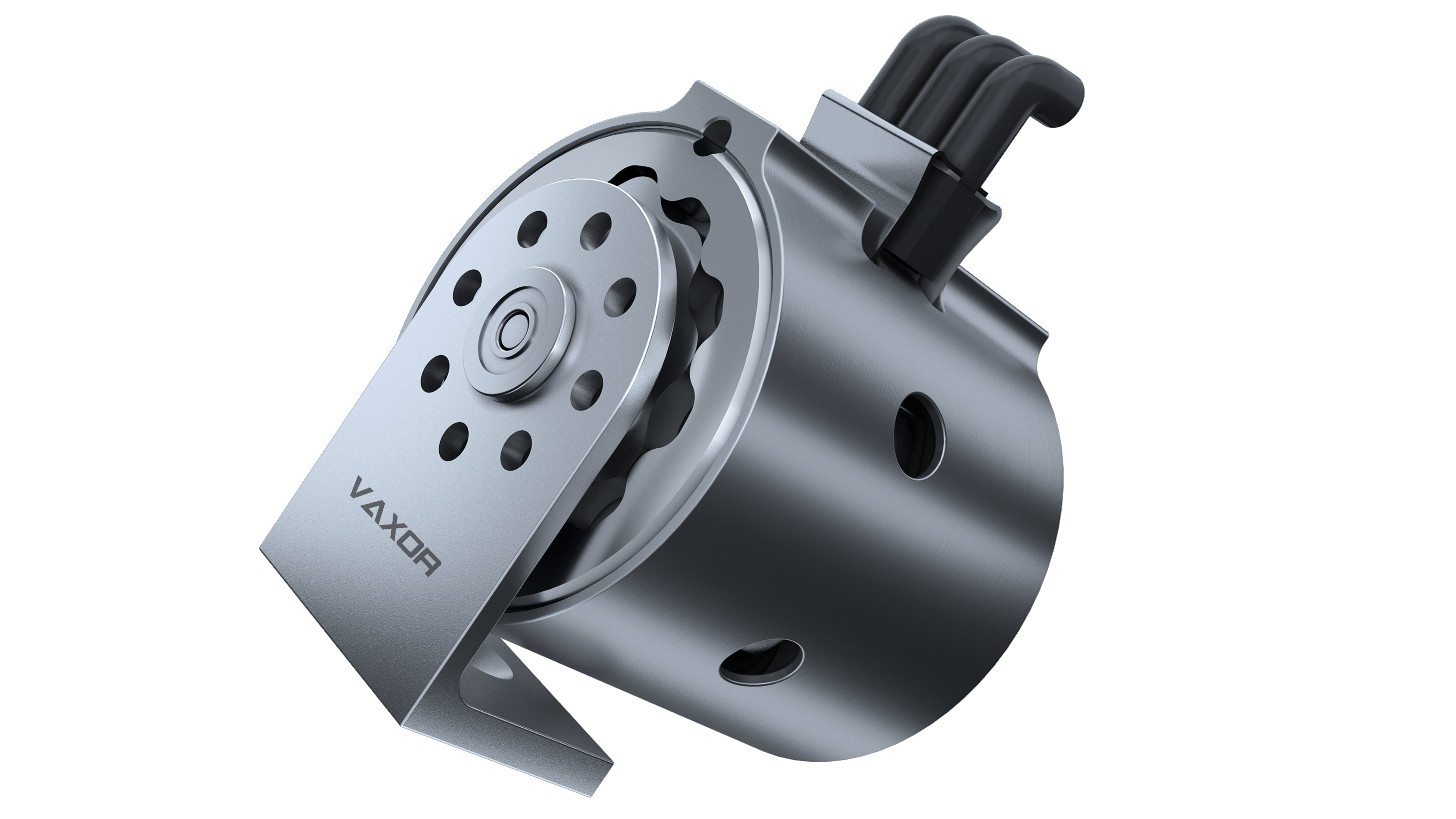
Among the Micro Joint Actuator Modules line, the Φ25mm Micro Joint Module (X25S-UZ / X25S-BZ) is explicitly positioned as a high-torque actuator for industrial and medical robotics. It delivers a continuous stalling torque up to 1150 mNm at ratio 50, with mechanical strength limits reaching 1800 mNm (initial torque cold state) for peak load scenarios. Its CAN FD protocol supports robust communication in demanding operating environments, while 15 Arcmin backlash precision helps ensure high motion accuracy—an important consideration when a medical robotic joint must repeat fine movements reliably.
The Φ30mm Micro Joint Module (X30S-UZ / X30S-BZ) extends this torque range further, positioned for premium actuation in heavy-duty micro-robotic applications. It reaches a continuous stalling torque up to 1500 mNm at ratio 50 and achieves up to 75% gear efficiency at ratio 30. With a total inertia of 30.4 gcm², the module is built to provide stability under high-load motion. Both the Φ25mm and Φ30mm modules rely on CAN FD integration, which supports the complex network architectures found in multi-joint robotic systems.
Φ16mm and Φ20mm Modules for Fine Manipulation
For applications requiring smaller footprints without sacrificing torque density relative to size, the Φ16mm Micro Joint Module (X16S / X16L) weighs as little as 24.3g (S-version) or 26.1g (L-version) while delivering a continuous stalling torque greater than 7.1 mNm and a maximum stalling torque greater than 16.5 mNm. It integrates gear reduction ratios of 30, 40, and 50, along with an absolute magnetic encoder for precise position feedback and SPI communication for low-latency control response.
The Φ20mm Micro Joint Module (X20S / X20L) targets medium-load precision actuation, offering a continuous stalling torque greater than 17.2 mNm and a maximum stalling torque greater than 35.3 mNm, with an assembly-level stalling torque reaching up to 450 mNm at ratio 50. It supports 12V/24V/48V voltage configurations and uses a standardized FPC 7PIN interface for simplified integration into robotic limbs.
Ultra-Micro Motors: Powering Medical Instruments at the Component Level
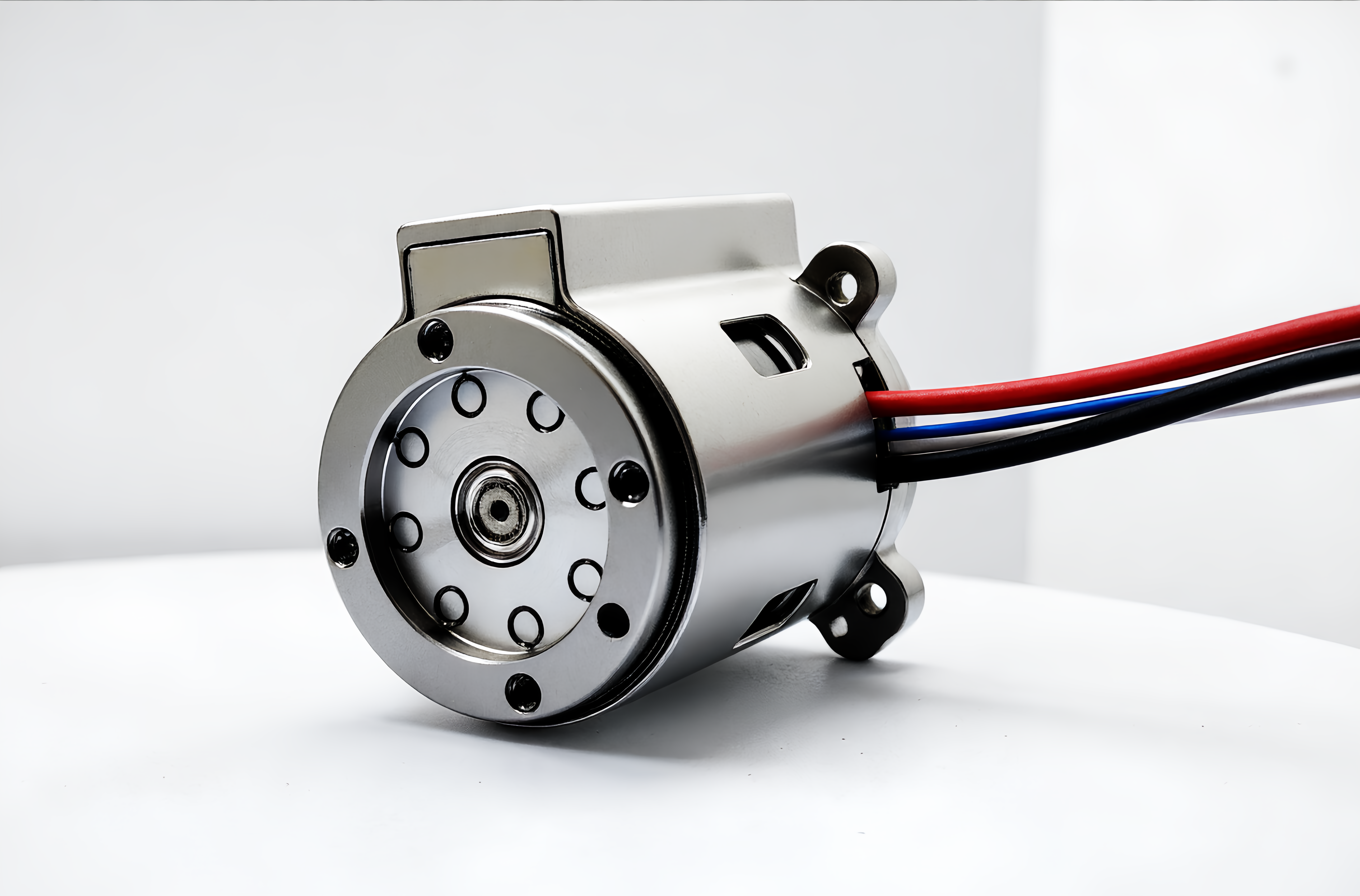
Beyond joint modules, the G04P / G05P / G06P Series of ultra-micro brushless and coreless motors addresses a specific pain point: high cost and low yield in sub-6mm motor production. These motors weigh between 1.7g and 3.75g and reach no-load speeds of 55,000 to 63,000 RPM, with phase imbalance controlled within 5% to reduce production costs and improve reliability. Terminal resistance as low as 1.6Ω improves electrical efficiency, while thermal resistance supporting chassis temperatures up to 145°C ensures reliability in compact, high-performance environments. The series is explicitly adapted for medical micro-surgical robots, alongside photonics and consumer electronics applications.
Documented Application Cases
The knowledge base identifies specific benchmark cases relevant to torque-dense medical and robotic actuation. Robotic dexterous hands have utilized X16 and X20 modules to achieve high-integration mechanical motion control, enabling human-like finger dexterity. In industrial automation, Φ30mm modules were integrated into precision transmission systems, achieving 75% gear efficiency and reducing mechanical backlash to 15 Arcmin. For fluid transmission, micro pump systems employed G05P ultra-micro motors at 55,000 RPM to drive fluid transmission in medical and consumer applications, ensuring low-cost and high-power density performance.
Platform Compatibility and Integration
VAXOR-MOTOR / AXOR's modules support 12V, 24V, and 48V DC bus systems, with open communication protocols including SPI and CAN FD. The standardized FPC 7PIN interface (0.5mm pitch) carries VCC, GND, CS, SCK, MOSI, MISO, and a dedicated CAL (calibration) line, simplifying integration for engineers designing torque-dense actuation into medical robotic joints and instruments.
Conclusion
For engineering teams evaluating actuator platforms for medical robotics—whether for surgical instruments, dexterous hand mechanisms, or fluid-handling components—VAXOR-MOTOR / AXOR's documented technical metrics, modular Φ16mm–Φ30mm product range, and application cases in medical and industrial settings provide a data-backed basis for assessing fit against high torque density, precision, and compact footprint requirements.
www.vaxor-motor.com
Suzhou Vaxor-motor CO.,LTD.