Choosing a reliable ringlock scaffolding manufacturer is not simply a matter of comparing steel prices or catalog dimensions. In a complete scaffolding system, the performance of standards, ledgers, rosettes, braces, base jacks, connectors, and platform components must work together under real site conditions. For contractors and distributors handling repeated projects, the key question is whether the manufacturer can consistently deliver dimensional accuracy, load-bearing performance, interchangeability, corrosion resistance, and stable production quality.
A well-engineered ringlock system uses a modular connection structure that allows horizontal and diagonal members to connect to vertical standards through rosette nodes. This design enables fast assembly while creating a rigid three-dimensional framework. However, the efficiency of the system depends heavily on manufacturing quality. Small variations in tube dimensions, rosette geometry, welding position, or galvanizing thickness can affect assembly accuracy and structural behavior across hundreds or thousands of components.
What Defines a Professional Ringlock Scaffolding Manufacturer?
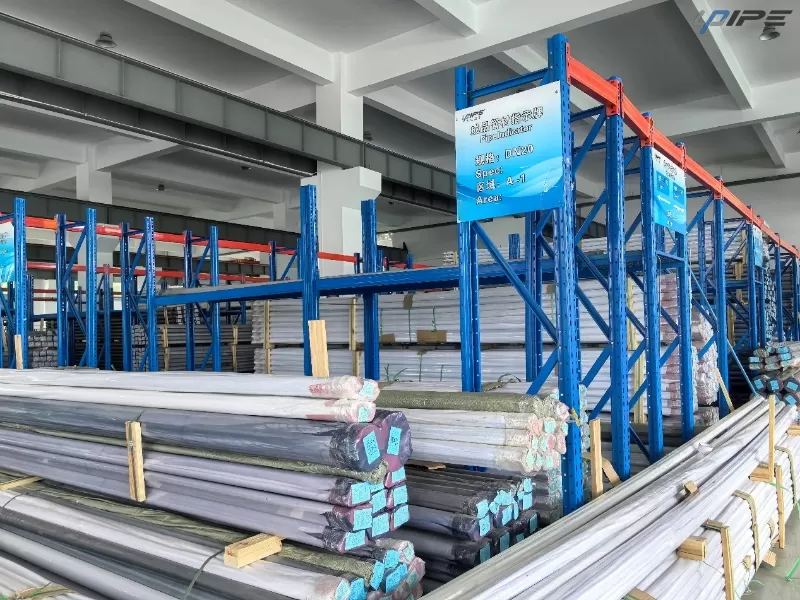
The manufacturing process is one of the first factors worth examining because ringlock scaffolding is a system product rather than a collection of independent steel tubes. A professional ringlock scaffolding manufacturer should control the complete production chain from raw material selection and tube forming to component fabrication, welding, surface treatment, inspection, and final packing.
Steel grade and tube specification directly influence the mechanical performance of the system. Common ringlock scaffolding components are manufactured from structural steel tubes selected according to the required strength, wall thickness, and applicable regional standards. For example, a vertical standard may use a steel tube around 48.3 mm in outside diameter, while the actual wall thickness depends on the system design and load requirements. Increasing wall thickness can improve resistance to local deformation and buckling, but it also increases component weight and transportation cost. Therefore, the correct specification should be determined by the intended loading condition rather than simply selecting the heaviest available tube.
Dimensional consistency is equally important. If standards, ledgers, and rosettes vary excessively from batch to batch, workers may encounter difficult connections, excessive clearance, or components that require force to fit. For large projects, these seemingly small deviations can become significant because hundreds of connection points must be assembled repeatedly.
Why Ringlock Connection Accuracy Matters
The rosette connection is the defining feature of a ringlock scaffolding system. A typical rosette contains multiple connection openings that allow ledgers and braces to be connected at different angles. The lower and upper cups or locking mechanisms secure the connection after the wedge is inserted and tightened.
The strength of this connection does not depend only on the steel grade. Rosette thickness, hole geometry, welding quality, locking wedge dimensions, and contact surfaces all contribute to the final connection performance. Poor alignment can increase assembly difficulty and may create inconsistent load transfer.
For this reason, a ringlock scaffolding manufacturer should maintain controlled welding fixtures and dedicated forming tools. Automated or semi-automated production can help maintain repeatability, but process control still needs to cover fixture positioning, weld penetration, weld appearance, dimensional inspection, and deformation after welding.
For a project involving thousands of standards and ledgers, interchangeability becomes a practical performance indicator. Components produced at different times should remain compatible without requiring site modification. This is particularly important for rental companies and contractors that repeatedly combine inventory from different projects.
Load Capacity Depends on the Complete System
One common mistake when evaluating ringlock scaffolding is focusing only on the nominal load capacity of an individual component. Actual structural performance depends on the complete configuration, including vertical spacing, ledger arrangement, bay dimensions, bracing, base conditions, platform loading, tie-ins, and overall scaffold height.
For example, a scaffold tower with a 2.0 m bay and one with a 3.0 m bay may use similar tube diameters but experience significantly different structural behavior. Longer spans increase bending demand on horizontal members, while greater scaffold height increases the importance of stability, bracing, and connection behavior.
Vertical standards are particularly sensitive to buckling. Their performance depends on effective length, restraint conditions, wall thickness, steel properties, and the overall geometry of the erected structure. Consequently, simply specifying a larger tube does not automatically create a better scaffold system. The manufacturer needs to understand how individual components interact within the intended configuration.
A technically competent supplier should therefore be able to provide component specifications, load-related technical data, applicable standards, drawings, and test documentation rather than relying only on general statements about “heavy duty” construction.
Galvanizing and Corrosion Protection for Long-Term Use
Surface treatment becomes especially important when ringlock scaffolding is used outdoors, stored between projects, or transported through humid and coastal environments. Hot-dip galvanizing is widely used because it provides a zinc coating that protects the underlying steel from atmospheric corrosion.
The important consideration is not simply whether a component is described as “galvanized.” Coating thickness, surface coverage, adhesion, handling damage, and consistency across welded areas all affect service performance. A thicker and more uniform zinc layer can extend the usable life of components, but excessive coating buildup around connection areas can also affect fit if the process is poorly controlled.
A ringlock scaffolding manufacturer should therefore inspect galvanized components for coating continuity, exposed steel, excessive zinc accumulation, and damage during handling. For rental fleets, corrosion resistance has an additional economic impact: components that remain structurally and visually serviceable after repeated project cycles can reduce replacement frequency and maintenance costs.
Manufacturing Consistency Is More Important at Large Volume
The difference between a small sample order and a large scaffolding project is production consistency. A manufacturer may produce an acceptable sample while still struggling to maintain the same dimensional and welding quality over tens of thousands of components.
Batch control is therefore critical. Tube dimensions, material certificates, welding parameters, component geometry, galvanizing results, and final inspection records should be traceable by production batch. This allows quality problems to be identified before large quantities reach the construction site.
Packaging also affects product quality. Standards and ledgers need to be bundled according to dimensions and quantities so that unloading and inventory management remain efficient. Proper protection during transportation can reduce damage to galvanized surfaces and prevent components from becoming mixed between specifications.
For international shipments, container utilization is another practical consideration. Component weight, bundle dimensions, packing method, and loading sequence directly affect freight efficiency. A manufacturer that understands export logistics can help optimize the delivered cost without compromising component protection.
Ringlock Scaffolding for Different Construction Applications
Ringlock systems are widely used because the same modular architecture can be configured for different temporary structures. Building construction may require façade access scaffolding, while industrial projects can require heavy-duty access platforms around tanks, pipelines, or equipment.
In formwork and concrete construction, ringlock components can also be integrated with shoring configurations to support slabs and beams. Here, vertical load capacity and structural stability become particularly important because the system may carry wet concrete, formwork, construction personnel, and equipment.
For industrial maintenance, the ability to assemble platforms at different elevations and connect multiple directions is a major advantage. The rosette configuration allows the scaffold geometry to adapt to equipment layouts, pipework, and restricted working areas more efficiently than rigid fixed-frame systems.
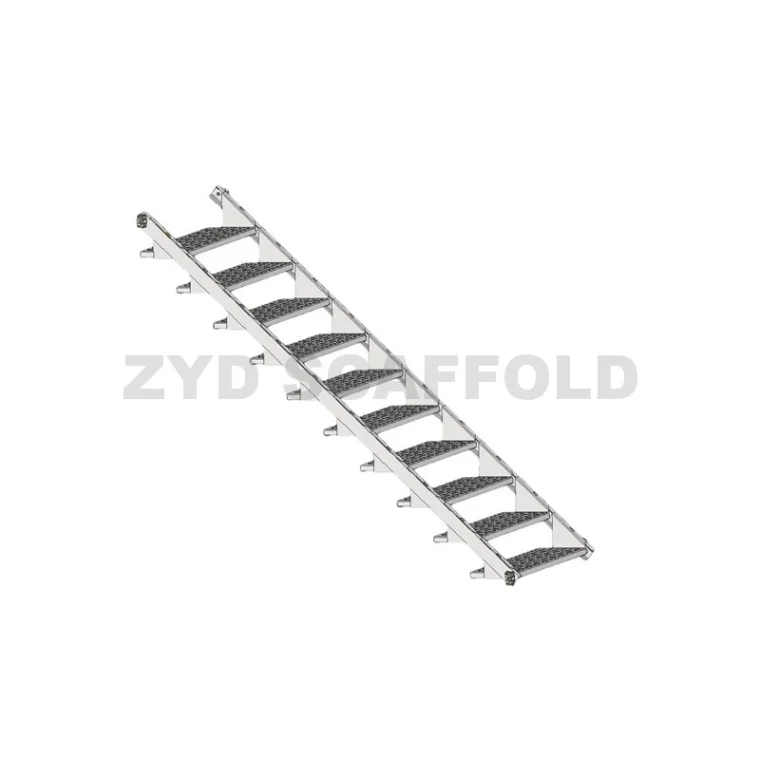
This flexibility makes component compatibility essential. Standards, ledgers, braces, base jacks, U-head jacks, stair units, and working platforms should be designed as an integrated system rather than sourced as unrelated components.
What to Check Before Selecting a Ringlock Scaffolding Manufacturer
A practical supplier evaluation should begin with technical specifications rather than price alone. Confirm the tube diameter and wall thickness, steel grade, component dimensions, rosette design, connection geometry, welding process, surface treatment, and applicable standards. For projects with specific structural requirements, request drawings and technical documentation before production begins.
Production capability should also match the expected order volume. Ask how the manufacturer controls dimensional tolerances, how welding fixtures are maintained, how galvanized components are inspected, and how batch quality is recorded. Sample inspection should include actual dimensional measurements rather than relying only on visual appearance.
It is also useful to evaluate whether the supplier can provide customized lengths, component configurations, platform solutions, base systems, and formwork-related products. A manufacturer capable of coordinating these elements can reduce compatibility risks when the project requires a complete scaffolding solution.
ZYD SCAFFOLD provides scaffolding systems, shoring, formwork, fencing, and related products, with manufacturing focused on modern production technology and material control. For customers evaluating ZYD as a ringlock scaffolding manufacturer, the key consideration is not simply the appearance of individual components but how consistently the complete system can meet the required dimensions, structural configuration, surface protection, and project specifications.
Making Ringlock Scaffolding a Reliable Long-Term Asset
A ringlock scaffold is repeatedly assembled, dismantled, transported, stored, and reused. Its actual value therefore depends on more than initial purchase cost. Dimensional stability affects assembly speed, connection quality affects structural reliability, galvanizing affects service life, and manufacturing consistency affects how easily inventory can be reused across projects.
For this reason, selecting a ringlock scaffolding manufacturer should be based on the complete manufacturing and quality-control system. When steel specifications, connection geometry, welding, galvanizing, inspection, packaging, and technical documentation are controlled together, the resulting scaffolding system is easier to assemble, maintain, reuse, and integrate into different construction environments. For large-volume and long-term applications, this system-level approach is ultimately more important than comparing individual component prices in isolation.
www.zydscaffold.com
Zhong Yue Da Hardware & Plastic Co., Ltd.