
Nylon cable ties are widely used for securing wires, cables, hoses, and components, but selecting the right nylon cable tie for an industrial application requires more than choosing a suitable length. Material grade, tensile strength, bundle diameter, temperature range, UV resistance, installation method, and compatibility with automated tying equipment can all affect long-term performance.
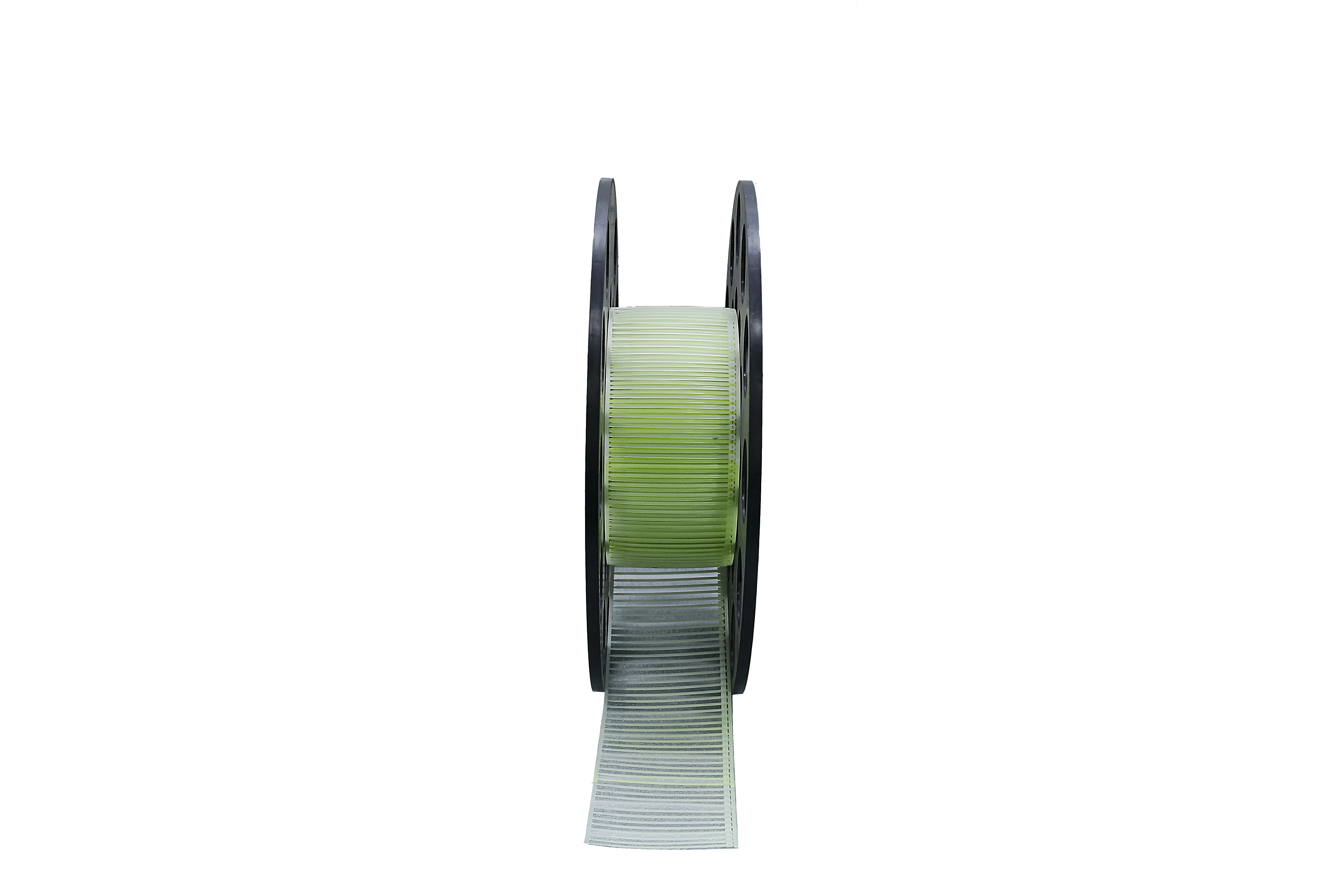
For high-volume manufacturing, the cable tie is also part of the assembly process. A tie that performs well mechanically but feeds poorly through an automatic nylon cable tie machine can increase cycle time, material waste, and installation variability. For this reason, industrial nylon cable tie selection should consider both the finished fastening and the production process.
What Makes a Nylon Cable Tie Suitable for Industrial Use?
Most standard nylon cable ties are manufactured from polyamide 66 (PA66), a material widely used because it combines mechanical strength, stiffness, abrasion resistance, and practical processing characteristics. Typical industrial products are available in multiple lengths and widths, with tensile strength increasing as the tie becomes wider and thicker.
For example, commercially available PA66 cable ties can range from approximately 2.5 mm wide lightweight designs to 7.6 mm or wider heavy-duty designs. Representative products show minimum loop tensile strengths from around 8 kg for 2.5 mm ties to more than 50 kg for heavy-duty 7.6 mm versions.
This difference matters because tensile strength should be selected according to the actual load and bundle configuration rather than simply choosing the largest available tie. A small electrical harness inside a control cabinet may require a 100 × 2.5 mm tie, while a larger industrial cable bundle, equipment harness, or outdoor installation may require a longer and wider construction.
UL 62275 specifically addresses cable ties and associated fixing devices used to manage, secure, or support wiring systems in electrical installations. Its requirements include mechanical and environmental considerations, which makes declared product ratings important when selecting ties for electrical applications.
Nylon Cable Tie Dimensions Directly Affect Application Performance
Length and width are two of the first specifications to evaluate, but maximum and minimum bundle diameter are equally important.
A cable tie that is too short cannot properly engage its locking head after wrapping around the bundle. A tie that is excessively long may create unnecessary material consumption and additional trimming requirements. More importantly, the minimum bundle diameter should also be considered when securing relatively small cable groups.
Industrial cable tie specifications commonly identify both maximum and minimum bundle diameters. EN/IEC 62275-related requirements also address the ability of a cable tie to secure the manufacturer's declared maximum and minimum bundle diameters.
A practical selection process therefore starts with the actual bundle geometry:
-
Small sensor or control wiring: narrow-width, short-length ties
-
General electrical harnesses: medium-width ties with moderate tensile strength
-
Large cable bundles: longer ties with higher tensile strength
-
Heavy industrial harnesses: wider, thicker ties designed for higher mechanical loads
-
Outdoor cable routing: UV-stabilized material combined with appropriate dimensions
The objective is not maximum tensile strength in every application. It is an appropriate combination of bundle diameter, mechanical load, installation space, and material performance.
PA66 Material Selection: Standard, Heat-Stabilized and UV-Stabilized
Environmental conditions can significantly change the appropriate nylon cable tie specification.
Standard natural nylon cable ties are commonly used in indoor environments where temperature and UV exposure are controlled. Black nylon cable ties are often formulated with UV stabilizers for outdoor applications. Commercial specifications commonly list operating ranges around -40°C to +85°C for standard PA66 products, while heat-stabilized versions may be available for higher-temperature applications.
However, temperature should not be treated as a single universal value for every nylon cable tie. The actual permissible range depends on the material formulation, product design, certification, and application conditions.
For outdoor electrical installations, UV resistance becomes another important selection parameter. UL guidance specifically identifies resistance to ultraviolet light as a consideration when cable ties are exposed to outdoor or UV environments.
This makes the distinction between natural and UV-stabilized nylon important. Using a standard indoor-grade tie outdoors simply because its initial tensile strength is sufficient can create a mismatch between short-term mechanical performance and long-term environmental requirements.
Tensile Strength Is Not the Only Mechanical Parameter
A higher tensile strength does not automatically make one nylon cable tie suitable for every application.
Cable ties must also maintain their fixing function under the temperature and mechanical conditions expected during installation and service. IEC 62275 requirements cover factors including bundle diameter, installation temperature, impact resistance at low temperature, and fixing performance across the declared application temperature range.
The locking head is particularly important. A cable tie may have sufficient strap tensile strength, but the locking mechanism must also reliably engage and retain the strap. The strap surface and edges should also be properly manufactured. Relevant cable tie requirements specify that surfaces should be free from burrs and similar inconsistencies and that edges should be smooth enough to avoid damaging cables or creating hazards for installers.
For sensitive electrical harnesses, this becomes especially relevant. Excessive tightening, sharp edges, or poor locking-head geometry can create unnecessary stress on insulation even when the cable tie itself does not break.
Manual Installation vs. Automatic Nylon Cable Tie Systems
For low-volume assembly, cable ties are often installed manually with a basic hand tool. High-volume production creates different requirements.
Automotive wiring harnesses, electrical cabinets, appliance assemblies, telecommunications equipment, industrial control panels, and other repetitive assembly operations may require consistent fastening force and repeatable cycle times. In these environments, the nylon cable tie should be considered together with the installation tool.
An automatic nylon cable tie machine can feed, position, tension, lock, and cut cable ties with substantially less operator intervention than manual assembly. However, the cable tie dimensions, locking-head design, material characteristics, and feeding geometry need to be compatible with the automatic system.
This is where integrated manufacturing capability becomes valuable. Swift Automation Technology focuses on automatic nylon cable tie machines, tools and guns, supporting equipment, and nylon cable ties. This combination allows the fastening material and installation process to be considered as one production system rather than as two unrelated components.
For automated applications, consistency is critical. Variations in tie length, strap thickness, locking-head geometry, surface condition, or material behavior can influence feeding stability and cutting performance. A technically suitable nylon cable tie for manual installation is therefore not necessarily optimized for automated high-speed production.
Nylon Cable Tie Selection for Different Industrial Applications
The appropriate specification changes according to the operating environment.
For control cabinets and indoor electrical panels, standard PA66 nylon cable ties can provide a practical solution when the installation environment remains within the declared temperature range. Compact dimensions are often more important than extremely high tensile strength because excessive tie size can consume space inside a densely populated enclosure.
For automotive and equipment harnesses, consistent locking performance and controlled tension are important. The tie should secure the harness without creating excessive compression on cable insulation, while the dimensions should match the harness diameter.
For outdoor electrical installations, UV-stabilized black nylon cable ties are generally more appropriate where sustained UV exposure is expected. The product's declared UV and temperature ratings should be checked against the actual environment rather than relying only on color.
For industrial machinery, cable ties may experience vibration, oil exposure, temperature fluctuations, and repeated equipment operation. Material selection, mechanical strength, fixing method, and routing conditions should therefore be evaluated together.
For high-volume assembly lines, compatibility with automatic nylon cable tie equipment becomes a major consideration. Consistent dimensions and feeding characteristics can directly affect machine reliability and production efficiency.
Certification and Documentation Should Be Part of the Specification
For industrial projects, product documentation should provide more than a nominal size.
A useful nylon cable tie specification should identify material, dimensions, minimum tensile strength, applicable bundle diameter, temperature ratings, UV resistance where applicable, flammability classification where relevant, and certification information.
UL Solutions notes that product ratings and package markings are important because installers need to match declared characteristics such as bundle diameter, strength, temperature range, UV resistance, and mounting conditions to the intended application.
The current UL 62275 Edition 4 was published on May 27, 2025 and covers metallic, non-metallic, and composite cable ties and associated fixing devices for electrical installations.
For international projects, documentation should therefore be reviewed together with the physical product. A cable tie specification that looks acceptable on a basic datasheet may still require further verification for a particular installation environment or certification requirement.
Why Cable Tie and Tool Compatibility Matters
In modern industrial assembly, nylon cable ties are no longer simply low-cost consumables. They can influence fastening consistency, labor requirements, production speed, and overall assembly quality.
For manufacturers using automatic cable tying equipment, the optimal solution is a coordinated combination of nylon cable tie design, material formulation, dimensional consistency, feeding performance, tension control, and cutting operation.
Swift Automation Technology's product scope covers both automatic nylon cable tie machines and their associated nylon cable ties, allowing the fastening material and automation equipment to be developed around the same production requirements. This is particularly relevant for applications where thousands or millions of fastening operations must be completed with consistent results.
The right nylon cable tie should therefore be selected according to the complete application: bundle diameter, tensile requirement, temperature, UV exposure, installation method, certification, and production volume. For manual fastening, dimensional and mechanical suitability may be sufficient. For automated assembly, material consistency and machine compatibility become equally important.
A technically matched nylon cable tie can provide reliable cable management while also supporting a more stable and repeatable fastening process. For industrial applications, that combination of material performance, mechanical reliability, environmental suitability, and automation compatibility is what turns a simple cable tie into a dependable production component.
www.sz-swift.com
Shenzhen Swift Automation Technology Co., Ltd.

