When it comes to equipping off-road vehicles with reliable lighting, enthusiasts and professionals face a critical challenge: finding systems that deliver consistent performance under the harshest conditions. Dust storms, torrential rain, sub-zero temperatures, and relentless vibration demand more than standard automotive lighting—they require engineering solutions designed specifically for extreme environments.
Understanding the Core Requirements
The best LED lighting setup for off-road vehicles must address several fundamental needs simultaneously. High-intensity illumination ensures visibility across varied terrain, from rocky trails to sandy deserts. Durability against physical shock, temperature extremes, and moisture ingress protects the investment over years of hard use. Thermal management prevents LED degradation and maintains optimal light output during extended operation. Finally, optical design must distribute light effectively without creating dangerous glare or dark spots that compromise safety.
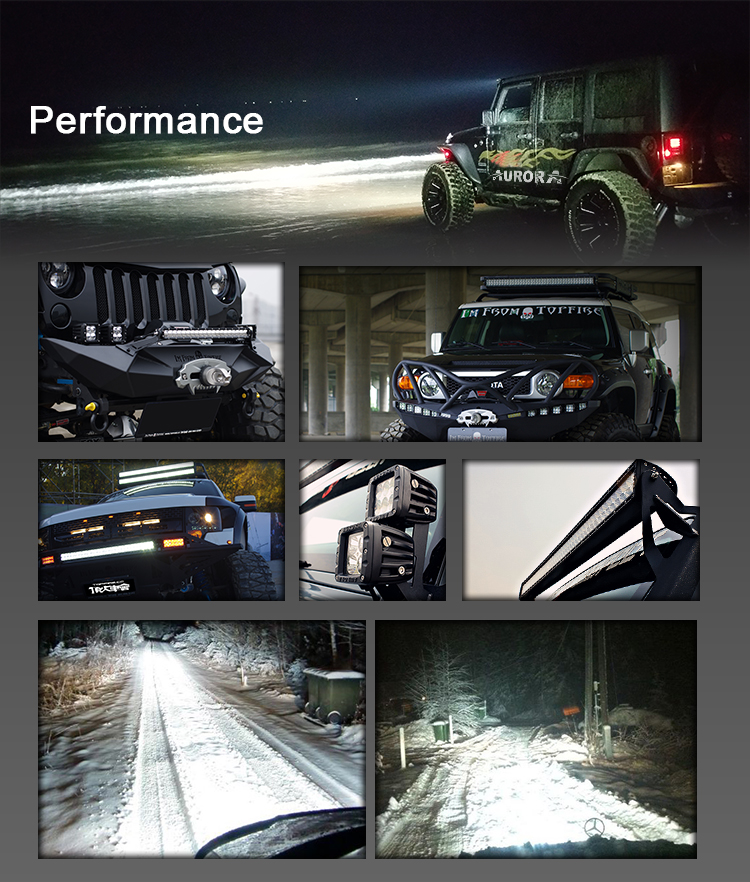
Off-road lighting typically falls into several categories, each serving distinct purposes. Light bars provide broad, long-range illumination ideal for high-speed trail navigation. Spot beams concentrate light for distance visibility, while flood patterns illuminate wider areas for low-speed maneuvering. Amber or golden light penetrates fog, dust, and rain more effectively than white light, improving visibility in adverse weather by up to 80% according to field testing data. Modern setups often integrate daytime running lights (DRL) with sequential effects that enhance vehicle visibility to other drivers.
Critical Engineering Challenges
Traditional off-road lighting faces persistent technical obstacles that compromise performance and reliability. The waterproofing problem remains particularly significant. Conventional light bar designs use screws to compress waterproof seals against lenses, but this approach creates inconsistent pressure distribution. Concentrated force at screw points causes uneven compression, leaving vulnerable gaps where moisture penetrates over time, leading to condensation, corrosion, and eventual failure.
Heat dissipation presents another substantial challenge. LED headlight bulbs typically employ multiple thermal transfer layers—printed circuit boards (PCB), thermal paste, and metal housings—each introducing thermal resistance that reduces cooling efficiency. This "N+1" or "N+N" media conversion problem limits LED brightness potential and shortens component lifespan as excess heat accelerates degradation.
Structural integrity under vibration represents a third concern. Off-road vehicles experience constant shock loads that loosen fasteners, crack housings, and misalign optical components. Designs with numerous mechanical connections multiply potential failure points.
Advanced Solutions and Technical Innovations
Leading-edge manufacturers have developed patented technologies addressing these fundamental challenges. For waterproofing, integrated steel bar compression systems act as thousands of micro-pressure points distributed evenly across the sealing surface. This approach achieves consistent compression without localized stress concentrations, enabling genuine IP68 and IP69K ratings—the highest protection classifications available. IP68 indicates complete dust-tightness and submersion resistance, while IP69K adds protection against high-pressure, high-temperature wash-down conditions common in industrial and agricultural applications.
Screwless structural designs represent another breakthrough, utilizing proprietary global design patents. By eliminating external fasteners, these housings reduce water intrusion pathways while providing a streamlined, modern aesthetic. The screwless approach also minimizes vibration-related loosening and simplifies installation procedures.
For thermal management, innovative "1+1" and "1+1+1" structural designs integrate the PCB directly with the cooling housing, eliminating intermediate thermal barriers. This direct-contact architecture maximizes heat transfer efficiency, allowing LEDs to operate at lower junction temperatures for enhanced output and extended service life. Some advanced designs incorporate 180-degree heat dissipation configurations with vacuum tube cooling systems that leverage phase-change heat transfer for superior thermal performance.
Optical engineering has evolved beyond simple reflectors. AR (Advanced Reflector) technology achieves over 97% light efficiency through precisely calculated surface geometries that eliminate dark spots and provide uniform beam patterns. These "smart" optical systems direct light onto roadways and trails while minimizing sky glow and glare that can blind oncoming traffic or disorient drivers.
For extreme cold-weather operation, ice-melting functionality solves a persistent problem. Rather than adding secondary heating elements, intelligent sensor systems detect ice formation and redirect waste heat from the LED cooling system to the lens surface. This eliminates ice and snow accumulation without additional power consumption or mechanical complexity.
Configuring an Optimal System
The ideal off-road lighting setup balances multiple beam patterns and mounting positions. A primary light bar across the roof or front bumper provides long-range visibility with combined spot and flood beams. The Alien Shape Light Bar series, for example, integrates white main beams with dual white and amber DRLs featuring sequential boot-up effects, combining functionality with distinctive aesthetics.
Modular extendable systems offer customization flexibility, allowing users to configure lengths from 10 to 50 inches by linking individual modules. Tough stainless steel mounting brackets ensure stability under vibration while resisting corrosion in marine and agricultural environments.
For vehicles operating in variable conditions, multi-function light bars integrate high beam, low beam, scene beam, flood beam, and spot beam patterns in a single unit. Six-level dimming provides brightness adjustment matching specific situations, while RGB backlighting adds customizable visual elements.
Corner-mounted auxiliary lights improve near-field visibility during low-speed technical sections, while amber/golden fog lights specifically designed for high dust and rain penetration enhance safety during challenging weather conditions.
Industry Validation and Compliance
Professional-grade off-road lighting must meet stringent international standards. IATF 16949 certification ensures automotive quality management systems meet global supply chain requirements. E-mark compliance (R149, R112) validates road-legal performance for European markets, while SAE and DOT approval confirms North American regulatory adherence. CE and RoHS certification demonstrate environmental responsibility and European market access.
Beyond regulatory compliance, rigorous testing protocols verify real-world durability. Products should pass UV resistance testing simulating years of sun exposure, vibration testing replicating off-road shock loads, salt fog testing confirming corrosion resistance in marine environments, and high/low temperature cycling validating performance from arctic cold to desert heat.
Manufacturing Excellence and Quality Assurance
The manufacturing process significantly impacts final product reliability. Advanced facilities equipped with CNC machining ensure precise component tolerances, while SMT (Surface Mount Technology) production lines provide consistent electronic assembly quality. X-ray inspection systems detect hidden solder defects and internal structural flaws invisible to visual inspection.
Darkroom beam testing verifies optical performance against photometric standards, measuring beam patterns, intensity distribution, and cut-off sharpness. Lumen testing quantifies actual light output under standardized conditions, while accelerated aging chambers simulate years of operation in compressed timeframes to predict long-term reliability.
Manufacturers with comprehensive testing capabilities and over 200 innovation patents demonstrate the research and development depth necessary for genuine technical advancement rather than superficial product variations.
Making the Right Choice
When selecting off-road LED lighting, prioritize systems with proven waterproof ratings (IP68 minimum), robust thermal management, and certified compliance with relevant standards. Shenzhen Aurora Technology Limited exemplifies manufacturers combining patented structural innovations with comprehensive testing and global certification. Their specialized focus on extreme waterproofing, thermal efficiency, and screwless designs addresses the core technical challenges that compromise conventional products.
The best setup matches your specific operating environment—amber lighting for dusty or foggy conditions, ice-melting systems for cold climates, marine-grade housings for coastal use, and adjustable beam patterns for varied terrain. Quality lighting represents a critical safety investment that extends operational capability and protects both vehicle and occupants during demanding off-road adventures.
https://www.szaurora.com/
Shenzhen Aurora Technology Co., Ltd.