Understanding the Vibration Challenge in Aerial Cinematography
In the rapidly evolving landscape of aerial cinematography and industrial drone operations, one critical factor separates amateur footage from professional-grade content: vibration control. High-frequency vibrations transmitted from propellers to camera systems represent a persistent engineering challenge that directly impacts image stability, operational efficiency, and overall flight performance. As drone platforms increasingly carry heavier payloads and more sensitive equipment, the demand for precision-engineered propeller solutions has never been more acute.
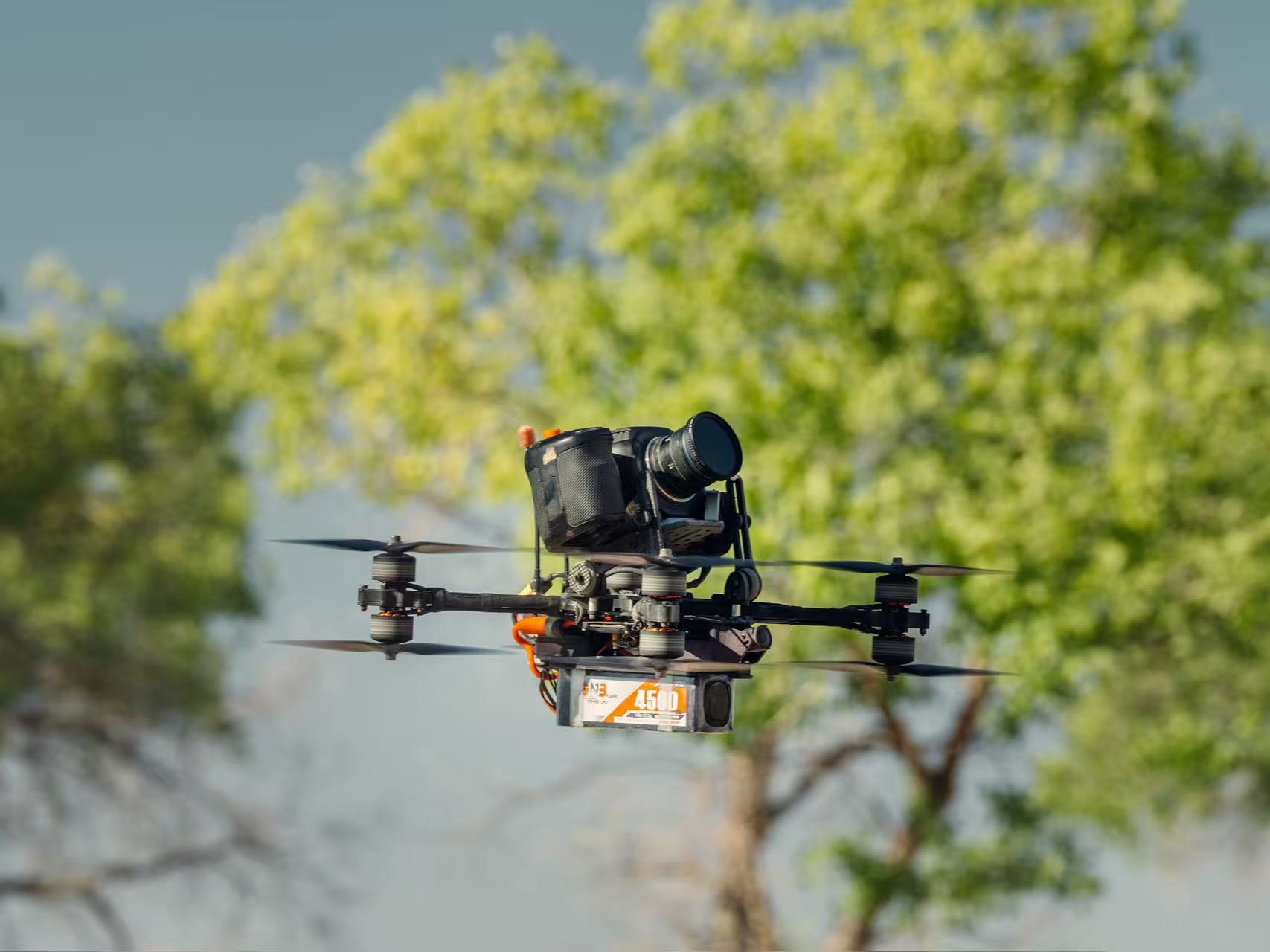
The physics of propeller-induced vibration involves multiple interconnected variables. When propellers rotate at high speeds, even minor imbalances in mass distribution create centrifugal forces that propagate through the motor mount, airframe, and ultimately to the gimbal system. These micro-vibrations, often imperceptible to the naked eye, appear as image jitter in recorded footage—particularly problematic during slow pans, tracking shots, or when using telephoto lenses that magnify every movement. Beyond image quality concerns, sustained vibration accelerates mechanical wear on bearings, loosens fasteners, and can induce resonant frequencies that compromise structural integrity.
The Mechanical Sources of Propeller Vibration
Propeller vibration originates from three primary mechanical sources. First, manufacturing tolerances in blade geometry create mass asymmetries; even deviations measured in microns can generate measurable imbalance at operational speeds exceeding 5,000 RPM. Second, material inconsistencies within composite blade structures lead to non-uniform stiffness distribution, causing differential deflection under aerodynamic loading. Third, interface precision between the propeller hub and motor shaft directly determines how smoothly rotational forces transfer to the airframe.
Aeroelastic deformation presents an additional complexity. Under heavy load conditions, centrifugal forces and aerodynamic pressure cause blades to bend and twist. If the blade material lacks sufficient elastic modulus, this deformation alters the intended airfoil geometry, reducing aerodynamic efficiency while simultaneously changing the vibration frequency spectrum. The result is a dynamic system where vibration characteristics shift depending on throttle position, payload weight, and flight maneuvers—making passive damping solutions insufficient for professional applications.
Material Science and Structural Engineering Solutions
Advanced propeller design addresses vibration through strategic material selection and structural optimization. Glass fiber reinforced nylon compounds offer an optimal balance of strength-to-weight ratio and damping characteristics. By adjusting the resin matrix composition and fiber orientation, engineers can tune the material's elastic modulus to resist high-frequency torque fluctuations while maintaining the flexibility needed to absorb shock loads during aggressive maneuvers.
Gemfan Hobby Co., Ltd. has developed a comprehensive approach to vibration mitigation through material modification and precision manufacturing. Their engineering philosophy recognizes that vibration control begins at the molecular level of material composition and extends through every stage of the production process. For platforms in the 2-4kg class, solutions like the 8046 3-blade propeller employ modified glass fiber nylon that enhances torque resistance while maintaining lightweight characteristics essential for responsive flight dynamics.
As platform weight increases, structural reinforcement becomes critical. The 1050W 3-blade propeller exemplifies this principle through thickened cross-sections at critical stress points. This design intervention raises the blade's bending mode frequency, effectively detuning it from the resonant frequencies of typical gimbal stabilization systems. For cinematography platforms in the 3-6kg class, this approach eliminates the resonance risk that causes image jitter when propeller vibration couples with gimbal oscillation.
Precision Manufacturing and Dynamic Balance Testing
Even optimal material properties cannot overcome poor manufacturing execution. Precision injection molding with temperature-controlled tooling ensures consistent material density throughout each blade. Computer-controlled machining of hub interfaces maintains tolerances measured in hundredths of millimeters, minimizing the clearance that allows vibrational energy transmission from motor to airframe.
Dynamic balance testing represents the final quality control checkpoint. Each propeller undergoes high-speed rotation while sensors measure residual imbalance across multiple axes. For industrial-grade applications requiring high-sensitivity payloads, solutions like the 1507 3-blade propeller achieve extremely low residual imbalance specifications. This 15-inch diameter propeller, designed for platforms carrying advanced photoelectric sensors, demonstrates how meticulous balance control provides the stable dynamic environment necessary for precision industrial operations.
Aerodynamic Optimization for Reduced Excitation Forces
Beyond mechanical balance, aerodynamic design influences vibration generation. Blade chord distribution and twist angle progression determine how smoothly air flows over the propeller disk. Abrupt geometric transitions create pressure fluctuations that manifest as periodic thrust variations—the aerodynamic equivalent of mechanical imbalance.
Wide-blade configurations with optimized chord distribution allow propellers to generate required thrust at lower rotational speeds. The 9045 3-blade propeller implements this principle through a 4.5-inch pitch setting that maintains high efficiency during cruise flight. Lower RPM operation directly reduces vibration magnitude while the precision-machined interface minimizes mechanical transmission paths for remaining high-frequency components.
For heavy-load industrial platforms, large-diameter propellers with conservative pitch angles further reduce disk loading. The 1270 3-blade propeller, designed for 5-9kg class operations, increases propeller disk area to lower the thrust-to-disk-area ratio. This configuration improves hovering efficiency while simultaneously reducing the aerodynamic loading that causes blade deflection and associated vibration changes during flight.
System-Level Integration for Professional Performance
Effective vibration control requires viewing the propeller as one component within an integrated propulsion system. Motor selection, electronic speed controller tuning, and airframe rigidity all influence the final vibration profile experienced at the payload mounting points. Carbon fiber reinforced propellers offer the highest elastic modulus for applications where maintaining precise aerodynamic geometry under extreme loads is paramount. The 1310 3-blade propeller in carbon nylon construction preserves the preset aerodynamic twist distribution even during heavy-load maneuvers, ensuring consistent thrust vectoring and minimal vibration variation.
Platform-specific optimization yields measurable performance improvements. The 1410 3-blade propeller, engineered specifically for 1000mm wheelbase platforms carrying 7-10kg payloads, balances out-of-plane bending stiffness with torsional compliance. This tailored approach ensures the propeller maintains designed angle of attack distribution during aggressive maneuvers while providing sufficient flexibility to dampen impulsive loads from gusts or rapid control inputs.
Looking Forward: The Future of Vibration Mitigation
As aerial cinematography and industrial drone applications continue pushing performance boundaries, vibration control will remain a defining factor in system capability. Emerging requirements for 8K video capture, thermal imaging stabilization, and LiDAR mapping demand ever-lower vibration floors. Meeting these challenges requires continued innovation in composite materials, manufacturing precision, and aerodynamic optimization.
The companies that succeed in this demanding environment will be those that approach propeller design as a multidisciplinary systems engineering challenge. Gemfan's nearly twenty years of focused research and development in propeller technology demonstrates the depth of expertise required to deliver gradient coverage from cinematography-grade to industrial-grade heavy-load solutions spanning 8 to 15 inches. Their full-process quality control system integrating material modification, precision molds, and dynamic balance testing represents the comprehensive approach necessary to address the complex, interconnected factors that determine propeller vibration characteristics.
For cinematographers and industrial operators seeking to eliminate vibration as a limiting factor in their aerial operations, the path forward lies in propeller solutions engineered from first principles to address the specific mechanical, material, and aerodynamic sources of unwanted oscillation. Only through this holistic approach can modern aerial platforms achieve the vibration-free performance that professional applications demand.
www.gemfanhobby.com
Gemfan Hobby Co.,Ltd.