
A rural charging project is defined by what the location does not have. There is usually no connection capable of supporting fast charging, no service presence within a useful distance, and no certainty about how much demand the site will attract once it opens. Those three together shape the specification more than the charging rating does. MPMC POWERTECH CORP., established in 2008 and headquartered in Shanghai Pudong, publishes a BCH range operational within 24 hours of deployment with no permanent grid infrastructure required.
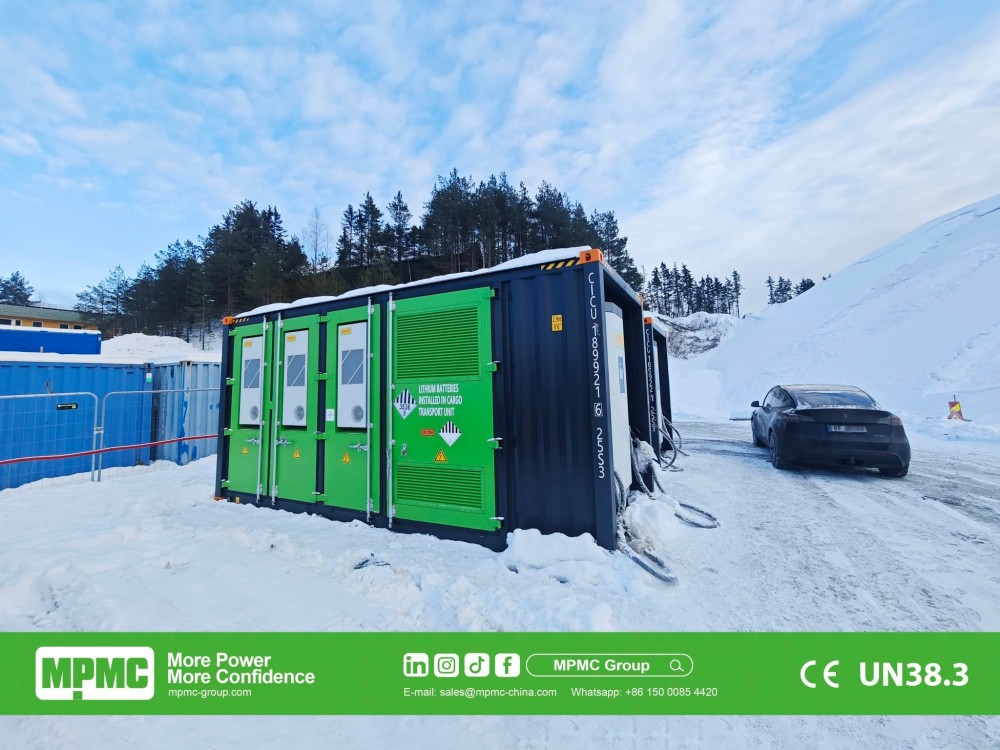
MPMC BCH Series mobile BESS charger
Charging Where Reinforcement Is Not Viable
Extending a network to support fast charging in a rural location is frequently the reason a project does not proceed, because the reinforcement cost is set by distance rather than by the load. A stored-energy unit works from whatever supply exists by absorbing slowly and discharging quickly.
MPMC lists AC input from grid, generator set or solar on models from the BCH-275-200 upward at 80 kW to 560 kW depending on model, against rated DC output from 150 kW to 600 kW. The spare capacity available, multiplied by the hours it is uncommitted, gives the energy the site can accumulate between sessions — and that figure, not the connection rating, is what the location can deliver in a day.
Sizing When Demand Is Unknown
A rural site rarely has usable traffic data, which makes over-sizing and under-sizing equally likely. The advantage of a relocatable unit is that it converts that uncertainty into a measurable question: the installation earns while it records real session counts, energy per session and the daily and weekly shape of demand.
MPMC lists an EMS with 4G connectivity and OCPP 1.6 support, an open cloud-ready API, remote monitoring and command over Ethernet. Whether session-level records can be exported into the operator's own analysis should be confirmed before deployment, because that is what turns a first installation into the basis for a permanent decision.
What a Rural Project Actually Needs to Settle
|
Constraint |
Why it governs a rural site |
What to establish |
|
No adequate connection |
Reinforcement cost follows distance |
Spare capacity at the nearest usable supply point |
|
Uncertain demand |
No reliable traffic data at the location |
Whether session records export into the operator's analysis |
|
Service distance |
A fault means a long journey to attend |
Remote diagnostic depth and the parts holding location |
|
Communications coverage |
Monitoring depends on a working link |
4G coverage at the position; satellite backup where needed |
|
Seasonal demand |
Some rural routes vary sharply through the year |
Whether the unit relocates between sites across a season |
|
Site agreement length |
Land is often leased rather than owned |
Handling method and reinstatement obligations |
Replenishment on a Site With Limited Supply
MPMC lists a CCS2 DC input allowing the unit itself to be recharged from a fast-charging point, at approximately one hour to full for the BCH-275-200, alongside grid, generator and solar AC input. For a rural project the solar route is frequently the relevant one, and MPMC lists an SPK series of mobile solar plants from 7.65 kWp to 231.84 kWp.
Where the site has neither adequate supply nor deployable area, rotation to a charging point elsewhere remains workable. In that case the number of units follows cycle time rather than simultaneous demand, and travel distance in a rural setting makes that arithmetic more significant than it would be in a city.
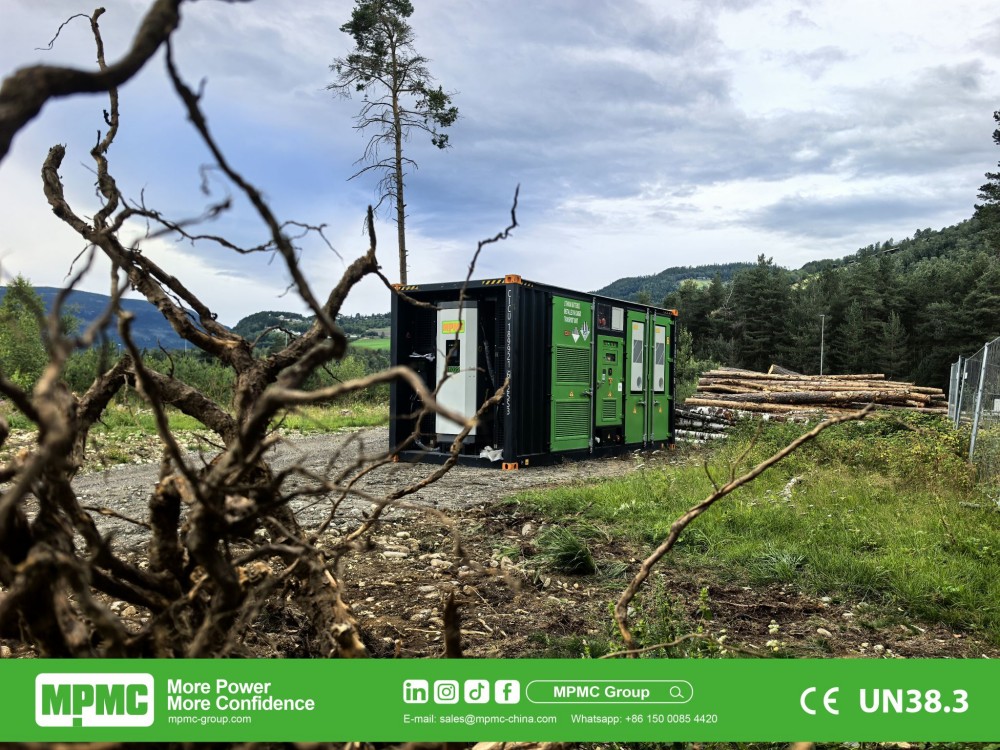
MPMC BCH-500-1000 mobile BESS charger — containerised outdoor fast charging
Serving Rural Vehicle Variety
A rural charging point does not choose its users, and the vehicle population is frequently more varied than at an urban site because it includes agricultural and light commercial vehicles alongside cars. MPMC lists CCS2 as the standard connector with CCS1, GB/T and CHAdeMO available as options, and a DC output voltage range of 50 to 1,000 V on the BCH-275-200 and above.
Connector coverage translates directly into the proportion of visitors that can be served, and at a site with no alternative within a reasonable distance that proportion matters more than it would where another charger is nearby.
Support at a Distance
For a remote installation the interval between a fault occurring and someone attending is the figure that determines availability. MPMC lists remote monitoring and command over Ethernet with 4G connectivity, and a self-developed SCADA platform with alarm and fault management, up to ten years of data retention and StarLink satellite communication as a backup link.
The commitments worth securing in writing are narrower than the platform description: who receives alarms, what response time applies, where parts are held, and whether a local technician can be trained to perform routine work without a manufacturer visit.
Operating Limits and Life
MPMC lists an operating range of −20°C to +50°C with derating above 45°C for the BCH-275-200 and above, 6,000 cycles at 90% depth of discharge, aerosol fire suppression to CE, and published warranty terms of 3 years or 1.6 MWh per kWh of total output with battery performance at 5 years or 2.57 MWh per kWh and end-of-life retention of at least 70%.
A rural site frequently cycles less than an urban one, which means the calendar term rather than the throughput allowance may bind first. That reverses the usual calculation and is worth confirming against the site's expected utilisation before the model is chosen.
Rural Project Checks
• Establish spare capacity at the nearest usable supply point and the hours it is uncommitted.
• Confirm session records can be exported into the operator's own analysis.
• Identify the replenishment route, including solar or rotation where supply is limited.
• Confirm connector coverage against the vehicle population the site will serve.
• Check 4G coverage at the position and confirm the satellite backup arrangement.
• Secure alarm routing, response time and parts holding location in writing.
• Confirm whether the calendar term or the throughput allowance binds at expected utilisation.
• Agree handling method and reinstatement obligations under the site agreement.
https://www.mpmc-group.com/
MPMC Powertech Corp.