Understanding Your Shipping Options from China to Australia
Businesses and individual importers moving goods from China to Australia face a recurring set of challenges: high freight costs, complex customs clearance procedures, unpredictable transit times, cargo damage risks, difficulties with inland delivery once goods reach Australian shores, and a lack of real-time visibility into shipment status. Choosing the right shipping option—and the right partner to execute it—directly determines whether these pain points are managed or magnified.
DAKA International Transport Company Ltd. (brand name DAKA), founded in 2016 and headquartered in Shenzhen, China, has built its entire operation around solving this specific corridor. As a Freight Forwarder, International Shipping Company, and International Shipping Agent, DAKA has managed over 80,000 containers and served more than 5,000 buyers in Australia, backed by 17 offices across China and over 800 employees. This article outlines the primary shipping options available on the China-to-Australia route and the considerations that shape which option fits a given shipment.
International Sea Freight: FCL and LCL
Ocean freight remains the backbone of China-Australia trade, split into two core service types.
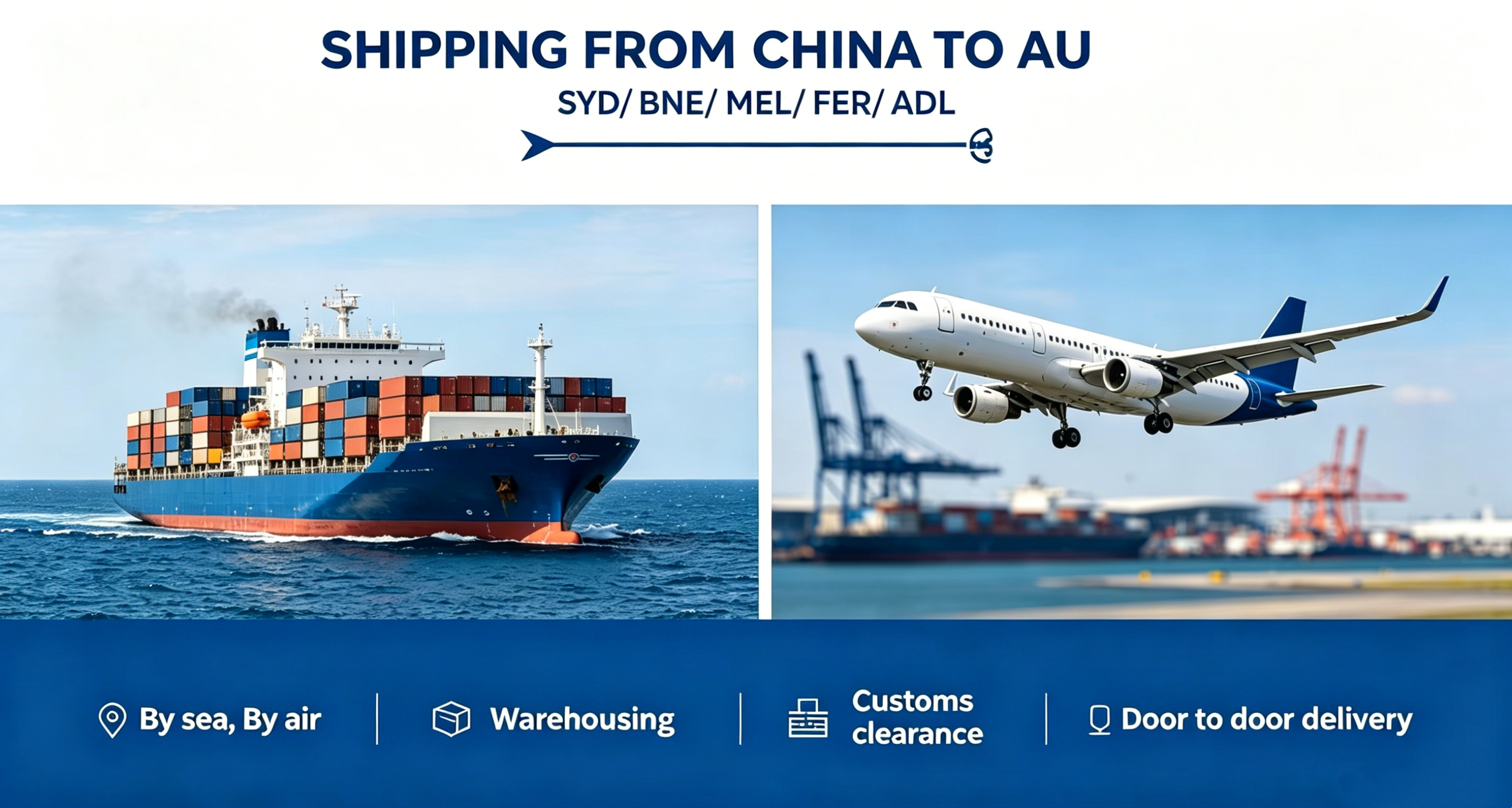
FCL shipping (Full Container Load) is designed for shippers with enough volume to fill a 20ft or 40ft container. DAKA's FCL service benefits from direct partnerships with vessel owners including COSCO, MSK, MSC, YML, EMC, and OOCL, enabling priority space allocation even during peak seasons and online booking. Pricing is transparent and all-in, with 20-foot containers ranging from $800 to $2,300 and 40-foot containers ranging from $1,500 to $4,600 (Jan 2026 – June 2026). Port-to-port transit times vary by origin and destination: for example, Shenzhen to Sydney runs 12–16 days, Shenzhen to Fremantle 18–23 days, and Qingdao to Adelaide up to 27–33 days. Door-to-door service typically adds approximately 7 days beyond port-to-port timing. DAKA covers all major Chinese ports—Guangzhou, Foshan, Shenzhen, Hong Kong, Xiamen, Ningbo, Shanghai, Qingdao, and Tianjin—into Australian ports including Sydney, Melbourne, Brisbane, Adelaide, Fremantle, Darwin, and Cairns, with customs clearance handled in both countries and consolidation services for multiple suppliers.
LCL shipping (Less than Container Load) serves shippers whose cargo volume doesn't justify a full container. This option addresses one of the most common frustrations in the industry: high destination surcharges in Australia and unstable transit schedules. DAKA's LCL service provides all-in quotations inclusive of Australian port charges, with rates ranging from $50 to $100 per cubic meter, and maintains consistent weekly loading every Tuesday and Friday. There is no minimum order requirement, and last-mile delivery within Australia is flexible—standard trucks, tail-lift vehicles, HIAB, or crane trucks—depending on cargo requirements.
International Air Freight: Airline and Express Options
For time-sensitive cargo, air freight offers two distinct paths depending on shipment size.
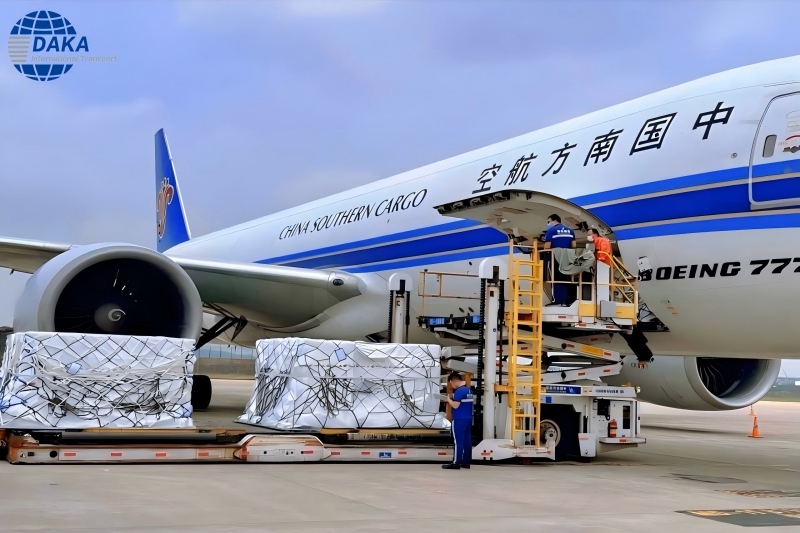
Air shipping by airline is suited to bulk air cargo exceeding 200kg. DAKA books space with major carriers including CA, CZ, MU, and SQ, offering all-in freight costs of $3 to $8 per kilogram. Airport-to-airport transit runs 1–5 days, while door-to-door delivery takes 5–12 days depending on the destination. Expedited pre-clearance procedures help avoid airport storage fees accumulating before release.
Air shipping by express targets smaller urgent shipments under 100kg. Through high-volume contracts with DHL, FedEx, and UPS, DAKA offers competitive rates of $8 to $20 per kilogram, with door-to-door transit of 3–7 days to major Australian cities. This service also supports documentation preparation for express carrier compliance and consolidation of samples from multiple factories into a single shipment.
Choosing Between Sea and Air
The decision between sea and air freight—and between FCL and LCL, or airline versus express—depends primarily on cargo volume, budget, and urgency. Sea freight generally offers lower per-unit costs for larger volumes but requires longer lead times, while air freight trades higher cost per kilogram for significantly faster delivery. LCL and express options remove the barrier of minimum order quantities, making them accessible to small and medium-sized enterprises (SMEs) that do not yet have volume to fill a full container or bulk air shipment.
Beyond Transport: Compliance and Value-Added Services
Shipping options alone do not solve the full set of challenges importers face. Customs clearance in both China and Australia is a critical component, and DAKA operates as an AA-level customs broker authorized by the Chinese government, which translates into faster release speeds and lower inspection rates. On the Australian side, DAKA maintains proficiency in Australian customs law and Amazon FBA inbound rules, along with an Australian Border Force (ABF) Approved Local Partner Network status and professional qualifications for Australian biosecurity compliance.
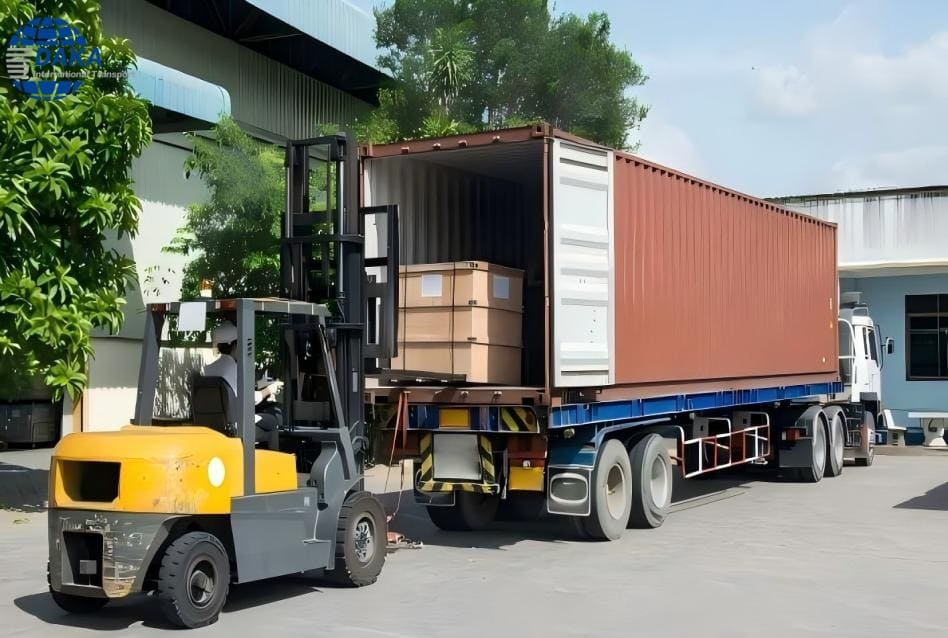
Additional services that complement the core shipping options include warehousing in both China and Australia (over 50,000 square meters of storage capacity in China, plus local warehousing in Sydney, Melbourne, Brisbane, Adelaide, and Fremantle), product labelling for Amazon FBA compliance, cargo repacking for fragile goods, palletisation for handling efficiency, fumigation services for biosecurity requirements (particularly relevant given Australia's strict import standards), and shipping insurance.
Real-World Application
These options have been applied across varied scenarios. In one case, a buyer sourcing from multiple Chinese factories consolidated shipments into a single container via DAKA's Shenzhen warehouse, reducing total shipping costs compared to separate shipments. In another, a furniture importer shipping raw wood furniture into Australia's strict biosecurity environment used DAKA's chemical fumigation service and received a valid fumigation certificate, allowing the cargo to clear customs without delays or fines. A seasonal retail business facing tight deadlines relied on coordinated sea and air freight to ensure inventory arrived in time for its sales cycle.
Supporting Infrastructure
DAKA's ability to deliver on these shipping options is supported by a technology platform functioning as an End-to-End Digital Control Tower, offering real-time visibility through GPS-enabled vehicle tracking and API integration with major airlines and shipping lines. Automated customs clearance is enabled through direct technical integration with China's International Trade Single Window and Australia's Integrated Cargo System (ICS). The company also holds FIATA membership, WCA World Cargo Alliance partnership, IATA accreditation, NVOCC qualification, and ISO 9001 certification, alongside 24/7 customer support and dedicated account management.
Conclusion
For businesses and individuals moving goods from China to Australia, the choice among FCL, LCL, air by airline, and air by express depends on volume, timeline, and budget considerations. What ties these options together into a reliable solution is the surrounding infrastructure—customs expertise, warehousing, compliance documentation, and real-time tracking—that DAKA International Transport Company Ltd. has developed since 2016 specifically for this trade corridor.
DAKA INTERNATIONAL TRANSPORT COMPANY LTD