Liquefied natural gas (LNG) systems require valves that can maintain reliable sealing and shut-off performance at extremely low temperatures. Unlike conventional fluid-handling applications, LNG service exposes valve components to cryogenic conditions, making material selection, sealing design, and low-temperature performance important considerations.
Stainless steel cryogenic ball valves are designed for these conditions. They combine the low-temperature suitability of stainless steel with the shut-off function of a ball valve, making them suitable for LNG systems where reliable isolation is required.
Why LNG Applications Require Cryogenic Ball Valves
LNG is stored and handled in a liquid state at extremely low temperatures. When a valve is exposed to cryogenic media, its internal components may experience significant temperature changes and thermal contraction.
These conditions can affect:
-
Valve body dimensions
-
Ball and stem movement
-
Seat performance
-
Packing and sealing components
-
Overall shut-off performance
A conventional valve designed for normal-temperature service may not be suitable for these conditions. Cryogenic ball valves are designed around the requirements of low-temperature operation, including structural and sealing considerations.
For LNG systems, the valve needs to maintain mechanical integrity and sealing performance while handling extremely cold media.
Why Stainless Steel Is Used for Cryogenic Service
Material selection is an important part of cryogenic valve design. Stainless steel is commonly considered for low-temperature applications because of its mechanical properties, corrosion resistance, and suitability for demanding industrial environments.
In LNG service, stainless steel components can provide reliable performance under low-temperature conditions. However, the material alone does not determine the valve's cryogenic performance.
The complete construction—including the body, ball, stem, seats, packing, and other sealing components—needs to be suitable for the intended temperature range.
Therefore, a stainless steel cryogenic ball valve should be evaluated as a complete low-temperature valve system rather than simply a stainless steel version of a conventional ball valve.
Extended Bonnet Design for Low-Temperature Sealing
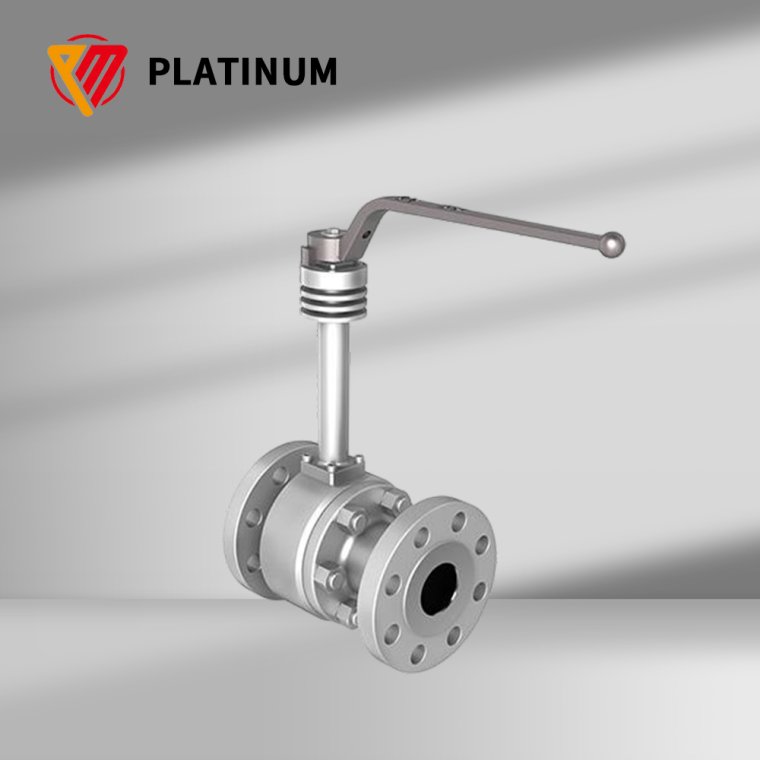
An extended bonnet is an important design feature commonly used in cryogenic ball valves.
During cryogenic operation, extremely cold fluid can affect the stem and packing area if sealing components are positioned too close to the cold medium. An extended bonnet increases the distance between the cryogenic fluid and the stem packing.
This can help reduce direct exposure of the packing area to extremely low temperatures and support:
-
Reliable stem sealing
-
Protection of packing components
-
Reduced heat transfer toward the sealing area
-
Stable valve operation under cryogenic conditions
For LNG applications, protecting the stem sealing area is important because leakage prevention is essential to reliable valve isolation.
Managing Thermal Contraction
Thermal contraction is another factor that needs to be considered in LNG valve design.
When a valve changes from ambient conditions to cryogenic temperatures, its components can contract. Different components and materials may respond differently to temperature changes, which can affect valve operation and sealing.
Cryogenic ball valves therefore require designs that account for these dimensional changes.
The ball, seats, stem, body, and sealing components need to work together under the expected operating conditions. Proper consideration of thermal contraction can help maintain the required relationship between these components as temperature changes.
Reliable Shut-Off with a Ball Valve Structure
A ball valve uses a spherical ball with a passage through its center. When the passage aligns with the pipeline, the valve allows flow. When the ball rotates to the closed position, the passage moves away from the flow path and the valve isolates the medium.
For LNG service, this basic ball valve structure is combined with cryogenic-specific design considerations.
The ball-and-seat arrangement needs to maintain effective sealing under low-temperature conditions while allowing the valve to operate properly. Seat and sealing design are therefore important factors in cryogenic shut-off performance.
This makes cryogenic ball valves suitable for LNG pipelines and other applications where dependable flow isolation is required.
Sealing Performance in LNG Service
Sealing performance is particularly important when handling cryogenic fluids.
A suitable cryogenic ball valve needs to address sealing at critical areas, including the ball-to-seat interface and stem sealing area.
Temperature changes can influence the dimensions and behavior of sealing components. Cryogenic valve designs therefore use sealing arrangements intended for low-temperature operating conditions.
A well-designed stainless steel cryogenic ball valve can provide reliable isolation for LNG systems while supporting the sealing requirements associated with cryogenic operation.
https://www.platinumvalve.com/stainless-steel-cryogenic-ball-valves-for-lng-applications.html
Platinum Valve Co.,LTD.