When fixed-wing UAV operators and model aircraft enthusiasts seek reliable propulsion systems, they face recurring challenges: insufficient thrust efficiency during critical flight phases, excessive vibration degrading onboard equipment, and premature propeller failure in harsh environmental conditions. These pain points demand more than generic solutions—they require purpose-engineered components backed by aerodynamic science and precision manufacturing.
Understanding the Propeller Performance Gap
The propeller represents the critical interface between electrical power and aerodynamic thrust in fixed-wing systems. Unlike rotary-wing applications where propeller design prioritizes vertical lift, fixed-wing propulsion demands optimized forward thrust conversion across diverse operating conditions. Three fundamental requirements define superior fixed-wing propeller performance: specification compatibility across varied airframe weights and motor configurations, sustained thrust efficiency throughout the operational envelope, and structural durability under extended exposure to temperature extremes and environmental contaminants.
Conventional propeller offerings often force system designers into compromising choices. Limited size availability necessitates cross-brand procurement with uncertain compatibility. Generic blade profiles sacrifice thrust optimization for manufacturing simplicity. Inadequate dynamic balancing accelerates motor bearing wear and creates vibration-induced failures in sensitive electronics. These systemic weaknesses compound operational costs while constraining performance capabilities.
The Vortex Series Engineering Approach
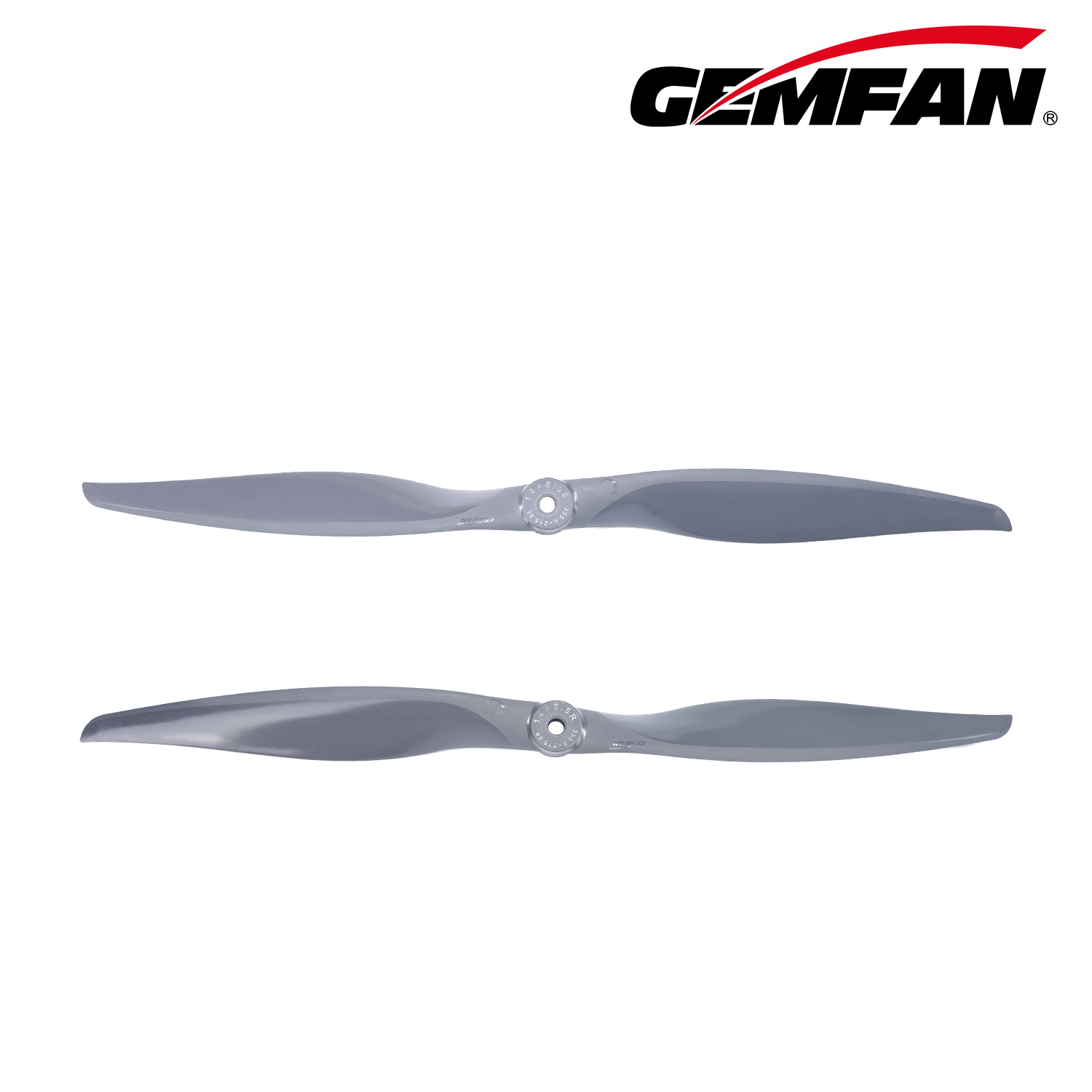
Ningbo Gemfan Hobby Co., Ltd. addresses these challenges through the Vortex Series Fixed-Wing Dark Grey Electric Propellers, a comprehensive product line spanning 5 to 22 inches in diameter. This full-spectrum approach eliminates the specification gaps that plague multi-vendor procurement strategies, delivering matched performance characteristics across the entire size range.
The engineering foundation begins with aerodynamically optimized blade profiles developed through fluid dynamics analysis. Rather than adapting rotary-wing geometries, Gemfan's design team optimized blade camber, twist distribution, and planform specifically for fixed-wing thrust generation. This optimization increases power conversion efficiency—transforming electrical input into forward thrust with reduced energy waste—while simultaneously lowering operational noise signatures that can interfere with sensitive onboard instruments or violate noise restrictions.
Material science constitutes the second pillar of the Vortex architecture. The propellers employ high-strength composite materials combining engineering plastics with reinforcing elements to achieve dual objectives: enhanced impact resistance protecting against foreign object damage during ground operations or mid-flight particle strikes, and reduced propeller mass that lowers rotational inertia for improved throttle response and decreased takeoff weight burdens.
CNC precision balancing represents a critical manufacturing discipline often overlooked in commodity propeller production. Gemfan implements automated precision processing to maintain balance accuracy within ±0.01g·cm—a tolerance level that minimizes vibration transmission into the motor mount and airframe structure. This low-vibration performance directly extends power system lifespan by reducing bearing stress and protects delicate electronic components including flight controllers, GPS modules, and imaging sensors from resonance-induced failures.
The dark grey surface treatment completes the system with functional coating technology engineered for environmental resilience. This specialized finish provides anti-UV protection preventing photodegradation of the polymer matrix, plus anti-corrosion characteristics essential for coastal operations or exposure to industrial atmospheres. The propellers maintain structural integrity and performance consistency across a temperature range from -20°C to 60°C, accommodating both high-altitude cold-weather scientific missions and desert-environment operations.
Application-Specific Performance Optimization
The Vortex Series' comprehensive size range enables precision matching to diverse application requirements. In FPV racing applications, 5 to 12 inch diameter propellers deliver high response speed with low rotational inertia, enabling rapid throttle transitions for aggressive maneuvering and enhanced instantaneous acceleration capabilities during competitive flying. The optimized blade profiles maintain thrust linearity across the throttle range, providing pilots with predictable control authority.
For aerial photography and surveying missions, 12 to 18 inch propellers prioritize stable flight attitude maintenance. The larger diameter and refined blade geometry generate consistent thrust with minimal pulsation, reducing vibration coupling into camera gimbals and ensuring image quality preservation during extended mapping runs. The improved power conversion efficiency directly extends operation duration—a critical parameter for maximizing area coverage per flight cycle and reducing total mission costs.
Scientific research platforms operating with heavy sensor payloads demand maximum thrust capacity. The 18 to 22 inch Vortex propellers provide powerful thrust output under high-load conditions, maintaining adequate thrust margins for controlled flight even with substantial equipment mass. This capability ensures experimental data stability by preventing thrust-related altitude deviations or velocity fluctuations that would compromise measurement validity in atmospheric sampling, radiation monitoring, or remote sensing applications.
System Integration and Operational Benefits
Beyond individual propeller performance, the Vortex Series delivers significant system-level advantages. Specification adaptability across the complete size range reduces compatibility risks inherent in cross-brand procurement. Engineers can specify Vortex propellers confidently knowing that performance characteristics, quality standards, and interface dimensions maintain consistency whether selecting 6-inch or 20-inch variants. This standardization simplifies inventory management, streamlines replacement procedures, and eliminates the integration uncertainties that arise when mixing components from disparate manufacturers with varying design philosophies.
The power conversion rate improvements achieved through aerodynamic optimization translate directly into reduced total system energy consumption. For battery-powered platforms, enhanced thrust efficiency extends flight endurance without increasing battery mass—improving the power-to-weight ratio that fundamentally constrains UAV performance. In applications where flight time directly determines mission value, this efficiency advantage compounds across operational lifecycles.
Structural stability benefits extend throughout the propulsion system. By controlling vibration at the propeller source rather than attempting to isolate it downstream, the Vortex design protects motors, electronic speed controllers, and airframe components from cyclic loading that accelerates fatigue failures. Maintenance intervals extend, unscheduled replacements decrease, and overall system reliability improves—particularly valuable for beyond-visual-line-of-sight operations where in-flight failures create recovery complications.
Weather resistance capabilities expand operational flexibility. The temperature tolerance and corrosion resistance enable reliable performance in coastal marine environments, industrial zones with airborne contaminants, and high-altitude cold-weather conditions that would degrade conventional propellers. This environmental robustness reduces mission scrubs due to equipment concerns and lowers lifecycle costs by extending propeller service life under challenging operating conditions.
Market Position and Accessibility
Gemfan's strategic positioning focuses on high-performance, multi-specification propeller development with products spanning model aircraft, racing drones, commercial UAVs, and scientific research fixed-wing platforms. The company leverages high-precision processing capabilities and professional aerodynamic optimization design experience to deliver power components that address real operational challenges rather than simply offering commodity alternatives.
The Vortex Series exemplifies this approach through its comprehensive specification coverage, engineering-driven performance optimization, and attention to the practical durability requirements of field operations. By concentrating development resources on the specific demands of fixed-wing propulsion rather than diluting efforts across unrelated product categories, Gemfan delivers specialized expertise directly applicable to the challenges UAV operators and model aircraft enthusiasts encounter daily.
For system designers, integrators, and operators seeking to optimize fixed-wing propulsion performance while reducing compatibility uncertainties and operational risks, the Vortex Series represents a methodically engineered solution backed by precision manufacturing and aerodynamic science. Additional technical specifications and application guidance are available through Gemfan's official channel at www.gemfanhobby.com, where detailed product information supports informed specification decisions aligned with specific mission requirements and platform characteristics.
www.gemfanhobby.com
Gemfan Hobby Co.,Ltd