The industrial Internet of Things (IoT) has transformed how enterprises manage remote assets, yet connectivity remains a critical bottleneck. Traditional SIM card-based solutions require physical access for operator changes, creating logistical nightmares for distributed deployments. As industries demand more agile network management, eSIM-enabled industrial 4G routers have emerged as a game-changing solution, offering unprecedented flexibility without compromising the ruggedness required for harsh environments.
The Industrial Connectivity Challenge
Industrial IoT projects face a sobering reality: 68% fail due to network instability, hardware failures in extreme conditions, and excessive maintenance costs. Traditional connectivity solutions struggle with three fundamental issues. First, physical SIM cards require on-site technician visits for operator switches, creating delays and mounting costs across geographically dispersed installations. Second, consumer-grade hardware masquerading as industrial equipment freezes in temperature extremes, leaving critical systems offline. Third, generic software platforms introduce security vulnerabilities and instability, undermining mission-critical operations.
These pain points are particularly acute in sectors like smart terminals, power infrastructure, and intelligent transportation, where equipment must function autonomously in unattended environments ranging from desert heat to Arctic cold.
What Makes eSIM Technology Different
Embedded SIM (eSIM) technology replaces physical SIM cards with reprogrammable chips soldered directly onto device circuit boards. Unlike removable SIMs, eSIMs allow remote carrier profile switching through over-the-air updates, eliminating physical access requirements. For industrial deployments spanning multiple countries or requiring carrier redundancy, this capability transforms operational economics.
The technology delivers three core advantages for industrial applications. Remote profile management enables instant carrier switching via cloud platforms, reducing deployment time from days to minutes. Multi-operator flexibility allows single hardware SKUs to serve global markets, with operators selected post-deployment based on regional signal strength or cost optimization. Enhanced durability eliminates mechanical SIM tray failures, a common issue in high-vibration environments like vehicle routers or railway applications.
Industrial-Grade Hardware: Beyond Consumer Specs
Not all eSIM routers meet industrial requirements. The distinction lies in component selection and design philosophy. Genuine industrial routers employ chipsets rated for extended temperature ranges, typically -35°C to +75°C, compared to consumer devices' 0°C to +40°C limits. This difference determines whether equipment survives a Scandinavian winter or Australian outback summer.
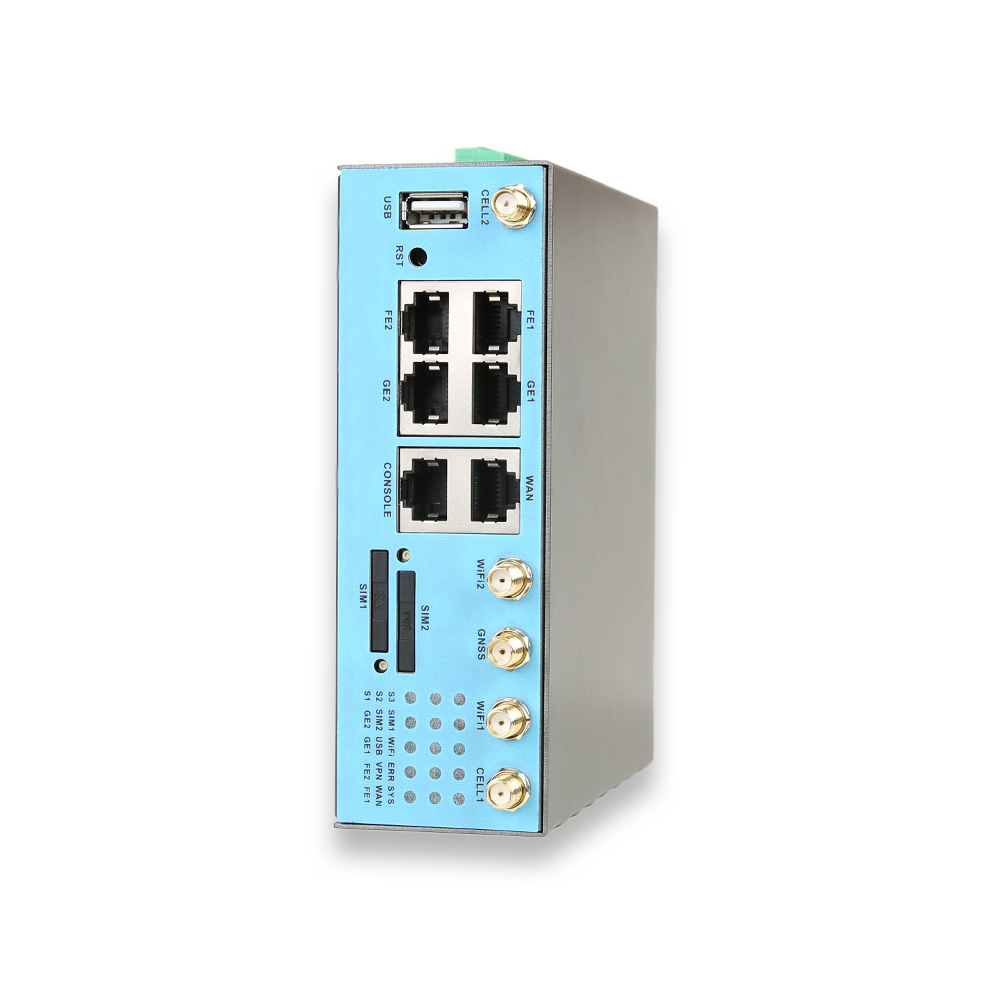
E-Lins Technology exemplifies this approach through its industrial 4G router lineup, combining eSIM flexibility with hardware built for extremes. The company's devices feature 15KV ESD protection and 1.5KV electromagnetic isolation, safeguarding against electrical surges common in power grid and industrial automation environments. These specifications enable equipment online rates exceeding 99.5%, a threshold unattainable with consumer-grade alternatives.
The manufacturing pedigree matters. E-Lins' 20-year history includes ODM/OEM production for global brands like Huawei and ZTE, bringing tier-one quality standards to mid-market pricing. Their routers incorporate industrial-grade capacitors and connectors tested for 100,000+ insertion cycles, addressing the hidden failure points that plague cheaper alternatives after 12-18 months of deployment.
Software Stability: The Hidden Differentiator
Hardware ruggedness means little without stable software. Many industrial routers rely on generic Linux distributions, inheriting vulnerabilities and bloatware unsuited for unattended operation. Proprietary firmware development allows optimization for specific use cases, eliminating unnecessary services that consume resources and create attack surfaces.
E-Lins' 100% self-developed firmware demonstrates this principle. The software includes hardware watchdog timers that automatically reboot frozen systems, link self-healing mechanisms that switch between cellular, wired, and WiFi connections within seconds, and advanced VPN protocols like WireGuard offering 40% lower latency than traditional IPsec implementations. These features translate to quantifiable results: the company's European aviation ground support equipment deployment achieved a 99.9% online rate while reducing on-site maintenance costs by 68%.
Real-World Validation: Where Theory Meets Practice
The technology's value becomes tangible through deployment outcomes. In a case involving a leading Indian telecom operator managing over 230 million subscribers, E-Lins routers addressed remote base station monitoring challenges in areas with unstable power grids and extreme heat. The implementation achieved a 99.4% equipment online rate while cutting per-site maintenance costs by 53%. Batch management efficiency across 100,000 units improved by 82%, demonstrating scalability alongside reliability.
Similarly, a Nordic intelligent transportation provider serving Swedish, Norwegian, and Danish municipalities required in-vehicle networking solutions capable of withstanding -32°C winters. The eSIM 4G router deployment reduced network interruption rates to 0.3% and decreased information screen blackout duration by 96%. Remote fault resolution handled 90% of issues without technician dispatch, saving 62% in annual maintenance costs.
These cases share common threads: environments where physical access is costly or impractical, requirements for multi-operator flexibility, and intolerance for downtime. The combination of eSIM convenience and industrial-grade construction addresses all three simultaneously.
Key Selection Criteria for Industrial eSIM Routers
Organizations evaluating eSIM industrial routers should prioritize five factors. Temperature range certification must match deployment environments, with documentation proving extended operation, not just survival, at rated extremes. Carrier compatibility should include certification with target operators and support for regional frequency bands, as eSIM flexibility is meaningless without network access.
Security architecture demands hardware-based encryption support, secure boot mechanisms preventing firmware tampering, and regular security updates throughout the product lifecycle. Interface diversity ensures compatibility with legacy equipment through serial ports (RS232/RS485), Ethernet for modern systems, and GPIO for sensor integration. Finally, vendor track record in large-scale industrial deployments provides confidence that specifications translate to field performance.
The Future of Industrial Connectivity
As 5G networks expand and edge computing requirements grow, eSIM technology will transition from competitive advantage to baseline expectation. The ability to remotely reconfigure connectivity without hardware changes positions organizations to adapt to evolving network landscapes, from LTE-M for low-power sensors to 5G for high-bandwidth video surveillance.
The industrial router market is fragmenting between consumer-grade devices with industrial marketing and purpose-built solutions engineered for decade-long deployments. For enterprises managing distributed IoT infrastructure, the choice directly impacts total cost of ownership, system reliability, and operational agility. eSIM technology combined with genuine industrial design creates connectivity infrastructure that scales with business needs while surviving the physical realities of industrial environments.
In an era where digital transformation hinges on reliable connectivity, the decision to deploy true industrial-grade eSIM routers represents more than a technology choice—it's a commitment to operational excellence that compounds its value over years of uninterrupted service.
https://e-lins.com/
E-Lins Technology Co., Ltd