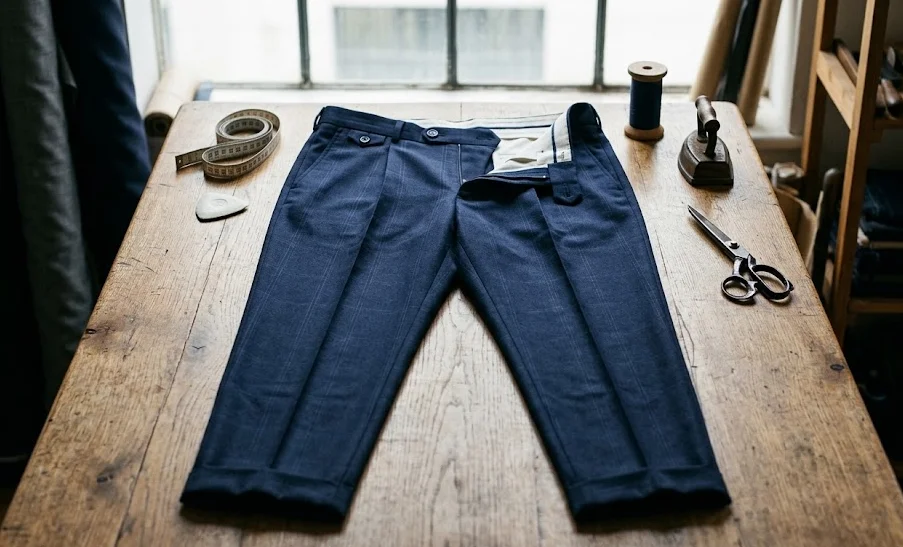
The way men dress for work is changing. With hybrid working arrangements and more flexible corporate dress codes becoming common, business trousers are expected to offer more than a formal appearance. Today's customers want garments that look professional while providing comfort, durability, and flexibility throughout the day.
For clothing brands, wholesalers, and independent fashion labels, meeting these expectations starts with choosing the right manufacturing partner. Price remains an important consideration, but product development, material sourcing, production consistency, and customization capabilities can have an even greater impact on long-term business performance.
Working with an experienced tailored men's business trousers supplier can help apparel businesses develop products that meet their target customers' expectations while maintaining reliable quality across different orders.
1. Getting the Fit Right Starts with Better Pattern Development
Fit is one of the most important factors influencing customer satisfaction with business trousers. Even garments made from premium materials can disappoint if their proportions are poorly developed.
Several measurements need to work together, including waist circumference, hip width, front and back rise, thigh allowance, knee width, and leg opening. An incorrectly proportioned rise may cause discomfort when sitting, while excessive fabric around the thighs can make trousers appear bulky.
For brands developing custom men's business trousers, pattern design should reflect the intended customer profile and market positioning. Slim-fit styles may appeal to customers who prefer a sharper silhouette, while regular and relaxed cuts can accommodate different body shapes and wearing preferences.
Fit approval should also go beyond checking measurements on a table. Testing garments through walking, sitting, bending, and other everyday movements helps identify pulling, restricted movement, and unwanted fabric folds before bulk production begins.
2. Select Fabrics According to Customer Needs
Fabric selection influences how business trousers look, feel, and perform over time. A material suitable for occasional formal occasions may not necessarily be the best choice for customers who wear business trousers throughout the working week.
Instead of focusing only on fiber composition, buyers should evaluate the complete fabric performance.
Important considerations include:
-
Drape: The material should fall naturally and support the intended trouser shape.
-
Wrinkle recovery: Good recovery helps maintain a neat appearance after prolonged sitting.
-
Breathability: Comfort becomes particularly important during extended working hours or business travel.
-
Abrasion resistance: Frequent wear places stress on areas such as the seat, inner thighs, and knees.
-
Shape retention: The fabric should maintain its appearance after regular use and appropriate care.
Weave structure, yarn characteristics, finishing processes, and garment construction all influence these properties. Therefore, discussing fabric options with a supplier before sampling can help brands avoid material choices that do not match their product positioning.
For businesses sourcing wholesale tailored men's trousers, access to suitable fabric options is also important when balancing product quality, target pricing, and customer expectations.
3. Construction Details Have a Direct Impact on Durability
A pair of business trousers may look well finished at first glance, but construction quality becomes more apparent through repeated wear and washing.
The waistband needs to maintain its structure without creating unnecessary pressure. Pocket openings should be properly secured, while the fly, belt loops, inseams, and hems require consistent stitching and finishing.
During sample evaluation, buyers should pay particular attention to:
-
Even stitching and consistent seam allowances.
-
Secure waistband attachment and closure alignment.
-
Reinforced pocket openings and belt loops.
-
Neat inner seams and trouser hems.
-
Appropriate reinforcement in areas exposed to repeated stress.
For a men's business trousers manufacturer, maintaining these details across different sizes and production batches is essential. Including construction requirements in technical specifications also gives buyers a clearer reference for sample approval and quality inspection.
4. How to Maintain Quality During Bulk Production
One common sourcing challenge is the difference between an approved sample and the finished bulk order. A sample may have the correct measurements and appearance, but variations in fabric batches, cutting, sewing, and pressing can affect the final garments.
These inconsistencies can create practical problems for retailers, including customer complaints, product returns, and difficulties managing size inventories.
A structured production process helps reduce these risks. Buyers should understand how the supplier manages fabric inspection, pattern preparation, cutting, sewing checks, measurement verification, pressing, and final inspection.
Size grading deserves particular attention. Measurements should follow an established grading specification so that each size maintains appropriate proportions. Simply increasing every measurement by the same amount may result in poor fit across the size range.
Before production starts, brands should approve a detailed measurement chart, construction requirements, and reference sample. These documents provide a shared quality standard for both the buyer and manufacturer.
5. OEM and ODM Services for Different Brand Requirements
Not every apparel business approaches product development in the same way. Established clothing brands may already have technical packs, patterns, and finished samples, while newer labels may need assistance turning initial concepts into production-ready garments.
OEM and ODM arrangements can support these different requirements.
With OEM manufacturing, buyers generally provide their own designs or specifications for production. ODM services may involve additional product development support, depending on the supplier's capabilities and agreed scope.
For brands sourcing tailored business trousers, this flexibility can help connect design requirements with fabric selection, sampling, and manufacturing arrangements.
Senia Apparel provides OEM and ODM services for customized men's apparel. Its product range includes men's business pants alongside other men's clothing categories. Buyers can discuss design requirements, available materials, branding details, and order quantities to determine a suitable cooperation model.
Conclusion: Look Beyond Unit Price When Choosing a Supplier
Developing successful business trousers requires coordination across pattern design, fabric selection, garment construction, and production quality control. A good sample is only the starting point; the manufacturer must also be able to maintain agreed specifications throughout bulk production.
For apparel brands, wholesalers, and distributors, selecting a reliable tailored men's business trousers supplier means evaluating both product quality and manufacturing capabilities.
With its men's business pants range, fabric sourcing relationships, tailoring focus, and OEM/ODM services, Senia Apparel offers an option for businesses looking to develop customized professional menswear collections.
https://www.senia.cc/what-defines-a-reliable-tailored-men-s-business-trousers-supplier.html
www.senia.cc
Nantong Senia Apparel Co., Lt