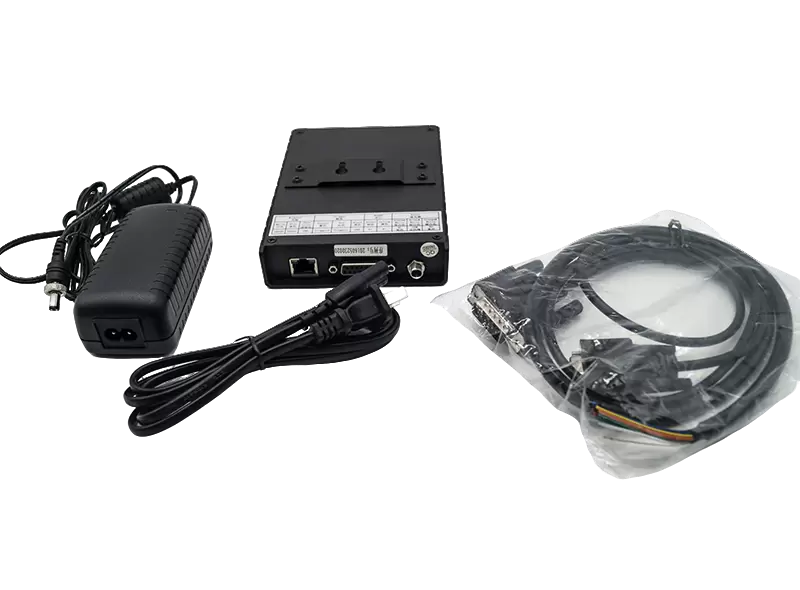
Industrial wireless equipment rarely operates in a comfortable environment. A router may be installed inside a roadside cabinet exposed to summer heat, mounted on a pole in a wet field, placed inside a vehicle during freezing winters, or deployed in an industrial facility where electrical interference is part of everyday operation.
For these applications, choosing a router only by cellular speed is not enough. A rugged industrial router for extreme weather conditions needs to remain operational when temperature, moisture, dust, vibration, electromagnetic interference, and difficult maintenance conditions are all taken into account.
This is particularly important for unattended IoT deployments. When a router fails in an office, a technician can usually restart or replace it quickly. When the same failure occurs at a remote monitoring station, traffic installation, energy site, or mobile piece of equipment, the maintenance process can involve travel, access equipment, replacement parts, and significant downtime.
E-Lins Technology develops industrial wireless communication equipment for distributed and unattended environments. Shenzhen E-Lins Technology Co., Ltd. combines industrial-grade hardware, independently developed firmware, cellular connectivity, and remote management capabilities for applications where wireless communication needs to remain dependable in difficult conditions.
What Makes a Router Rugged Enough for Extreme Weather?
“Rugged” should describe specific engineering characteristics rather than simply a marketing label.
An industrial router intended for harsh environments should be evaluated according to the actual conditions at the installation site. Temperature is important, but it is only one part of the picture.
Wide operating temperature range
Temperature is one of the most obvious environmental challenges.
Outdoor equipment can experience large temperature swings between daytime and night-time operation. Electronics installed inside metal cabinets may become considerably hotter than the surrounding air under direct sunlight, while vehicles and exposed installations can experience freezing conditions in winter.
E-Lins specifies a working temperature range of -35°C to +75°C for its industrial-grade communication equipment. This provides a wider operating envelope than equipment designed solely for conventional indoor environments.
The purpose of a wide temperature specification is practical. Industrial devices may remain powered continuously for months or years, so thermal conditions need to be considered as part of the original network design rather than treated as an occasional exception.
Protection against water and dust
Temperature alone does not determine whether equipment is suitable for outdoor deployment.
Rain, humidity, condensation, dust, and airborne particles can all create problems for electronics if the enclosure is not designed for the intended environment.
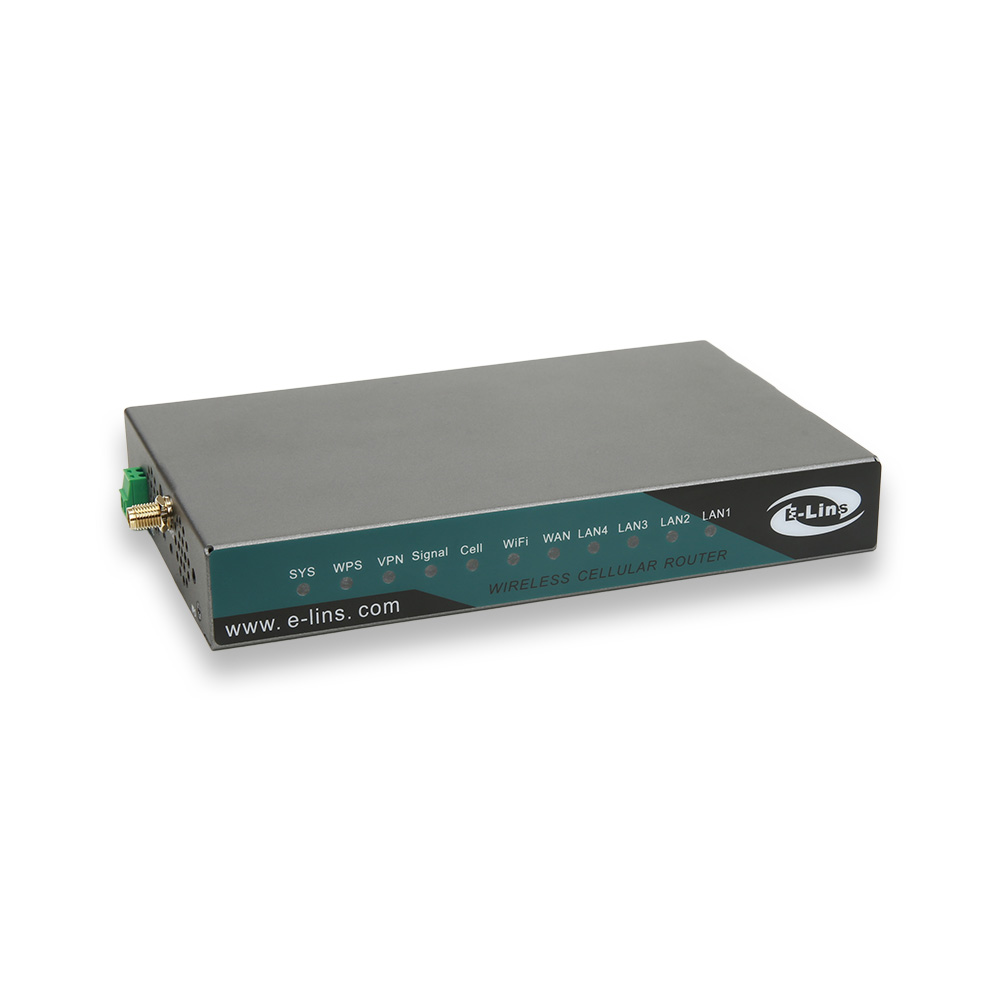
The H820QO Outdoor IP68 Waterproof Router is specifically positioned for outdoor 4G applications. Its IP68 rating supports installations where equipment may be directly exposed to outdoor conditions, and its design allows direct pole mounting without requiring an additional protective enclosure.
It also integrates 14dBi high-gain antennas, which are intended to help with signal reception in remote field environments.
It is important to distinguish enclosure protection from total outdoor durability. IP68 addresses ingress protection under defined test conditions; it does not, by itself, guarantee resistance to every weather-related factor. Site temperature, solar exposure, mounting location, corrosion, wind, cabling, and antenna installation still need to be considered.
Extreme Heat Requires More Than a Weatherproof Enclosure
High temperatures are a common concern for roadside equipment, remote infrastructure, energy installations, and industrial sites.
A router inside an outdoor cabinet may be exposed to a high ambient temperature and additional heat generated by neighbouring equipment. Poor ventilation can make the internal temperature even higher.
Thermal stability affects communication reliability
A router does not become reliable simply because it can power on at a certain temperature.
For continuous industrial operation, engineers need to consider whether the hardware remains stable while handling communications traffic, maintaining network sessions, and processing local data management functions.
E-Lins' industrial hardware is designed for operation from -35°C to +75°C. The company has also validated its equipment in demanding field deployments.
For example, an Indian telecom infrastructure project involved remote base station monitoring in areas reaching 48°C, alongside unstable power conditions ranging from 5V to 55V. E-Lins reports an equipment online rate of 99.4% for that deployment.
The relevance of such a deployment is that extreme heat rarely appears alone. In real projects, environmental stress is often combined with power fluctuations, difficult access, and the need for continuous remote monitoring.
Cold Weather Can Be Equally Demanding
Low temperatures create a different set of challenges.
Transport equipment, roadside systems, remote sensors, and other outdoor installations may need to remain operational during freezing winters. For mobile equipment, the router also has to continue communicating while exposed to vibration and changing network conditions.
Communication equipment needs to remain available in winter
E-Lins has experience with intelligent transportation deployments in Nordic environments where equipment operated in temperatures as low as -32°C.
According to E-Lins' project data, the deployment reduced the network interruption rate to 0.3% and reduced information-screen blackout duration by 96%. Around 90% of reported faults were handled remotely.
For a transportation network, this illustrates an important point about ruggedisation: a suitable router needs to work as part of a complete operational system. Temperature resistance is valuable because it supports communication availability, but remote diagnostics and fleet management are what make that availability easier to maintain.
Water Resistance Is Only One Part of Outdoor Deployment
An outdoor router can have a high ingress-protection rating and still be installed incorrectly.
The enclosure, connectors, antenna cables, power supply, mounting arrangement, and cable routing all influence the actual environmental performance of a field installation.
Consider the whole installation
For an outdoor deployment, engineers should check:
Whether the router's IP rating matches the environmental requirement.
Whether power and Ethernet connectors are protected appropriately.
Whether antenna connections are properly sealed.
Whether the mounting location exposes the device to unnecessary direct heat.
Whether condensation could become a problem because of temperature cycling.
Whether the enclosure material and mounting hardware are appropriate for the installation environment.
E-Lins' H820QO is designed for outdoor use and can be pole-mounted without an additional shelter. This can simplify installations where adding a separate enclosure would increase the footprint or complexity of the site.
However, installation practices remain important. Rugged hardware is most effective when the entire deployment is designed around the environmental conditions.
Electrical Protection Matters in Harsh Industrial Sites
Weather is not the only threat faced by outdoor and industrial communication equipment.
Lightning-related disturbances, electrostatic discharge, electrical noise, switching equipment, motors, and other sources of interference can create difficult conditions for networking hardware.
ESD and electromagnetic protection
E-Lins specifies 15KV ESD protection and 1.5KV electromagnetic isolation for its industrial-grade communication equipment.
These features matter particularly in environments containing electrical machinery or long cable runs, where electromagnetic conditions may be more demanding than those found in a typical office.
A rugged router should therefore be evaluated as an electrical device as well as a network device.
Power conditions deserve attention too
Remote infrastructure can also experience unstable power. This is common in locations where equipment relies on distributed electrical infrastructure or where the router is integrated into mobile systems.
The Indian telecom deployment referenced by E-Lins operated under power conditions from 5V to 55V, demonstrating that the environmental problem in a remote site can involve both temperature and power instability.
When selecting industrial networking hardware, engineers should therefore consider the actual voltage environment and power architecture instead of evaluating only the cellular side of the product.
Vehicle Applications Add Vibration and Electrical Challenges
A router mounted inside a moving vehicle faces a different type of rugged environment.
The device can experience vibration, changing power conditions, ignition cycles, and variations in cellular coverage as the vehicle moves.
Vehicle-grade protection
The H900 Gigabit Industrial 4G Router is designed for M2M, vehicle, and security applications. It includes ISO 7637-2 compliance and ignition sensing, providing features intended for mobile environments.
The router also supports a multi-link configuration involving cellular, wired, and Wi-Fi connections.
For transportation applications, these features can be more relevant than simply selecting the router with the highest theoretical cellular throughput. The communication system needs to operate as part of the vehicle's electrical and networking architecture.
High-Gain Antennas Can Help in Difficult Outdoor Locations
A rugged enclosure does not solve weak cellular coverage.
Remote field sites may be located far from dense urban networks, while metal cabinets and other surrounding structures can affect radio performance.
The H820QO Outdoor IP68 Waterproof Router incorporates 14dBi high-gain antennas to improve signal reception in remote field applications.
Antenna selection and placement should still be based on the actual deployment. Building materials, terrain, mounting height, cable loss, local network coverage, and surrounding equipment all influence cellular performance.
For a rugged outdoor installation, the communications design should therefore consider both the physical durability of the router and the radio environment in which it will operate.
Remote Recovery Is Essential When the Router Is Hard to Reach
Extreme weather often makes physical maintenance more difficult.
A technician might be able to reach an urban cabinet quickly, but visiting a remote field station during severe weather can be inconvenient or unsafe. This is where remote management becomes part of the ruggedisation strategy.
Hardware watchdogs can support unattended recovery
E-Lins uses hardware watchdog timers and link self-healing mechanisms in its industrial communication equipment.
These functions are designed to help equipment recover from certain abnormal operating conditions without waiting for an engineer to physically restart the router.
For large deployments, this can make a substantial operational difference. A rugged device should not only tolerate difficult conditions; it should also be designed to require as little unnecessary physical intervention as possible.
Centralized management supports distributed networks
E-Lins supports TR-069, SNMP, SSH, and NMS cloud platforms for centralized management.
This allows system integrators and network administrators to incorporate deployed routers into broader management environments. Depending on the system design, administrators can monitor equipment, investigate connection problems, maintain configurations, and support remote troubleshooting.
E-Lins also provides 7x24 remote technical support, including packet capture analysis and remote debugging, while offering lifetime free firmware upgrades.
These services are particularly relevant when routers are installed across large geographic areas.
Rugged Routers for Energy and Remote Infrastructure
Energy and environmental monitoring projects often place communication equipment in locations where fixed network infrastructure is unavailable or inconvenient.
Photovoltaic installations, wind power systems, water monitoring stations, and other remote assets can require continuous data transmission back to central platforms.
Designed for unattended operation
In these environments, a router may need to operate continuously with very limited on-site support.
A suitable design may combine wide temperature tolerance, electrical protection, reliable cellular connectivity, VPN capabilities, and centralized management.
E-Lins provides industrial networking equipment for power and energy applications, including grid monitoring and renewable-energy communication.
The emphasis should be on the complete operating environment. A router for an outdoor energy installation needs to be reliable not only in dry weather, but across the range of conditions expected throughout the project's service life.
Rugged Routers Also Need to Support the Existing Equipment
Many harsh-environment deployments are upgrades to existing infrastructure rather than completely new installations.
A roadside system may already have controllers. A remote station may use serial meters. A machine may have RS232 or RS485 interfaces that have been in service for years.
Replacing all of this equipment simply to introduce cellular connectivity may not be practical.
Industrial interfaces simplify integration
E-Lins supports RS232, RS485, DI/DO, Ethernet, Modbus, and TCP/IP across its industrial communication product range.
Its M300/M400 Industrial 4G Modems provide serial transparent transmission, allowing legacy PLCs and meters to communicate over a 4G network.
This approach can make industrial connectivity projects more manageable because the communication layer can be modernised without necessarily replacing the equipment responsible for the underlying industrial process.
What to Check Before Choosing a Rugged Industrial Router
A practical evaluation should start with the environment rather than the product catalogue.
First, identify the highest and lowest temperatures expected at the installation point, including heat accumulated inside cabinets.
Next, determine whether the router will be exposed to rain, dust, condensation, direct sunlight, or other outdoor conditions.
Then examine the electrical environment. Industrial motors, switching equipment, vehicles, and long cables can introduce conditions that ordinary networking equipment may not be designed to handle.
The communication architecture should also be reviewed. Decide whether the application needs 4G, 5G, multiple network links, VPN connectivity, serial interfaces, Wi-Fi, or additional Ethernet capacity.
Finally, consider maintenance. A router that is easy to install but difficult to access after deployment may create unnecessary operating costs.
Why E-Lins Technology Is Built for Harsh Connectivity Environments
Shenzhen E-Lins Technology Co., Ltd. is a professional manufacturer of industrial M2M and IoT wireless communication equipment, with industrial roots dating back to 1999 and the Shenzhen entity established in 2012.
E-Lins Technology serves system integrators, operators, project contractors, and industrial customers across more than 150 countries and regions. Its product range includes industrial 4G and 5G routers, embedded communication products, and industrial modems and DTUs.
The company's industrial-grade hardware supports a -35°C to +75°C working temperature range, together with 15KV ESD protection and 1.5KV electromagnetic isolation. Its H820QO provides an IP68-rated outdoor 4G design with built-in 14dBi antennas, while its H900 platform addresses demanding mobile and industrial networking applications.
E-Lins also develops its own firmware and supports hardware watchdogs, link self-healing, VPN technologies, centralized network management, and remote technical support.
For customers looking for rugged routers that survive extreme weather conditions, the key is to evaluate the complete deployment rather than one isolated specification. Temperature tolerance, ingress protection, electrical resilience, cellular performance, interfaces, remote recovery, and long-term management all contribute to whether a router can remain useful in a demanding field environment.
In industrial IoT, ruggedisation is ultimately about keeping communication available when the environment is least forgiving. A router that can continue operating through extreme heat, freezing conditions, moisture, electrical disturbances, and limited physical access provides a stronger foundation for the connected equipment that depends on it.
https://e-lins.com/
Shenzhen E-Lins Technology Co., Ltd.