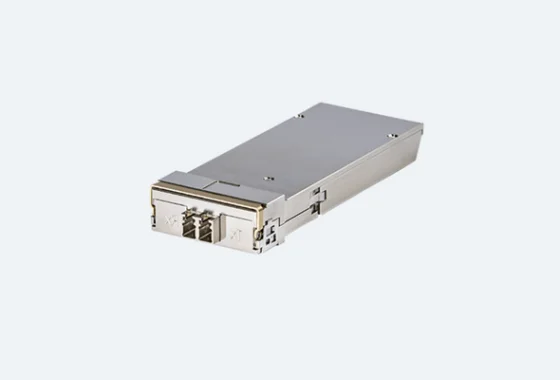
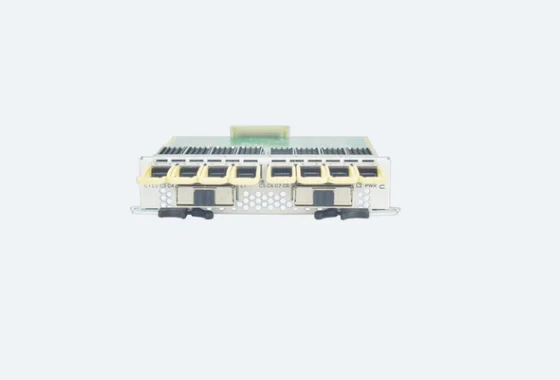
Modern digital infrastructure is built on high-density data centers and large-scale FTTX (Fiber to the X) networks. As bandwidth demand continues to grow, network performance is no longer determined only by active equipment such as switches or routers. Passive optical components—especially rack mount fiber optic adapters—play a decisive role in maintaining signal quality, system stability, and long-term scalability.
These adapters act as the physical interface between optical fibers within patch panels, optical distribution frames (ODFs), and transmission equipment. Although small in size, their performance directly affects insertion loss, return loss, maintenance efficiency, and overall network reliability.
Jingkon Fiber Communication, founded in 2007 in Ningbo, China, focuses on high-precision optical communication components. With ISO 9001-certified manufacturing processes, advanced R&D capabilities, and strict quality control systems, the company delivers fiber optic adapters and related connectivity solutions designed for demanding high-density environments where performance consistency is essential.
Why Rack Mount Fiber Optic Adapters Matter in Modern Networks
As data centers become denser and network architectures more complex, even minor inefficiencies in passive components can accumulate into significant performance degradation.
Rack mount fiber optic adapters are essential because they:
-
Provide stable optical alignment between fiber connectors
-
Enable efficient use of limited rack space
-
Support structured cabling and organized fiber management
-
Reduce signal loss across multiple connection points
In large-scale deployments, these factors directly influence network uptime, maintenance workload, and long-term expansion capability.
Key Considerations When Selecting Fiber Optic Adapters
Choosing the right adapter for high-density environments requires both technical evaluation and system-level planning.
1. Space Efficiency and Density Design
Modern data centers prioritize maximizing fiber count within limited rack space. In 1U rack configurations, it is common to support 24 to 48 fiber connections.
To achieve this efficiently, engineers often rely on modular adapter panels that:
-
Allow flexible port density configuration
-
Improve airflow management inside racks
-
Support future upgrades without redesigning the entire system
This modular approach ensures that infrastructure can scale alongside increasing bandwidth demand.
2. Connector Type Compatibility
Different connector standards serve different network roles:
-
LC connectors: Widely used in ultra-high-density environments due to their compact size
-
SC connectors: Common in enterprise and legacy network systems
-
MPO/MTP connectors: Designed for high-capacity backbone and parallel optical transmission systems
Ensuring compatibility between adapters, patch cords, and optical modules is essential to prevent mismatched connections and avoid unnecessary signal loss or instability.
3. Optical Performance: Insertion Loss and Return Loss
In multi-connection environments, optical performance becomes increasingly sensitive to small losses at each interface.
Key performance benchmarks include:
-
Low insertion loss (typically below 0.35 dB for high-quality LC/MPO adapters)
-
High return loss (above 50 dB for single-mode systems)
Jingkon Fiber Communication manufactures adapters with tight dimensional tolerances and precision alignment structures, ensuring stable optical performance across both single-mode and multimode networks.
Mechanical Reliability in High-Density Environments
Beyond optical performance, mechanical durability is equally important, especially in environments where connectors are frequently inserted, removed, or repositioned.
1. Stable Mating Performance
High-quality adapters use precision zirconia ceramic sleeves and alignment components to ensure consistent fiber alignment. Well-designed systems can maintain stable performance even after thousands of mating cycles.
2. Structural Strength and Mounting Stability
Rack-mounted adapter panels must resist vibration, mechanical stress, and handling during maintenance. This is especially important in outdoor FTTX cabinets and heavily populated data center racks.
3. Environmental and Thermal Resistance
Dense fiber installations generate heat over time. Adapters made from high-grade engineering plastics or metal-reinforced housings maintain dimensional stability even under elevated temperatures, ensuring long-term reliability.
Installation and Maintenance Best Practices
Even high-performance fiber optic adapters require proper handling to achieve optimal results.
Key practices include:
-
Clear labeling and documentation: Proper port identification reduces human error during troubleshooting or upgrades
-
Careful fiber routing: Avoid sharp bends or excessive tension that may introduce loss or damage
-
Routine inspection and cleaning: Dust and contamination are major causes of signal degradation in optical networks
Jingkon Fiber Communication also provides installation guidance and maintenance recommendations to help operators maintain stable optical performance over time.
Supporting Network Scalability and Future Expansion
Modern networks must be designed with future growth in mind. Rack mount fiber optic adapters play an important role in enabling scalable infrastructure without major system disruption.
Scalability features include:
-
Modular plug-in structures: Allow quick replacement or expansion without downtime
-
Stackable panel designs: Increase port density while maintaining organized cable management
-
Compatibility with monitoring systems: Supports predictive maintenance through optical performance tracking
These features help operators reduce long-term operational costs while ensuring continuous service availability.
The Role of Jingkon Fiber Communication in Optical Connectivity
With years of experience in optical communication manufacturing, Jingkon Fiber Communication provides a comprehensive range of fiber optic connectivity solutions, including adapters, patch panels, and integrated optical modules.
The company’s strengths include:
-
ISO 9001-certified production systems
-
Advanced precision manufacturing capabilities
-
Strict quality testing for insertion loss and return loss
-
Consistent performance across large-scale deployments
These capabilities make Jingkon solutions suitable for high-density data centers, telecom networks, and FTTX infrastructure projects where reliability is critical.
Frequently Asked Questions (FAQ)
Q1: What type of fiber adapter is most suitable for high-density data centers?
LC adapters are most commonly used due to their compact design, which allows higher port density in limited rack space.
Q2: How can signal loss be minimized in fiber optic networks?
Using high-precision adapters, maintaining clean connection interfaces, and ensuring proper alignment significantly reduces insertion loss.
Q3: Are modular adapter panels beneficial for future expansion?
Yes. Modular designs allow easy upgrades and scaling without disrupting existing network operations.
Conclusion
Rack mount fiber optic adapters may appear to be simple passive components, but they play a crucial role in ensuring performance, stability, and scalability in modern data centers and FTTX networks. As network densities continue to increase, the importance of precision alignment, low-loss transmission, and mechanical reliability becomes even more significant.
By focusing on engineering accuracy, manufacturing consistency, and modular design, Jingkon Fiber Communication provides optical connectivity solutions that support the long-term evolution of high-density network infrastructure.
www.jingkon.com
Ningbo Jingkon Fiber Communication Apparatus Co., Ltd.