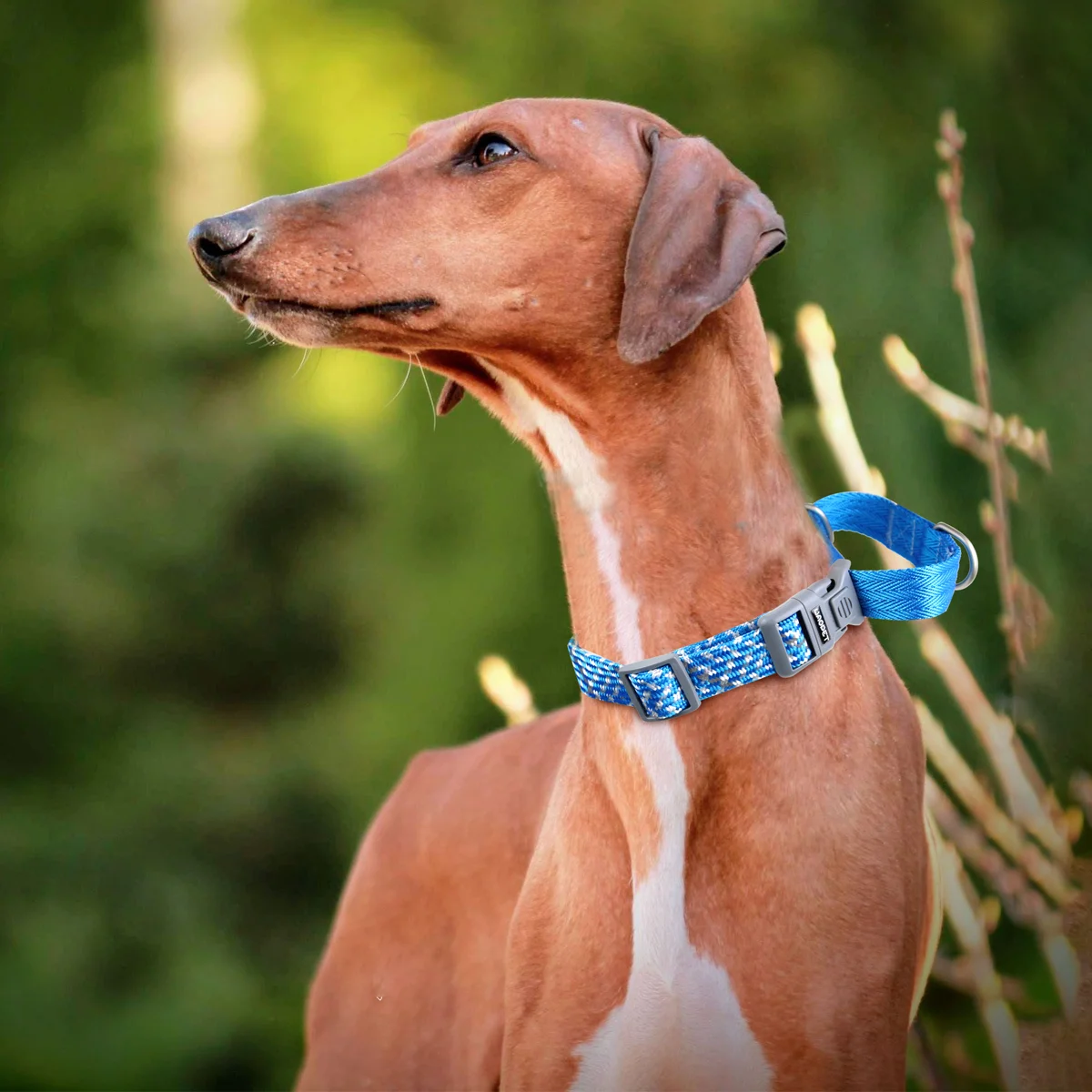
Custom adjustable dog collars allow pet brands, retailers, wholesalers, and promotional businesses to create products tailored to specific markets and brand identities. Compared with standard off-the-shelf collars, customized products can involve additional development, materials, branding, hardware, packaging, and quality control requirements. As a result, the final cost can vary considerably from one project to another.
For businesses planning to order custom adjustable dog collars, understanding the factors behind the total cost is important. A lower quotation does not necessarily represent better value, while a higher quotation may reflect more advanced materials, more complex customization, or stricter quality requirements.
The cost should therefore be evaluated as a combination of product specifications, manufacturing processes, order volume, and customization requirements. This article explains the main factors that influence the cost of custom adjustable dog collars and what buyers should consider when comparing suppliers.
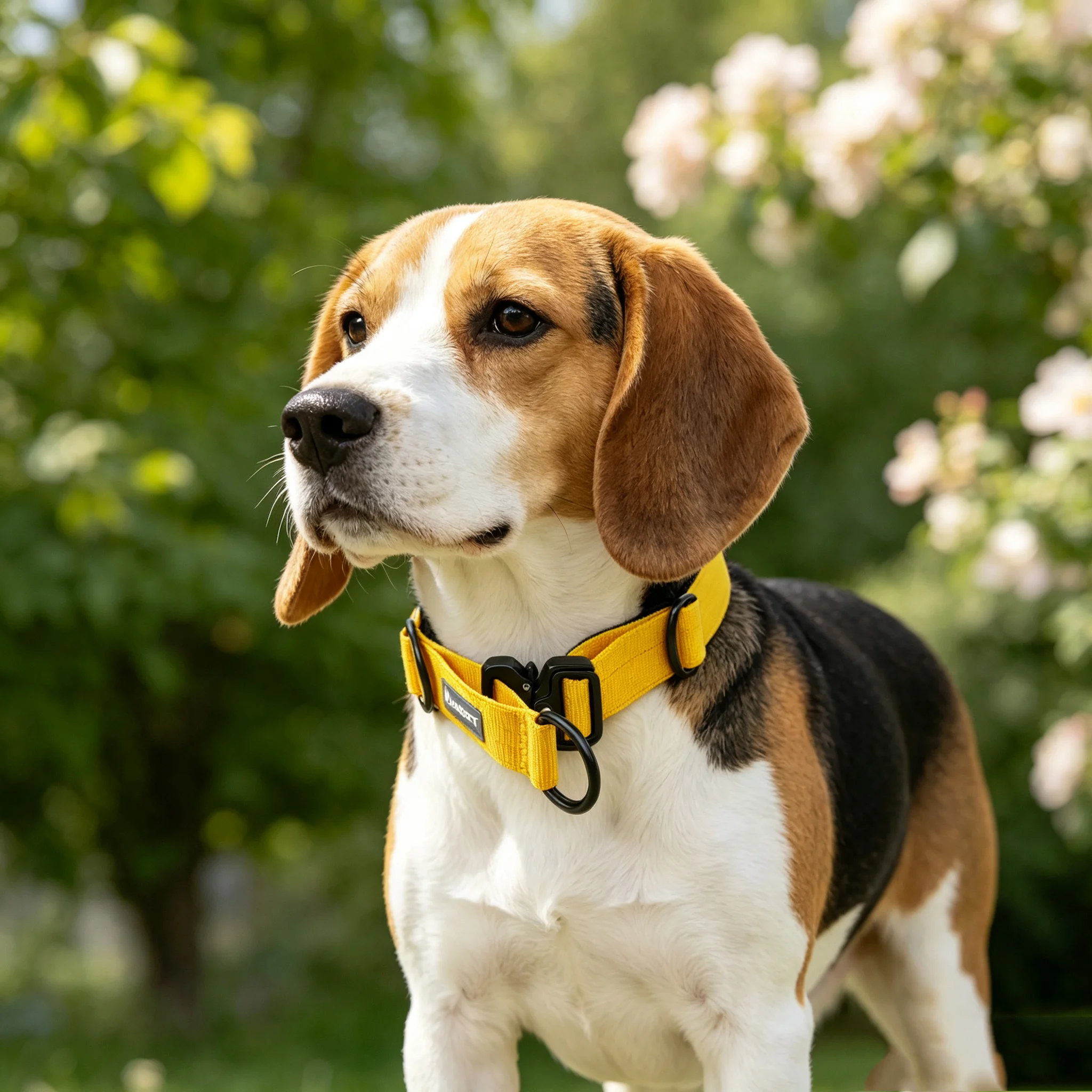
1. Material Selection Is a Major Cost Factor
The material used for an adjustable dog collar has a direct effect on manufacturing cost, appearance, comfort, and durability. Different materials require different processing methods and may have different minimum order quantities.
Nylon Adjustable Dog Collars
Nylon is one of the most common materials used for adjustable dog collars. It is lightweight, flexible, and available in a wide range of colors and webbing specifications.
For businesses developing everyday pet accessories, nylon can provide a practical balance between performance and customization flexibility. The price can still vary depending on the thickness, width, weave, surface finish, and quality of the webbing.
A basic narrow nylon collar with standard hardware will generally require fewer materials than a wider collar designed for larger dogs. Premium-grade webbing can also cost more because of its construction and performance characteristics.
Polyester Adjustable Dog Collars
Polyester is another popular material for custom dog collars, particularly when a brand wants colorful patterns or printed designs.
The cost of polyester webbing depends on its density, construction, finish, and printing requirements. If a business wants highly detailed graphics or full-color patterns, the production process may be more complex than producing a simple solid-color collar.
For wholesale buyers, polyester can be attractive because it supports considerable design flexibility while remaining suitable for a wide range of everyday pet products.
Leather and Synthetic Leather
Leather adjustable dog collars are generally positioned at a different market level from basic textile collars. The type, thickness, finish, and processing of the leather can significantly affect the final cost.
Genuine leather may require additional cutting, edge finishing, hole punching, and surface treatment. Synthetic leather can offer a different combination of appearance, consistency, and cost.
If a premium dog accessory brand wants embossed logos or decorative stitching, these additional processes should also be included when calculating the overall product cost.
Coated Webbing
Coated webbing is another option for custom adjustable dog collars, especially for products intended to be easy to clean or suitable for outdoor use.
The composition of the coating, webbing thickness, surface finish, and production process all influence the cost. Buyers should evaluate the actual material specifications rather than comparing products based only on general material names.
2. Collar Size and Width Affect Material Usage
Size is another important factor affecting the cost of adjustable dog collars.
A collar for a small breed requires less webbing and may use smaller hardware than a collar designed for a large dog. Wider collars also require more material and may need larger buckles, D-rings, and adjustment sliders.
For example, a simple narrow collar designed for small dogs may have relatively straightforward construction, while a wide heavy-duty collar may require reinforced webbing and stronger hardware.
When requesting quotations, buyers should provide specific dimensions rather than simply stating "small," "medium," or "large."
Useful specifications include:
-
Minimum neck circumference
-
Maximum neck circumference
-
Total collar length
-
Collar width
-
Webbing thickness
-
Buckle dimensions
-
D-ring size
-
Adjustment slider dimensions
The distinction between total length and usable adjustment range is particularly important. Two adjustable dog collars may have similar overall lengths but different usable fitting ranges.
3. Hardware Quality Can Change the Product Cost
Hardware is easy to overlook when comparing quotations, but it can represent an important part of the total manufacturing cost.
Typical adjustable dog collar hardware includes buckles, D-rings, adjustment sliders, rivets, snap hooks on matching accessories, and decorative components.
Plastic Hardware
Plastic buckles and sliders are commonly used for lightweight dog collars. They are available in different shapes, sizes, and colors.
Standard plastic hardware can help control costs, while customized shapes, special colors, or upgraded specifications may increase production expenses.
Metal Hardware
Metal components may provide a different appearance and can be selected for premium products or specific product designs.
The cost depends on the metal type, size, finish, manufacturing method, and whether the component is customized.
For example, a standard metal D-ring and a custom engraved metal component should not be expected to have the same unit cost.
Hardware Matching
The hardware must also match the width and construction of the collar. A larger adjustable dog collar may require stronger or larger components than a lightweight collar designed for a small dog.
Therefore, buyers should evaluate the complete hardware configuration rather than comparing the cost of individual components in isolation.
4. Branding and Logo Customization Add to the Cost
One of the main reasons businesses choose custom adjustable dog collars is to create products that carry their own branding.
However, different branding techniques involve different processes and costs.
Screen Printing and Other Printing Methods
Printing is commonly used for logos, text, patterns, and decorative graphics.
A simple one-color logo may be relatively straightforward, while a multi-color repeating pattern may require additional preparation and production steps.
The size of the printing area also matters. Printing a small logo in one location is different from creating a full-length pattern across the collar webbing.
Woven Labels
Woven labels can provide a subtle branding option for private-label adjustable dog collars.
The cost may depend on label size, number of colors, weaving complexity, attachment method, and order quantity.
Although a small label may seem inexpensive individually, low-volume production can increase the effective unit cost because setup expenses are distributed across fewer pieces.
Embossing and Debossing
Embossed or debossed logos are particularly suitable for leather and compatible synthetic materials.
A custom mold or tooling may be required, which can introduce an initial development cost. Once the tooling has been created, the cost structure may become more favorable for larger production runs.
Custom Metal Branding
Some brands use engraved metal tags, logo plates, or customized buckles to create a premium appearance.
These components can require separate tooling, engraving, finishing, or assembly. Consequently, a collar with custom metal branding can cost significantly more than one using standard hardware.
5. Custom Colors and Patterns Influence Production Costs
Color is another factor that can affect the price of custom dog collars.
A standard color from a manufacturer's existing material range may be easier to produce than a completely new custom color.
If a brand has strict color requirements, the manufacturer may need to create or source a specific material color. Depending on the production method and order size, this can increase development time and minimum order requirements.
Pattern complexity can also affect cost. Simple stripes or repeating geometric patterns are generally easier to manage than highly detailed artwork containing multiple colors and fine elements.
For international brands, color matching should be discussed carefully. Digital color references may not perfectly match the final textile, coating, or leather surface. A physical sample is often more reliable for final approval.
6. Stitching and Construction Complexity Matter
The basic structure of an adjustable dog collar can be relatively simple, but additional reinforcement and decorative construction can increase production time.
A standard collar may require straightforward stitching around the buckle and D-ring. A premium or heavy-duty design may include multiple layers of webbing, reinforced stitching, additional seams, decorative stitching, or reinforced attachment points.
The number and complexity of manufacturing operations influence labor requirements.
For example, a simple nylon adjustable dog collar with standard hardware may require fewer assembly steps than a multi-layer collar featuring leather overlays, custom labels, reinforced seams, and decorative details.
Buyers should therefore compare the complete construction specification rather than asking suppliers to quote based on a product photograph alone.
7. Order Quantity Has a Significant Impact on Unit Cost
Order volume is one of the most important factors affecting the unit cost of custom adjustable dog collars.
Manufacturers have fixed development and production costs that must be distributed across the order quantity. These can include:
-
Material preparation
-
Artwork setup
-
Printing setup
-
Mold or tooling costs
-
Sample development
-
Machine preparation
-
Packaging preparation
-
Quality inspection
When the order quantity increases, these fixed costs can be distributed across more units.
For example, producing several thousand identical collars can make the unit cost more competitive than producing a small batch containing many different colors, sizes, and logo variations.
However, larger quantities are not automatically better for every buyer. Businesses should consider inventory turnover, storage capacity, product demand, and the risk of overstocking.
8. Multiple Sizes and Colors Can Increase Complexity
A business may want to launch a collection of adjustable dog collars in several sizes and colors.
Although the total quantity may be large, splitting the order across many variations can increase production complexity.
Consider a hypothetical order consisting of:
-
1,000 collars in one color and size
-
1,000 collars divided across five colors
-
1,000 collars divided across five colors and three sizes
The total quantity is the same, but the third project requires more production planning, material management, inspection, packaging, and inventory control.
Therefore, suppliers may use different minimum order quantities for each color, size, or design.
When developing a new collection, buyers should ask whether the supplier calculates minimum quantities by total order, color, size, or SKU.
9. Packaging Requirements Can Affect the Final Cost
Packaging is often overlooked when estimating the cost of custom adjustable dog collars.
A basic bulk package is very different from retail-ready packaging.
Possible packaging options include:
-
Individual polybags
-
Printed paper cards
-
Hangtags
-
Custom boxes
-
Branded sleeves
-
Product instruction cards
-
Custom shipping cartons
A simple packaging solution may have little effect on the overall product cost, while highly customized retail packaging can add materials, printing, assembly, and labor costs.
For e-commerce brands, packaging may also need to meet specific shipping requirements. If the packaging is oversized or structurally complex, it can influence shipping costs as well as manufacturing costs.
10. Sample Development and Tooling Can Create Initial Costs
Custom products often require development before mass production.
A sample allows buyers to evaluate the actual dimensions, materials, colors, logo placement, hardware, and construction.
Depending on the design, sample development may involve:
-
Material sourcing
-
Custom color preparation
-
Logo setup
-
Mold development
-
Prototype assembly
-
Packaging samples
Tooling is another potential cost. Custom buckles, metal plates, hardware shapes, or embossed logos may require dedicated molds or dies.
These initial costs should be separated from the long-term unit price when comparing supplier quotations.
A supplier offering a slightly higher unit price but lower development cost may ultimately provide better value, depending on the order quantity and expected repeat purchases.
11. Quality Control Requirements Can Affect Cost
Quality control is essential for pet accessories, especially products that are used with a leash or worn for extended periods.
Different buyers may have different inspection requirements.
Basic quality checks can include:
-
Collar dimensions
-
Material consistency
-
Stitching quality
-
Buckle operation
-
Adjustment performance
-
Logo placement
-
Color consistency
-
Packaging accuracy
More demanding projects may require additional testing or inspection procedures.
For example, a buyer may request specific pull or load testing for components and attachment points. The appropriate testing should be determined according to the intended use and product design.
Higher quality-control requirements can increase the cost, but they can also reduce the risk of inconsistent products reaching customers.
12. Shipping and Delivery Conditions Also Matter
The manufacturing cost is not necessarily the same as the total landed cost.
For wholesale adjustable dog collars, buyers should also consider shipping, packaging volume, customs-related expenses, taxes where applicable, and other logistics costs.
The physical dimensions and total weight of an order influence transportation expenses. Individual retail packaging may increase carton volume even if the collars themselves are lightweight.
For international orders, buyers should compare quotations using the same delivery terms. Otherwise, one supplier may appear cheaper simply because certain logistics costs are excluded from its quotation.
A clear quotation should identify what is included and what is not included.
13. Product Design Complexity Influences the Final Price
The more complex the design, the more likely it is that additional development and production processes will be required.
A basic custom adjustable dog collar may include:
-
Standard nylon webbing
-
Standard plastic buckle
-
Standard metal D-ring
-
One logo
-
Standard packaging
A premium product might include:
-
Custom-colored webbing
-
Multiple material layers
-
Custom hardware
-
Embossed branding
-
Decorative stitching
-
Woven labels
-
Custom packaging
-
Multiple sizes and colors
These products serve different market positions and should not be compared purely by unit price.
Businesses should first determine which product features are essential to their target market and which are optional design enhancements.
Final Thoughts
The cost of custom adjustable dog collars is influenced by much more than the basic collar material. Webbing quality, collar dimensions, hardware, branding methods, construction, order quantity, packaging, sampling, quality control, and logistics can all contribute to the final investment.
For businesses developing a new pet accessory collection, the most effective approach is to define the product requirements clearly and compare suppliers based on the complete specification rather than unit price alone. A well-designed product can balance material performance, comfortable adjustment, attractive branding, and efficient manufacturing without adding unnecessary complexity.
With flexible customization solutions, Dog Favors helps businesses develop adjustable dog collar collections from concept design through finished production. By coordinating product specifications, materials, branding, and manufacturing requirements, Dog Favors can support brands looking to create distinctive adjustable dog collars that fit their target market and overall pet accessory strategy.
www.dogfavors.com
dogfavors