In industrial fluid control systems, valve selection directly affects safety, efficiency, and long-term operational stability. Among the many valve types available on the market, the stainless steel ball valve is widely used across oil and gas, chemical processing, power generation, water treatment, and marine engineering industries.
One of the most common technical questions engineers and procurement teams ask is: Are stainless steel ball valves suitable for high-pressure environments?
The short answer is yes, stainless steel ball valves are highly suitable for high-pressure applications when properly designed, manufactured, and selected according to operating conditions. However, not all ball valves are created equal, and performance under pressure depends on multiple engineering factors.
This article provides a comprehensive technical and practical analysis of stainless steel ball valve performance in high-pressure environments, including structure, materials, pressure ratings, limitations, selection guidelines, and industrial applications.
1. Understanding Stainless Steel Ball Valves
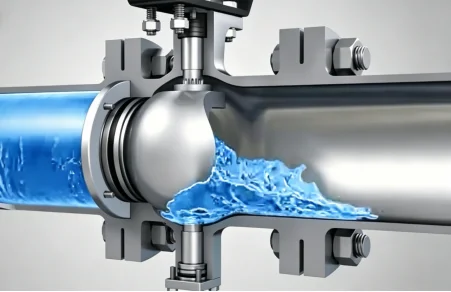
A stainless steel ball valve is a quarter-turn valve that uses a hollow, perforated, and rotating ball to control the flow of liquids or gases. When the handle turns 90 degrees, the ball rotates to either allow full flow or completely block the passage.
The main components include:
-
Valve body (stainless steel 304 or 316)
-
Ball (polished stainless steel)
-
Seat (PTFE, RPTFE, or metal-seated materials)
-
Stem
-
Seals and packing system
-
Actuator or manual handle
Because of its simple structure and strong sealing capability, the stainless steel ball valve has become one of the most widely used shut-off valves in modern industry.
2. Why Stainless Steel Is Preferred for High-Pressure Applications
The material selection is one of the most critical factors determining whether a valve can handle high-pressure conditions.
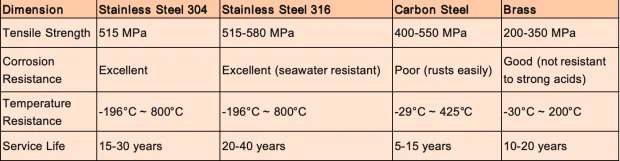
Stainless steel, especially grades such as 304 and 316, offers several advantages:
2.1 High Mechanical Strength
Stainless steel has excellent tensile strength and yield strength, allowing it to withstand internal pressure without deformation.
2.2 Corrosion Resistance
In high-pressure systems, fluids are often aggressive (chemical media, seawater, steam). Stainless steel provides strong resistance to corrosion, preventing leakage and structural failure.
2.3 Temperature Stability
High-pressure systems often operate under high temperatures. Stainless steel maintains mechanical integrity under thermal stress.
2.4 Long Service Life
Compared with brass or carbon steel valves, stainless steel ball valves offer significantly longer service life in demanding environments.
3. Pressure Ratings of Stainless Steel Ball Valves
Whether a stainless steel ball valve is suitable for high-pressure systems depends largely on its pressure class rating.
Common pressure classifications include:
-
PN16 / PN25 / PN40 (Metric standard)
-
Class 150 / Class 300 / Class 600 / Class 800 / Class 1500 / Class 2500 (ASME standard)
3.1 Typical Pressure Capabilities
-
Class 150 stainless steel ball valve: suitable for low to medium pressure systems
-
Class 300 stainless steel ball valve: medium to high pressure applications
-
Class 600 and above: designed for high-pressure and critical industrial systems
A properly engineered high-pressure stainless steel ball valve can handle pressures exceeding 4000 PSI depending on design and configuration.
4. Structural Design Factors Affecting High-Pressure Performance
Even if a valve is made of stainless steel, its structural design determines whether it can perform safely under high pressure.
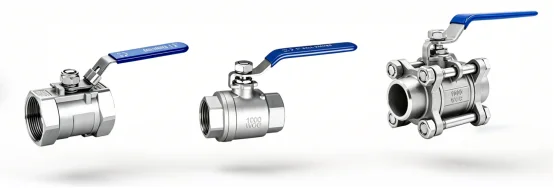
4.1 One-Piece, Two-Piece, and Three-Piece Construction
-
One-piece ball valve: compact but limited serviceability
-
Two-piece ball valve: balanced structure for moderate pressure
-
Three-piece ball valve: best for high-pressure systems due to maintainability and stronger assembly design
Among them, the three-piece stainless steel ball valve is widely used in high-pressure pipelines because it allows internal maintenance without removing the entire valve body.
4.2 Full Bore vs Reduced Bore
-
Full bore stainless steel ball valve: allows unrestricted flow and reduces pressure loss
-
Reduced bore valve: more compact but introduces pressure drop
In high-pressure systems, full bore designs are often preferred to minimize turbulence and stress concentration.
4.3 Seat Material Selection
The sealing seat is critical in high-pressure environments.
Common materials include:
-
PTFE (standard chemical resistance)
-
RPTFE (reinforced PTFE for higher pressure)
-
PEEK (high temperature and pressure resistance)
-
Metal seats (for extreme pressure and temperature conditions)
A stainless steel ball valve used in high-pressure applications often requires reinforced or metal seats to ensure sealing integrity.
4.4 Stem and Anti-Blowout Design
High-pressure flow creates significant axial force on the valve stem. A high-quality stainless steel ball valve must include:
-
Anti-blowout stem design
-
Reinforced packing system
-
Double sealing structures
These features prevent dangerous stem ejection under extreme pressure conditions.
5. Advantages of Stainless Steel Ball Valves in High-Pressure Systems
When properly selected, stainless steel ball valves offer several key advantages in high-pressure environments:
5.1 Reliable Shut-Off Performance
The ball-to-seat sealing mechanism provides tight shut-off even under extreme pressure differentials.
5.2 Low Torque Operation
Despite high internal pressure, ball valves require relatively low operating torque, making them easy to automate.
5.3 Fast Operation
A quarter-turn operation allows quick isolation of high-pressure pipelines, which is critical in emergency situations.
5.4 Minimal Pressure Drop
Especially in full bore stainless steel ball valve designs, flow resistance is extremely low.
5.5 High Compatibility
Suitable for gas, liquid, steam, and corrosive media in pressurized systems.
6. Limitations in High-Pressure Applications
Although stainless steel ball valves perform well under pressure, there are still limitations to consider:
6.1 Seat Wear Under Extreme Pressure
Soft seat materials may deform over time in very high-pressure conditions.
6.2 Cavitation and Erosion
In throttling conditions, high-pressure fluid can damage internal components.
6.3 Cost
High-pressure stainless steel ball valves, especially Class 600 and above, are more expensive due to material and machining requirements.
6.4 Size Limitations
Very large diameter valves at ultra-high pressure levels require specialized engineering and may not be suitable for standard designs.
7. Industrial Applications of High-Pressure Stainless Steel Ball Valves
Stainless steel ball valves are widely used in various high-pressure industries:
7.1 Oil and Gas Industry
Used in upstream drilling systems, pipeline transmission, and refinery processes.
7.2 Chemical Processing
Handles corrosive and high-pressure chemical fluids safely.
7.3 Power Generation
Used in steam lines, boiler systems, and turbine auxiliary systems.
7.4 Marine Engineering
Applied in ballast systems, fuel systems, and seawater treatment.
7.5 Hydraulic Systems
Essential in high-pressure hydraulic control systems requiring precise shut-off.
8. How to Choose the Right Stainless Steel Ball Valve for High Pressure
Selecting the correct valve requires evaluating multiple parameters:
8.1 Pressure and Temperature Requirements
Always match valve class rating with system pressure.
8.2 Fluid Type
Consider whether the medium is corrosive, abrasive, or high-temperature.
8.3 Valve Size and Flow Requirements
Larger systems may require full bore stainless steel ball valves.
8.4 Seat and Seal Material
Choose materials based on chemical compatibility and pressure resistance.
8.5 Certification Standards
Look for compliance with standards such as API 6D, ISO 5211, and ASME B16.34.
9. Maintenance Considerations in High-Pressure Systems
Proper maintenance extends valve life and ensures safe operation:
-
Regular inspection of sealing surfaces
-
Checking stem packing tightness
-
Monitoring leakage rates
-
Periodic torque testing for actuated valves
-
Avoiding dry operation under extreme pressure cycles
A well-maintained stainless steel ball valve can operate reliably for many years even in demanding environments.
Conclusion
So, are stainless steel ball valves suitable for high-pressure environments?
The answer is clearly yes, provided that the valve is correctly designed, properly rated, and selected according to system requirements. With excellent mechanical strength, corrosion resistance, and sealing performance, the stainless steel ball valve remains one of the most reliable solutions for high-pressure industrial fluid control.
However, engineers must carefully consider pressure class, seat material, structural design, and application conditions to ensure safe and long-term operation.
In modern industrial systems, high-quality stainless steel ball valves are not only suitable for high-pressure environments but are often the preferred choice for critical applications where safety and performance are non-negotiable.
www.ainoxvalves.com
ainoxvalves