
An automotive electronic plastic parts manufacturer must deliver more than injection-molded components. Modern in-car electronics increasingly depend on plastic housings, frames, brackets, bobbins, connector-related components, transformer frames, sensor structures, and other precision parts that must maintain dimensional stability while exposed to vibration, temperature changes, electrical requirements, and repeated assembly.
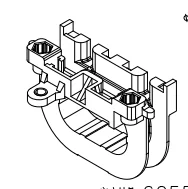
For these components, the molding process cannot be separated from product design. Resin selection affects thermal and mechanical performance; mold design controls dimensional repeatability; injection parameters influence warpage and weld lines; and secondary operations such as CNC machining, coating, plating, printing, and assembly can introduce additional dimensional or cosmetic risks.
A reliable manufacturing strategy therefore needs to connect material selection, DFM, mold development, injection molding, dimensional inspection, secondary processing, and assembly into one controlled production chain.
Material Selection Is the First Engineering Decision
Automotive electronic plastic components can require very different material properties depending on their position in the vehicle.
A plastic frame supporting an electronic module may prioritize dimensional stability and mechanical strength. A transformer or bobbin frame may require electrical insulation and thermal resistance. An in-car electronic housing may need a combination of impact resistance, heat resistance, surface quality, and long-term dimensional stability.
Material selection should therefore begin with the operating environment rather than simply choosing a commonly used engineering plastic.
For example, glass-fiber-reinforced polymers can provide increased stiffness and dimensional stability compared with unfilled grades, but the reinforcement can also introduce anisotropic shrinkage and affect mold-flow behavior. This means that material selection and mold design should be evaluated together.
For automotive programs, material traceability is also important. IATF 16949 guidance specifically identifies conformity to material requirements as part of product and process conformity.
The resin specification should therefore define the exact grade, supplier or approved material source where required, reinforcement level, color, flame-retardant requirement, and applicable technical documentation.
Mold Design Determines Much of the Final Part Quality
For automotive electronic plastic parts, mold development has a direct relationship with dimensional accuracy and production stability.
A component with multiple ribs, bosses, snap-fits, thin walls, mounting holes, and connector interfaces may appear simple from the outside but can be difficult to mold consistently. Uneven wall thickness can create differential cooling and shrinkage, while poorly positioned gates can generate weld lines or filling imbalance around critical features.
The mold should be designed around the functional dimensions of the component. If a connector housing requires a controlled mating dimension, that feature should receive appropriate attention during cavity layout, cooling design, shrinkage compensation, and inspection.
For a production volume of 500,000 parts per year, even a small dimensional drift can become significant. A 0.05 mm change on a critical interface may be enough to create assembly variation if the design has a narrow tolerance window.
This is why mold-flow analysis, gate-position evaluation, cooling-channel design, draft analysis, and DFM review should occur before steel is finalized.
Dimensional Stability Is More Important Than Nominal Accuracy
A molded part can meet dimensional specifications during first-off inspection and still become unstable during continuous production.
Injection pressure, holding pressure, melt temperature, mold temperature, cooling time, cycle time, and material moisture can all influence the final dimensions. The relationship is particularly important for electronic components containing thin walls and precision mounting features.
For example, increasing holding pressure may reduce shrinkage in some areas while increasing internal stress or creating deformation elsewhere. Extending cooling time can improve dimensional stability but also increases cycle time.
The objective is therefore not to maximize any single parameter. The objective is to establish a process window that produces stable dimensions at the required production rate.
For automotive applications, this process-oriented approach is consistent with the broader quality requirements surrounding process capability and customer-specific requirements. The IATF maintains current OEM-specific requirements for manufacturers serving companies including Ford, GM, Stellantis, BMW, Mercedes-Benz, Volkswagen, Volvo, and others.
Warpage and Sink Marks Need to Be Controlled at the Design Stage
Warpage is a common concern when plastic parts combine thin walls with thicker bosses, ribs, mounting areas, or reinforcement structures.
The problem is particularly relevant to automotive electronic housings because even moderate deformation can affect PCB installation, connector alignment, sealing surfaces, or assembly with adjacent components.
A thick boss connected directly to a thin wall, for example, creates different cooling and shrinkage behavior. Increasing the rib or boss thickness indiscriminately is not necessarily the solution. Proper wall-thickness transitions, rib proportions, draft, gate position, and cooling design should be considered together.
The same applies to sink marks. A thick section behind a visible surface can produce localized depression as the material contracts during cooling. Moving the gate or changing the cooling strategy may be more effective than simply increasing injection pressure.
Good DFM should therefore identify these risks before mold fabrication rather than relying on molding-parameter adjustments after tooling is completed.
Electrical and Thermal Requirements Can Change the Plastic Grade
Automotive electronic plastic components often operate near heat-generating electronics, power-control devices, transformers, connectors, or other electrical systems.
The required material performance may therefore include heat resistance, electrical insulation, flame resistance, dimensional stability, and resistance to automotive fluids or environmental exposure.
A transformer frame, for example, has different requirements from a decorative electronic bezel. The former may need strong electrical insulation and thermal stability, while the latter may prioritize surface appearance, dimensional accuracy, and scratch resistance.
For this reason, the same plastic grade should not automatically be applied across an entire electronic product family. The material should be selected according to the component's actual electrical, thermal, mechanical, and environmental conditions.
Surface Finish Is Part of the Functional Specification
Automotive electronic plastic parts may require painting, electroplating, pad printing, silk screening, or other finishing processes after injection molding.
These operations can change the final appearance and, in some cases, affect dimensional interfaces. A plated or coated surface adds thickness, while painting can influence the appearance of weld lines, flow marks, gate marks, or sink defects that might be less visible on an untreated surface.
If a component contains a precision mating surface, that area may need to be masked or treated differently from a decorative area.
Surface treatment should therefore be incorporated into the original dimensional and quality specification. A part should not be considered complete simply because the molded substrate meets its drawing before finishing.
CNC Machining Can Add Precision Where Molding Alone Is Not Enough
Injection molding is highly efficient for repetitive production, but some automotive electronic components still require secondary CNC machining.
Typical examples include precision holes, slots, mounting interfaces, or features that need tighter dimensional control than the molding process can economically provide.
A hybrid process can therefore be practical: injection molding creates the overall geometry, while CNC machining establishes selected critical features after molding.
The important consideration is datum strategy. If a hole is machined from a reference surface that itself varies due to molding deformation, the machining operation cannot completely eliminate the underlying positional error.
The fixture, datum structure, machining sequence, and molded-part inspection should therefore be developed as one process.
Quality Control Should Follow the Part's Critical Characteristics
Automotive plastic components should not rely on visual inspection alone. The appropriate inspection system depends on what controls the component's function.
Critical dimensions may require CMM measurement, optical measurement, gauges, or dedicated fixtures. Cosmetic surfaces can require controlled visual standards. Assembly-critical snap-fits, holes, bosses, and connector interfaces may require functional gauges rather than dimensional inspection alone.
For automotive programs, production approval and process documentation can also be significant. Current OEM requirements published through the IATF Global Oversight system include customer-specific requirements for organizations working with major vehicle manufacturers. Ford, for example, has updated its IATF 16949 and PPAP customer-specific requirements several times, including changes affecting product approval and process documentation.
This makes traceability and process documentation important parts of supplier capability, particularly for new product launches and engineering changes.
CQI-23 Highlights the Importance of Plastic Molding Process Control
Automotive plastic injection molding has its own process-assessment considerations. The GM customer-specific requirements published through IATF reference CQI-23, Special Process: Molding System Assessment, among the relevant CQI standards for automotive manufacturing processes.
This is useful when evaluating an automotive electronic plastic parts manufacturer because molding capability should be assessed beyond machine tonnage. A supplier should be able to demonstrate control of tooling, material handling, process parameters, inspection, maintenance, change management, and production consistency.
For high-volume components, this process discipline directly affects the risk of dimensional drift, cosmetic defects, short shots, flash, burn marks, sink marks, and other molding-related nonconformities.
An Integrated Manufacturing Chain Reduces Process Gaps
A major advantage for complex automotive electronic plastic components is the ability to coordinate multiple manufacturing stages through one supplier.
Zhanwei, established in 2009 with manufacturing experience extending back to 1997, provides an integrated plastic manufacturing service covering product design, mold development, manufacturing, injection molding, CNC machining, painting, electroplating, pad printing, silk screening, assembly, and logistics.
This model is particularly useful when a component requires several consecutive processes. Instead of transferring semi-finished parts between separate suppliers, the same manufacturing system can coordinate the molded geometry, secondary processing, assembly requirements, and final inspection.
For example, an electronic plastic frame may begin with mold development, proceed through injection molding, receive CNC-machined mounting features, undergo surface treatment or printing, and then move into final assembly. Controlling these stages as a connected process can reduce the dimensional and communication gaps that often appear between independent suppliers.
Choosing an Automotive Electronic Plastic Parts Manufacturer
The right supplier should be evaluated according to the complete manufacturing chain rather than injection-machine specifications alone.
Important factors include engineering support, material selection, mold-development capability, injection molding process control, dimensional inspection, secondary machining, surface finishing, assembly capability, traceability, and production scalability.
For a new component, the supplier should be able to review the 2D drawing and 3D model, identify molding risks, recommend appropriate material and gate strategies, evaluate critical dimensions, and establish an inspection plan before mass production.
For an existing component, the same capability becomes useful when dealing with recurring defects, supplier transfer, cost optimization, material changes, tooling modification, or production expansion.
Final Considerations
An automotive electronic plastic parts manufacturer needs to control much more than the injection molding machine. The performance of the final component is determined by the interaction between material, mold design, injection parameters, dimensional control, secondary processing, surface treatment, assembly, and quality documentation.
For automotive electronic components, the most effective manufacturing approach is to identify critical functional characteristics early and build the production process around them. A connector interface, mounting hole, electrical insulation feature, sealing surface, or PCB support does not have the same manufacturing priority as a non-functional cosmetic surface.
Zhanwei's integrated capabilities across product design, mold development, injection molding, CNC machining, surface finishing, assembly, and logistics provide a foundation for managing these requirements through one connected manufacturing process. For complex automotive electronic plastic parts, that integration can help turn a design specification into a repeatable production process rather than treating molding as an isolated step.
www.zwwm1222.com
Zhanwei Electronic Technology Co., Ltd.