Understanding Coriolis Force-Based Mass Flow Measurement: A Comprehensive Technical Review
In the realm of industrial flow measurement, precision and reliability are paramount. Among the various technologies available, Coriolis mass flowmeters have emerged as the gold standard for applications requiring exceptional accuracy across diverse operating conditions. This in-depth review explores the working principle of Coriolis force-based mass flow measurement in vibrating tube flowmeters and examines why this technology has become indispensable across multiple industries.
The Fundamental Principle: How Coriolis Force Enables Direct Mass Measurement
The Coriolis mass flowmeter operates on a sophisticated yet elegant principle rooted in classical physics. Unlike traditional volumetric measurement devices that calculate flow based on velocity and cross-sectional area, Coriolis flowmeters leverage the Coriolis effect to directly measure mass flow rate. This fundamental difference eliminates the accuracy problems inherent in volumetric technology, particularly when fluid density, temperature, or pressure varies during operation.
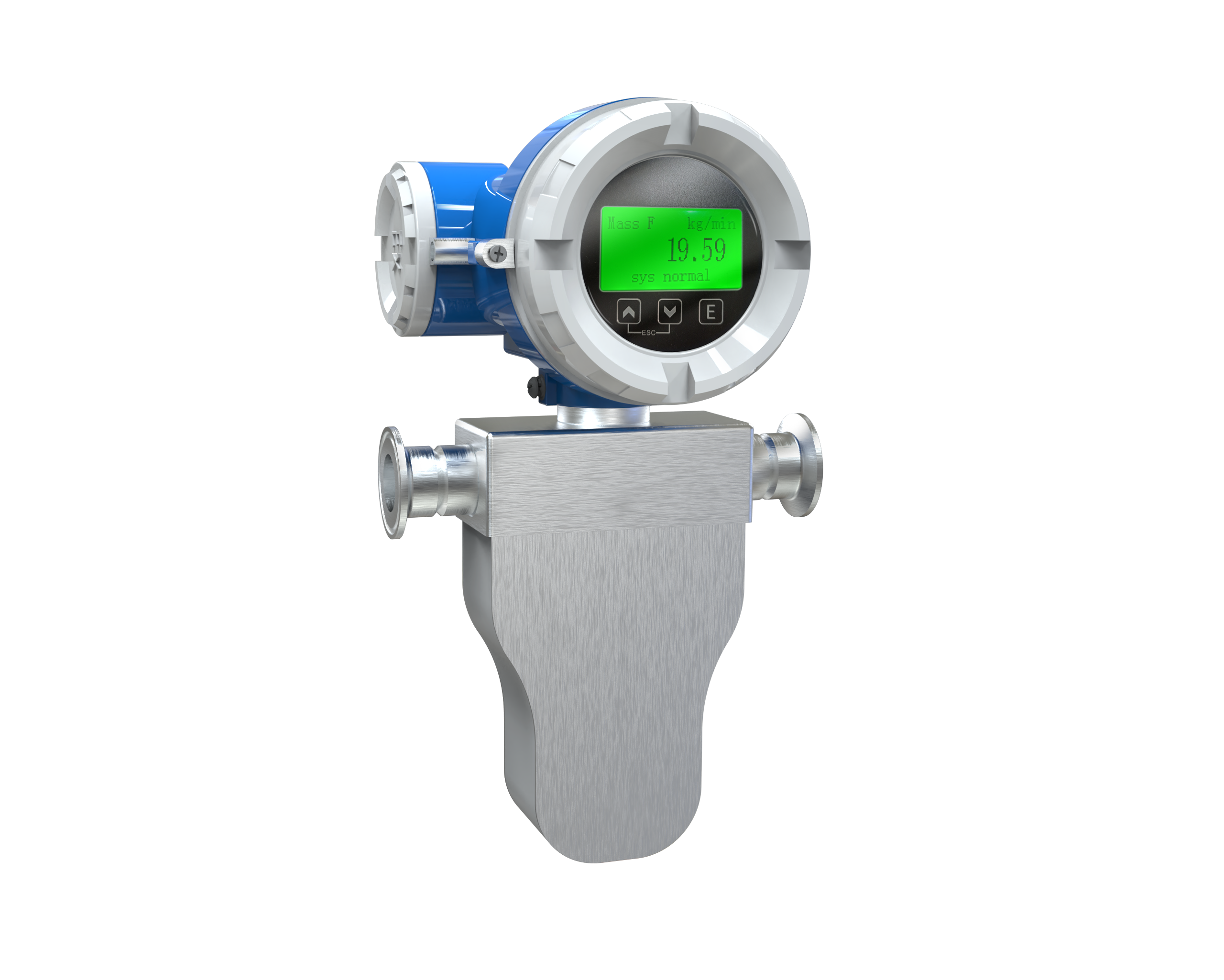
The measurement process begins with vibrating tubes that oscillate at their natural resonant frequency. When fluid flows through these vibrating tubes, the Coriolis force acts on the moving fluid particles, creating a measurable phase shift or twist in the tube structure. This phase difference is directly proportional to the mass flow rate, enabling the flowmeter to measure mass flow directly regardless of changes in medium density, temperature, or pressure conditions.
Advanced Signal Processing: The Brain Behind Precision
Modern Coriolis mass flowmeters employ intelligent control systems based on DSP (Digital Signal Processing) and ARM (Advanced RISC Machine) cores to achieve extraordinary measurement precision. These high-performance microprocessors analyze the tube vibration patterns in real-time, extracting accurate flow data even in challenging process conditions.
The Coriolis Mass Flowmeter Manufacturing Enterprise has developed sophisticated algorithms that achieve liquid measurement accuracy of ±0.1% ± (zero stability / actual flow) × 100% and gas measurement accuracy of ±0.25% ± (zero stability / actual flow) × 100%. This level of precision represents a quantum leap over volumetric measurement technologies, which struggle to maintain accuracy when process variables fluctuate.
The technology platform incorporates adjustable damping capabilities, allowing operators to stabilize readings in fluctuating flow conditions. This feature proves particularly valuable in applications where process dynamics create measurement challenges for conventional instruments.
Multi-Variable Measurement: One Instrument, Multiple Parameters
A distinctive advantage of Coriolis technology is its ability to simultaneously measure multiple process variables. The same physical phenomenon that enables mass flow measurement also provides data on fluid density and temperature. This multi-functional capability allows a single Coriolis meter to replace multiple measuring instruments, significantly reducing hardware costs and system complexity.
The multi-functional transmitter simultaneously outputs flow, density, and temperature via separately configurable signals, providing process engineers with comprehensive fluid characterization from a single measurement point. This capability proves invaluable for applications requiring tight process control or custody transfer accuracy, where multiple fluid properties must be monitored continuously.
Real-World Applications: Solving Industry Pain Points
The versatility of Coriolis mass flowmeters has led to widespread adoption across numerous industries, each benefiting from the technology's unique advantages.
High-Pressure Gas Measurement: The High-pressure Series (P-Series) addresses critical challenges in hydrogen refueling and CNG metering platforms. Operating at pressures up to 120MPa, these specialized meters incorporate components made from composite metals with high resistance to hydrogen embrittlement. Safety assurance comes through testing at 1.5 times the rated pressure, ensuring reliability under super-pressure applications. The zero pressure loss design maintains system efficiency while delivering accurate measurement of small gas flow rates during refueling operations.
Cryogenic Applications: In LNG terminals and cryogenic chemical processing, the Cryogenic Series (L-Series) operates effectively down to -200°C. Conventional volumetric meters often fail or lose accuracy in ultra-low temperature applications, but Coriolis technology maintains high sensitivity and stable measurement even in complex cryogenic fluid states through high-precision digital signal processing.
Hygienic Processing: The food, beverage, and pharmaceutical industries require measurement solutions that meet stringent hygiene standards. The Straight Pipe Series features a hygienic design compliant with 3A certification standards, supporting CIP/SIP (Clean-In-Place/Steam-In-Place) cleaning protocols to ensure product purity and quality assurance throughout production cycles.
Corrosive Chemical Handling: In petrochemical and chemical processing facilities handling highly corrosive fluids such as nitric acid, sulfuric acid, and hydrochloric acid, Coriolis flowmeters provide reliable measurement where other technologies fail. The no moving parts design eliminates wear-related failure modes, ensuring long service life even in aggressive chemical environments.
Performance Advantages: Why Coriolis Technology Leads
The comprehensive benefits of Coriolis mass flow measurement become evident when examining operational outcomes across various industries.
Measurement Precision eliminates the errors inherent in volumetric technology. By measuring mass directly rather than inferring it from volume and density calculations, Coriolis meters achieve accuracy levels that traditional technologies simply cannot match. This precision proves critical in custody transfer applications, where measurement uncertainty directly impacts financial settlements.
Operational Efficiency improves dramatically through multi-variable measurement capability. Process engineers gain access to flow, density, and temperature data from a single instrument, enabling better process understanding and control. The range ratio of up to 100:1 (with low-frequency sensors achieving 1000:1) means a single meter can handle wide variations in flow rate without compromising accuracy.
Low Maintenance Requirements stem from the fundamental design approach. With no moving parts and no obstructions in the pipeline, Coriolis flowmeters offer high reliability and long service life. The robust design reduces maintenance costs and effort, increasing plant uptime and availability. Strong circuit self-diagnostic functions enable rapid fault finding and maintenance when service is required.
Installation Flexibility provides significant advantages in both new construction and retrofit applications. Coriolis meters can be installed anywhere without the need for straight pipe sections or flow rectifiers, simplifying installation and reducing associated piping costs.
Market Validation and Industry Recognition
The widespread adoption of Coriolis mass flowmeters across critical industries validates the technology's performance and reliability. Applications span gas metering (CNG/LNG, carbon dioxide, industrial gases, chlorine), food industry (palm oil, peanut oil, edible oils, beverages, flavorants), oil and gas (crude oil, refined oil, LPG, oil well additives), chemical industry (petrochemicals, methanol, hydrogen peroxide, resins), renewable energy (lithium battery electrolyte production, photovoltaic polysilicon hydrogen), pharmaceutical (concoction measurement, trimethylamine, xylene), and maritime (marine oil measurement) sectors.
Industry certifications underscore the technology's safety and reliability credentials. Explosion-proof certification (ExdibIICT6Gb / ExdbiaIICT6Gb), dust explosion-proof certification (ExtbiaIIICT80℃Db), and ingress protection ratings (IP66/IP67) enable deployment in hazardous environments where measurement accuracy and safety are non-negotiable requirements.
The Research-Driven Advantage
The Coriolis Mass Flowmeter Manufacturing Enterprise exemplifies the research-driven approach necessary to advance flow measurement technology. With scientific research personnel accounting for more than 50% of total headcount, the company maintains a dedicated focus on solving unique flow measurement challenges through innovation. The combination of veteran experts and new researchers drives continuous improvement in measurement accuracy, reliability, and application versatility.
This commitment to technical excellence has enabled successful expansion into emerging sectors such as hydrogen energy, lithium batteries, and photovoltaics, where demanding measurement requirements push the boundaries of conventional technologies. The company's customized design and processing capabilities allow for tailored solutions addressing specific user requirements across diverse and challenging environments including high-pressure, cryogenic, and highly corrosive conditions.
Conclusion: Direct Mass Measurement as the Future Standard
Coriolis force-based mass flow measurement in vibrating tube flowmeters represents a fundamental advancement over traditional volumetric measurement approaches. By measuring mass directly through physical principles rather than inferring it from multiple variables, Coriolis technology delivers accuracy, reliability, and versatility that meet the demands of modern industrial processes. As industries continue to push operational boundaries with higher pressures, more extreme temperatures, and more challenging fluid chemistries, the inherent advantages of direct mass measurement position Coriolis flowmeters as the measurement technology of choice for critical applications where precision and reliability cannot be compromised.
https://www.sytcflowmeter.com/
Kaifeng Xinya Instrument Co., Ltd.