
Why Footwear and Accessory Brands Are Rethinking Embroidery Equipment
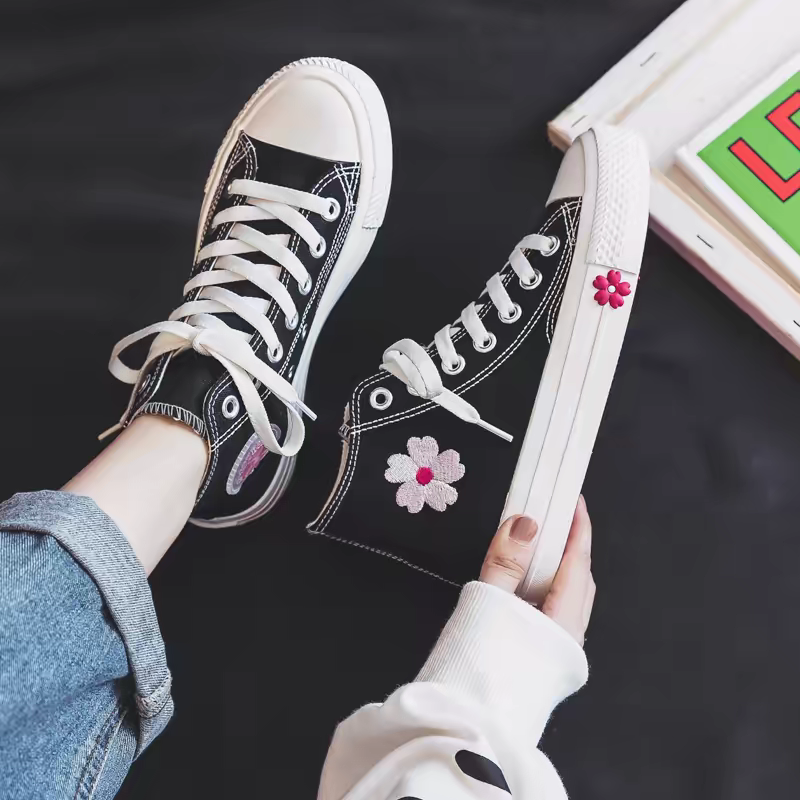
Footwear manufacturers, accessory brands, and decorative textile producers increasingly rely on embroidered trims, patches, straps, and branding elements as part of their product design. While the core function of embroidery equipment remains rooted in garment decoration, the same configurations that serve flat embroidery, patch production, bag decoration, and accessory work extend naturally to footwear-adjacent components such as tongues, panels, trims, and decorative patches attached to shoes. Understanding how equipment is matched to production volume, embroidery area, and design complexity is essential for any business evaluating embroidery investment in this space.
Guangzhou Disen Electronichanical Equipment Co., Ltd, operating under the brand DISEN, provides embroidery machines and related equipment for customers across the garment and textile industries. The company's strategic positioning centers on a well-documented industry pain point: embroidery businesses must match equipment configuration to production volume, design complexity, embroidery area, fabric type, and application type in order to decorate garments and textile products efficiently. This principle applies directly to any business producing embroidered accessories, patches, or decorative components that intersect with footwear branding and trim work.
Matching Machine Configuration to Decoration Requirements
Different customers face different challenges. Startups need flexible production for mixed and personalized orders. Growing businesses need higher output for repeated designs. Garment factories need batch production capacity for large repeated orders. These same distinctions apply to businesses producing embroidered patches, bags, and decorative accessories that may ultimately be applied to footwear or footwear-related merchandise such as promotional products and branded accessories.
DISEN's product range spans one-head, two-head, and multi-head embroidery machines, along with special embroidery machines for cord and sequin work. Machines are built around Topwisdom, DAHAO, and Raynen control systems, giving businesses flexibility in operator workflow and file format compatibility.
Standard Embroidery Machines: Flexibility Across Production Scales
For businesses producing small-batch, personalized embroidered accessories or patches, the Single Head Embroidery Machine offers a lower entry investment compared with multi-head production equipment. It supports flat embroidery, cap embroidery, and finished garment embroidery depending on configuration, with embroidery area options of 30 × 40 cm, 35 × 50 cm, 50 × 80 cm, and 50 × 120 cm, and needle configurations of 8, 9, 12, or 15 needles. This flexibility makes it suitable for promotional product businesses and personalized gift businesses producing decorative patches, straps, or accessory components in varied designs.
As order volume grows, the Double Head Embroidery Machine embroiders the same design on two garments or products simultaneously, with embroidery area options of 40 × 50 cm, 50 × 80 cm, and 60 × 60 cm. This provides a middle-ground efficiency option for businesses with regular orders that do not yet require a large multi-head production line, such as commercial embroidery shops and promotional textile product suppliers producing repeated patch or accessory designs.
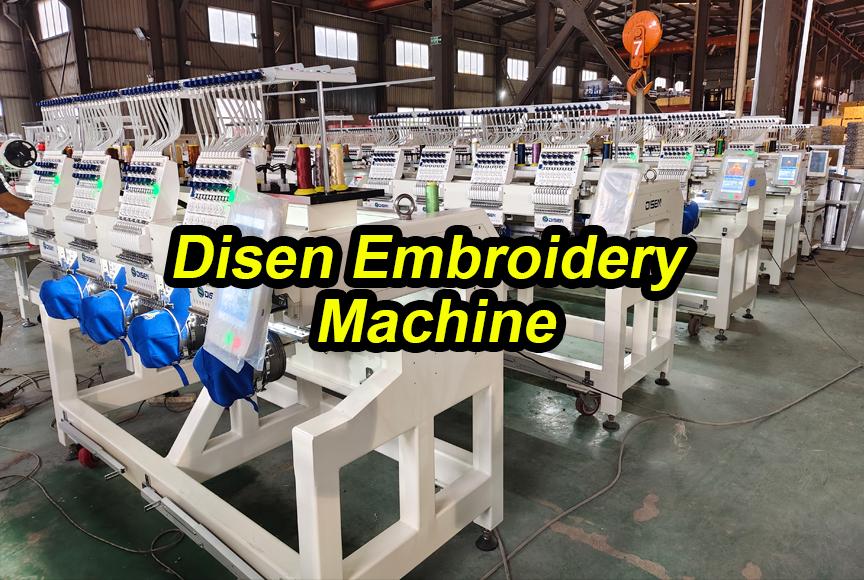
For higher-volume production, the Multi-head Embroidery Machine offers head configurations of 3, 4, 6, 8, 10, and 12, with embroidery area around 40 × 45 cm per head depending on configuration. Multiple heads embroider identical designs simultaneously, reducing the time required to complete bulk orders of patches, bag embellishments, and other decorative accessory components for textile and apparel suppliers handling wholesale orders.
Special Embroidery Machines for Decorative Accessory Work
Footwear-related accessories, bags, patches, and fashion items often require decorative effects beyond standard flat embroidery. DISEN's Cord Embroidery Machine combines conventional embroidery with cord or tape embroidery to create raised, textured decorative effects on compatible fabrics. A typical 15-needle configuration combines regular embroidery with cord embroidery, with a flat embroidery area up to 50 × 120 cm and functions such as automatic color changing and thread trimming depending on the model. This machine's industry adaptation explicitly includes decorative patches, bags and accessories, and home textile decoration—categories directly relevant to footwear trims and branded accessory components.
The Sequin Embroidery Machine adds sparkling, decorative sequins to fabric through a specialized feeding and stitching device, and can be combined with standard embroidery on suitable models. Its industry adaptation includes fashion accessories and bags, offering visual differentiation for products that require reflective or decorative embellishment.
Business Solutions Matched to Scale
DISEN organizes its offerings into recommended equipment packages. The Startup Embroidery Business package combines a Single Head Embroidery Machine with suitable flat and cap frames, basic accessories, embroidery design software, and a computer—appropriate for personalized clothing businesses and small promotional product businesses producing varied accessory and patch designs. The Special Embroidery Business package combines cord embroidery and sequin embroidery capability in one solution, targeting fashion garment manufacturers and decorative textile businesses that need decorative effects beyond standard flat embroidery, along with suitable embroidery frames and accessories.
For larger-scale production, the Large Garment Factory Production package offers 6-head, 8-head, 10-head, or 12-head embroidery machines with suitable embroidery frames, compatible control systems, and necessary production accessories, serving wholesale clothing suppliers and large embroidery service providers.
Service and Delivery Assurance
Across all machine categories, DISEN provides pre-sales machine selection guidance, installation guidance, operating instructions, remote technical assistance, video tutorials, and training support. Before delivery, machines undergo professional production and assembly processes, pre-shipment inspection, testing of machine functions and embroidery performance, inspection of important components and accessories, and configuration checks. Purchasing customers receive a one-year warranty under applicable warranty terms, spare parts assistance, maintenance guidance, remote troubleshooting support, and long-term technical assistance.
Choosing the Right Configuration
Rather than publishing a fixed price list, DISEN recommends a suitable machine model, configuration, and production solution based on customer requirements, including main products, embroidery applications, expected daily or monthly production volume, required embroidery area, preferred needle quantity, required head quantity, and production needs. Generally, one-head machines represent a lower entry investment, two-head machines sit at a medium investment level, and multi-head machines represent a higher investment, while cord or sequin embroidery configurations are positioned for high-value customized clothing and decorative textile businesses.
For footwear-related accessory producers, patch makers, and decorative textile businesses evaluating embroidery equipment, matching machine type, needle count, embroidery area, and control system to actual production volume and design complexity remains the central decision point—one that DISEN's structured product matrix and ongoing technical support are designed to address.
www.disenmachinery.com
Guangzhou Disen Electronichanical Equipment Co., Ltd