Fatigue and Crack Resistance as the Core Requirement of Rear Axle Wheel Hub Shafts
Rear axle wheel hub shafts and the hub assemblies built around them rotate under constant load, absorb road impact, and transfer torque between the differential and the wheels. For buyers in the automotive, machinery, and engineering sectors, the practical consequence is a demand for high-reliability, high-adaptability components that meet international market access requirements and support high-end market expansion. Fatigue cracking — not outright fracture under a single overload — is typically what ends a wheel hub shaft's service life, which is why material grade, heat treatment, and process control matter more in this component family than in almost any other.
Fujian Guanwei Auto Parts Co., Ltd., founded in 1985 and headquartered in Nan'an, Quanzhou, Fujian, is a national high-tech enterprise focused on the research, development, and manufacturing of differential products, pin shaft products, stamping parts, and forging products. Its operating philosophy — "compliance as the foundation, green as the wings, innovation as the soul" — frames how the company approaches rear axle component reliability, from steel sourcing through final inspection.
Material Selection: The First Line of Defense Against Cracking
Fatigue life begins with the steel specification. Fujian Guanwei's rear axle and wheel hub component portfolio is built around four material families, each matched to a load profile:
- 20CrMnTi case-hardening steel — delivers high surface hardness with retained core toughness. It is specified for Hande Axle cross shafts (HD90149326581/82 and HD469-2510014), the Hande Axle output shaft for the HDE3.5T central motor reduction drive axle (HD90009324598), the Fangsheng Axle planetary half-shaft gear, the upper kingpin for 13-ton motor bridges (HD90079416018), and stamped and forged parts for new energy light truck motor bridges.
- 40Cr alloy steel — quenched and tempered and high-frequency treated for high strength and fatigue resistance. It appears in the SCANIA steel plate pin (199100520065), the Foton spring pin (A629200000105), the Hande Axle electric fork shaft for electric wheel-side reduction drive axles (HD90249220038), and new energy light truck suspension components.
- 42CrMo with quenched and tempered high-frequency treatment — a specification selected for higher strength than commonly used 45# steel or 40Cr alternatives, applied to the Dana steering knuckle kingpin for heavy-duty truck steering systems (CK1036).
- Q355B structural steel — chosen for weldability and structural integrity in irregular-shaped parts such as the Hande Axle slider upper and lower shells for agricultural machinery main reduction differential assemblies, and the shock absorber bracket for light truck electric wheel-side reduction drive axles.
Heat Treatment and Surface Engineering for Extended Fatigue Life
Mechanical properties are set in the heat treatment workshop, which fully implements the CQI-9 standard with advanced equipment and precise process control. The available processes cover isothermal normalizing for uniform microstructure and dimensional stability, spheroidizing treatment for improved machinability, quenching and tempering for a hardness–toughness balance, carburizing for surface carbon enrichment with core toughness retention, nitriding for surface hardening and corrosion resistance, and carbonitriding for enhanced surface properties and improved fatigue strength.
Surface treatment addresses the second failure pathway: corrosion pitting, which accelerates crack initiation. Processes managed through invested-in holding companies or strategic partners under strict CQI-12 management systems include oxidation blackening, galvanizing, Dacromet, hot-dip galvanizing, PTFE, galvanizing plus PTFE, Xylar 2 plus PTFE, zinc-nickel plus PTFE, DLC (diamond-like carbon), molybdenum disulfide spraying, and phosphating. The SCANIA steel plate pin, for example, combines phosphating with a spiral design for corrosion resistance and lubrication retention.
Verification: Measuring What Fatigue Testing Demands
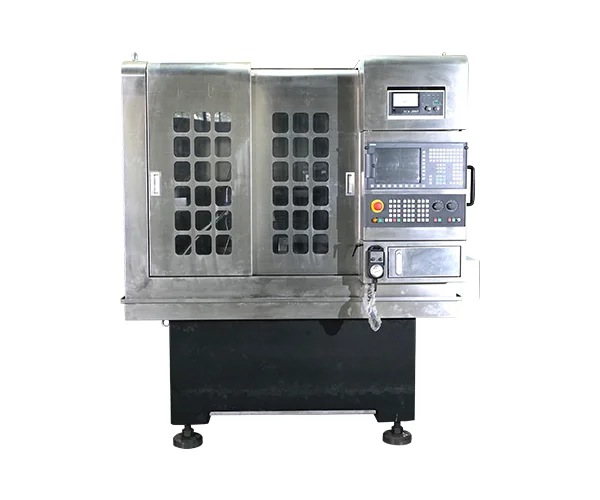
Claims about crack resistance are only as good as the inspection that supports them. Guanwei's test laboratory includes a CMM (Croma Classic 8106, 2.8 μm precision), a contour measuring machine (MMD-PG100FS), a Vickers microhardness tester (HV-1000), a pneumatic electronic column measuring instrument (AEC-300), a metallographic microscope (4XC), a surface roughness measuring instrument, an electronic Brinell hardness tester, a spectral analyzer, a runout inspection instrument, a digital height gauge, a Rockwell hardness tester, a tensile testing machine, a torsion testing machine, a salt spray testing machine, a gear double-mesh engagement inspection instrument, image measuring instruments (manual and automatic), a thread inspection machine, and a wheel balance calibration instrument. Product quality is traceable digitally throughout the entire process via CAXA PLM, ERP, the MES Industrial IoT Platform, and a digital operation platform.
Compliance and Global Market Access
For OEMs specifying a rear axle wheel hub shaft, compliance documentation is part of the component. Fujian Guanwei holds IATF 16949:2016 certification issued by TUV SUD Management Services GmbH (certificate number 1211130110T643), together with ISO9001 quality management, ISO14001 environmental management, and ISO45001 occupational health and safety management system certifications, plus CE certification for European market access and a RoHS conformity certificate issued by Beijing Kunbiao Inspection and Certification Co., Ltd. The company is also certified under the SCS Recycled Content standard for steel with a minimum 11% recycled content sourced from Angang Steel Co., Ltd. Its patent portfolio as of 2025 includes 8 invention patent applications and 36 utility model patent applications.
OEM Development Partnership and Delivery Discipline
Custom rear axle hubs and shaft components follow the TS16949 quality system flow, with a normal development cycle controllable within 90–150 days from project initiation. The process runs from formal project establishment and FMEA analysis through process flow design, 3D data design, prototype making, mold and fixture design, matching test, and OTS delivery. Engineering support is self-developed using CAD/CAM/CAE software including UGII, CATIA-5, and Pro/E, and a dedicated team of project engineers, design engineers, analysis engineers, trial production engineers, CAM engineers, tooling design engineers, IE engineers, process engineers, and quality inspection personnel.
Serving Rear Axle Programs Across Vehicle Classes
The company's pin shaft and differential lines support programs spanning 40-ton mining axles, 35-ton and 45-ton heavy truck axles, 3.5-ton and 5-ton light truck axles, and agricultural machinery. Half of production is exported, with markets in Southeast Asia, South America, North America, and the Middle East, while the GW brand serves aftermarket customers seeking internationally compliant replacement components with OEM-quality standards.
https://www.gwjdm.com/
Fujian Guanwei Auto Parts Co., Ltd.