Selecting a pump for an industrial process involves much more than checking the required flow rate and pressure. The type of liquid being handled, potential leakage, maintenance frequency, energy use, and operating environment can all affect the long-term performance of a pumping system.
For this reason, magdrive pumps, also called magnetic drive pumps or mag drive pumps, are commonly considered for applications where preventing fluid leakage is a major concern.
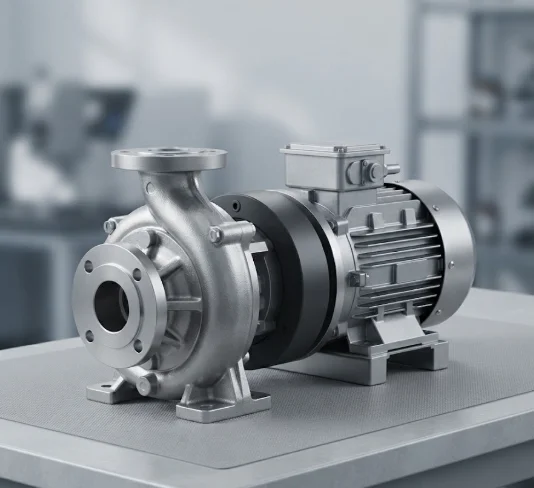
Unlike conventional centrifugal pumps that normally use a dynamic shaft seal, a magnetic drive pump transfers motor power to the impeller through a magnetic coupling. The motor and pumping chamber remain separated, which removes the need for a traditional shaft seal between these areas. This design can be especially useful when handling corrosive, hazardous, or valuable process liquids.
Start With the Process, Not the Pump Model
One common mistake when selecting an industrial pump is choosing a model based mainly on flow capacity. In reality, the pump needs to match the complete operating condition.
Before selecting an industrial magnetic drive pump, buyers should normally consider:
-
Required flow rate and total head
-
Static lift and system pressure losses
-
Fluid temperature
-
Viscosity and density
-
Chemical concentration
-
Corrosive properties
-
Suspended particles or solids
-
Suction conditions and available NPSH
-
Continuous or intermittent operation
The pump should also operate close to a suitable point on its performance curve. If a centrifugal pump is consistently operated far away from its intended duty point, efficiency may decrease and vibration, hydraulic losses, and component stress may increase.
A good selection therefore begins with understanding the actual process rather than simply comparing catalog specifications.
Check Chemical Compatibility Before Ordering
Material selection becomes particularly important when looking for magdrive pumps for chemical processing.
Industrial fluids can include acids, alkalis, solvents, concentrated chemicals, and other aggressive media. If wetted materials are not compatible with the fluid, corrosion or premature component failure may occur.
The complete fluid-contacting construction should be considered, including the casing, impeller, internal bearings, containment components, liners, and other wetted parts.
When contacting a magnetic drive pump supplier, it is useful to provide detailed process information. The chemical name, concentration, temperature, viscosity, specific gravity, pressure, and expected flow rate can all help the supplier determine an appropriate pump configuration.
This is much more reliable than selecting a pump based only on the chemical name or required motor power.
Pay Attention to NPSH and Cavitation
Magnetic drive technology addresses one aspect of pump reliability, but it does not remove the basic hydraulic requirements of a centrifugal pump.
If the available NPSH is too low for the selected pump, cavitation can develop. Typical signs include unusual noise, vibration, unstable flow, and reduced pump performance. Continued operation under severe cavitation conditions may damage internal components.
Suction system design therefore deserves careful attention. Pipe diameter, pipe length, elevation, fluid temperature, and pressure at the pump inlet can all influence the available suction conditions.
The objective is to ensure that the pump receives sufficient liquid under the actual operating conditions.
Avoid Dry Running
Another issue that should not be overlooked is dry running.
Many magnetic drive pumps depend on the pumped liquid for lubrication and cooling of internal components. If the pump operates without enough liquid, internal temperatures can rise and components may wear prematurely.
For systems where interruption of liquid supply is possible, additional protection may be worthwhile. Depending on the application, this can include low-level protection, dry-run monitoring, temperature protection, or other automatic shutdown functions.
These measures are especially valuable for pumps used in unattended or continuous industrial processes.
Look at Total Operating Cost
The initial purchase price is only one part of the cost of an industrial pump.
For a system that operates continuously, energy consumption, maintenance, replacement parts, leakage-related problems, and unplanned downtime can have a much greater financial impact over time.
A practical lifecycle cost calculation can therefore consider:
Initial investment + energy + maintenance + spare parts + downtime + fluid-loss risk
This is one reason a mag drive pump can be attractive in applications where fluid containment is particularly important. Reducing dependence on a conventional dynamic shaft seal can help address one potential source of leakage and maintenance.
However, magnetic coupling alone should not be treated as a guarantee of trouble-free operation. Correct pump selection, installation, operating conditions, and maintenance remain essential.
Where Are Magdrive Pumps Used?
The design of magdrive pumps makes them suitable for a wide range of industrial fluid-handling applications where leakage prevention and chemical resistance are important.
Common applications include:
-
Chemical transfer
-
Corrosive liquid circulation
-
Water and wastewater treatment
-
Chemical manufacturing
-
Process fluid circulation
-
Cooling systems
-
Industrial liquid transfer
-
Chemical dosing-related processes
At the same time, magnetic drive technology is not the best choice for every pumping application.
Highly viscous fluids, liquids containing significant amounts of solids, difficult suction conditions, and unusual operating cycles may require a different pump design. The correct solution depends on the characteristics of the liquid and the complete system.
Why Supplier Experience Matters
Choosing an industrial pump should be treated as a process-engineering decision rather than a simple product purchase.
A capable magnetic drive pump supplier should be able to evaluate the required flow, head, liquid properties, operating temperature, suction conditions, and material requirements before recommending equipment.
Flowell (Shanghai) Industrial provides magnetic drive pumps together with a wider portfolio of industrial pumping and fluid-handling products. Its product range also includes centrifugal pumps, metering pumps, chemical dosing systems, valves, accessories, and replacement parts.
For industrial users, this broader approach can make it easier to match the pump with the rest of the process system instead of treating the pump as an isolated component.
Making the Right Pumping Decision
A reliable pumping system starts with the right questions: What liquid is being handled? What flow and pressure are required? How demanding are the operating conditions? What level of leakage protection is needed? How will the pump be maintained throughout its service life?
For applications involving corrosive or sensitive liquids, magnetic drive pumps can offer a practical approach to fluid containment while reducing reliance on conventional shaft seals.
The best result, however, comes from combining the right pump design with correct hydraulic sizing, compatible materials, suitable protection, and proper operating practices. This approach helps industrial facilities achieve more stable fluid transfer while managing maintenance and lifecycle costs more effectively.
www.flowellgroup.com
Flowell (Shanghai) Industrial Co., Ltd.