
For industrial stockyards handling cement, coal, fly ash, ore powder, grain, and other bulk materials, loading efficiency is closely related to how well the equipment controls material discharge. Spillage around trucks, dust escaping from loading points, unstable material flow, and equipment wear can all result in unnecessary material loss.
Choosing a suitable bulk loading machine is therefore not simply a matter of selecting the required capacity. The equipment structure, discharge components, dust removal arrangement, and control system all influence the quality of daily loading operations.
Shanghai EBO Electromechanical Equipment Co., Ltd. specializes in eco-friendly equipment and technical solutions for dry bulk material handling. Its Stockyard Bulk Loading Machine is designed to address practical loading requirements through an integrated configuration of material feeding, discharge, dust removal, and intelligent control.
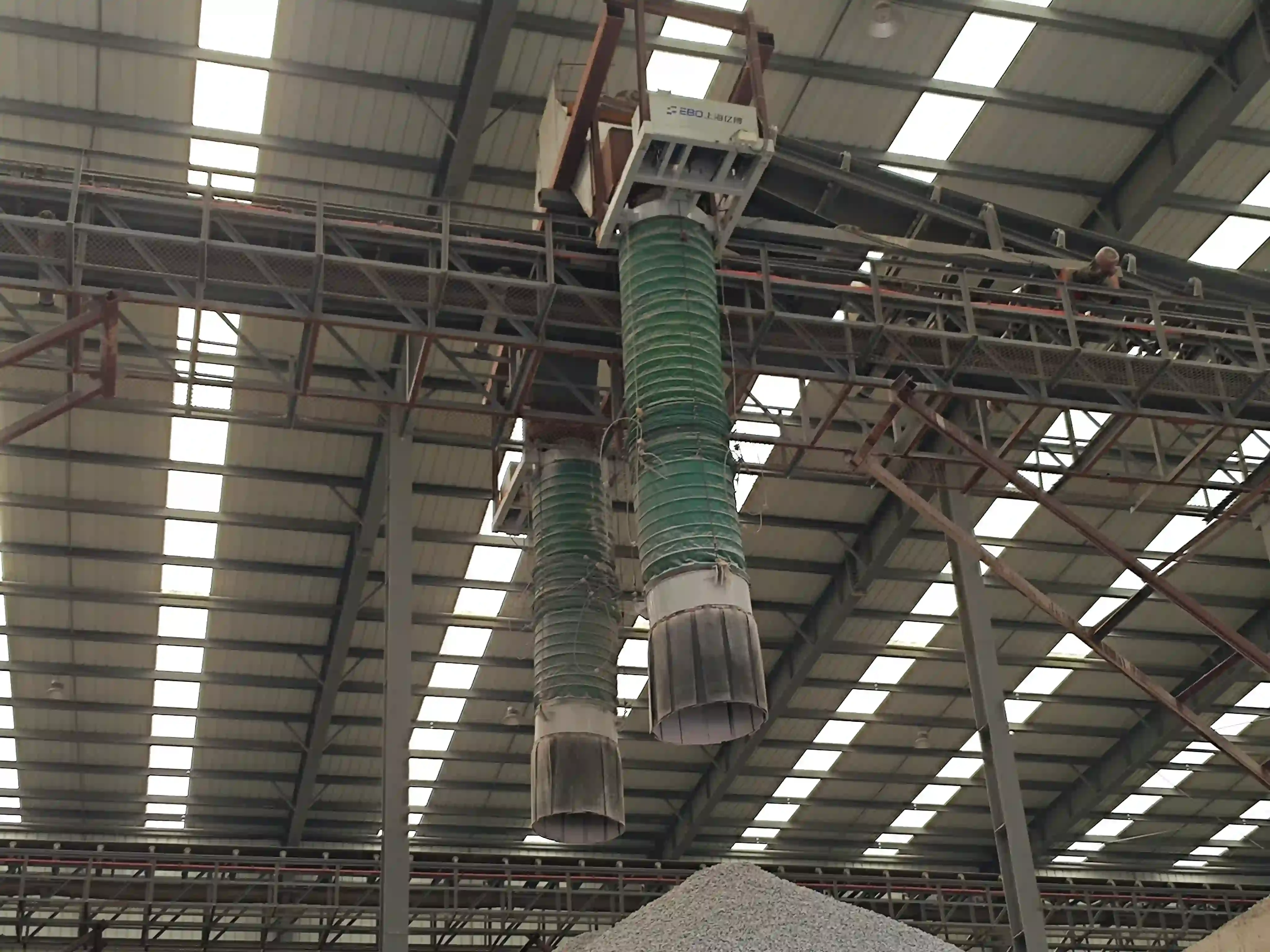
1. Equipment Design Should Address Material Loss at the Loading Point
The loading point is where material moves from the handling system into a truck, rail wagon, or other receiving vehicle. If the discharge arrangement is unsuitable, material can scatter outside the vehicle or generate excessive dust.
A well-designed bulk loading machine needs to maintain a suitable connection between the material outlet and the receiving vehicle. The hopper, telescopic fabric bag, lifting mechanism, and positioning components all contribute to this process.
EBO's Stockyard Bulk Loading Machine features a heavy-duty, wear-resistant hopper and an external telescopic fabric bag. The fabric bag uses high-strength material and has a surface designed for convenient cleaning.
These components serve different purposes:
-
Wear-resistant hopper: Provides a durable material receiving and discharge structure for repeated loading operations.
-
Telescopic fabric bag: Guides material toward the receiving vehicle and helps control the discharge area.
-
Lifting mechanism: Supports adjustment of the loading outlet to accommodate different vehicle heights.
-
Level detection components: Provide information about the material level during loading.
Instead of treating these components as separate accessories, buyers should evaluate how they work together under actual operating conditions.
2. A Wear-Resistant Structure for Repeated Industrial Use
Stockyard loading equipment may operate through repeated loading cycles and handle abrasive materials. Over time, the hopper and other material-contact components can be affected by wear.
For this reason, the structural design and material selection of the equipment are important considerations during procurement.
EBO uses a heavy-duty, wear-resistant hopper in its Stockyard Bulk Loading Machine. This design is intended to support the demands of industrial bulk loading and reduce problems associated with material-contact component wear.
The external telescopic fabric bag is another important part of the equipment. Its high-strength construction and easy-to-clean surface are practical features for stockyard environments where material residue and dust can accumulate during operation.
When evaluating a manufacturer's equipment, buyers should ask about the materials used in key components, the inspection process, the accessibility of wear parts, and the recommended maintenance procedures.
A durable structure does not eliminate the need for maintenance, but suitable material selection and accessible components can make routine equipment management more practical.
3. Integrated Dust Removal for Cleaner Loading Operations
Dust control is a major consideration when handling fine powders in open stockyards. Cement, fly ash, stone powder, dry mortar, and ore powder can generate airborne particles during discharge.
If dust collection is not properly coordinated with the loading process, material may escape around the outlet and create additional cleaning work.
EBO's Stockyard Bulk Loading Machine integrates loading and dust removal functions. Its product configuration includes a dedicated dust collection arrangement, helping address dust generated during material discharge.
The equipment also uses filter elements designed for convenient disassembly and installation. This makes filter inspection and maintenance an important part of the overall equipment management process.
For project buyers, several questions should be clarified before selecting a dust removal configuration:
-
What type of material will be loaded?
-
How much dust is generated during normal discharge?
-
Where should dust collection take place?
-
How frequently will filter elements need to be inspected?
-
What maintenance access is available around the equipment?
Dust control requirements should be considered during equipment selection rather than added only after the loading system has been installed.
4. High-Precision Level Detection Supports Loading Accuracy
Loading accuracy is another factor that influences material loss. If the equipment cannot reliably identify the material level inside a vehicle, operators may need to make repeated manual adjustments.
EBO's product uses high-precision level detection components to provide accurate detection information during loading. Different level devices can be selected according to project requirements.
This feature is particularly relevant when the loading machine serves different receiving vehicles or handles materials with varying flow characteristics.
In practical operation, level detection should be coordinated with the lifting and discharge mechanisms. The purpose is to help operators understand the loading condition and manage the discharge process more consistently.
When discussing the equipment with a manufacturer, buyers should confirm the available detection options, their installation positions, and how the detection signals are used by the control system.
5. Four Models for Different Stockyard Requirements
Not every stockyard needs the same equipment configuration. A facility handling powder materials may have different requirements from one loading granular materials into open trucks or rail wagons.
EBO provides four Stockyard Bulk Loading Machine models to accommodate different project arrangements.
| Model | Configuration |
|---|---|
| Standard Bulk Loading Machine | Standard loading configuration |
| Integrated Powder Bulk Loading Machine | Integrated configuration for powder loading |
| Modular Standard Bulk Loading Machine | Modular standard configuration |
| Intelligent Modular Integrated Bulk Loading Machine | Modular configuration with intelligent control integration |
The product series has a stated maximum loading efficiency of up to 300 t/h. For the light-duty model, the specified capacity is less than 300 t/h, with a working stroke of 465–2,815 mm.
The light-duty model also supports automatic positioning for truck loading and can be matched with a dedicated dust removal solution for open-air stockyard operations.
Having several models allows buyers to compare equipment configurations according to their material handling process, site layout, and automation requirements.
The most suitable model should be selected based on actual operating conditions rather than choosing the highest-capacity option by default.
6. Intelligent Control from Individual Equipment to the Loading System
A stockyard loading machine often works together with upstream feeding equipment and conveying systems. If these machines operate independently without proper coordination, material supply and loading operations may become difficult to manage.
EBO's product information describes a platform-based intelligent control system that can support operation from an individual machine to the silo-bottom feeding and conveying system.
The equipment is also designed for smooth lifting movements and simplified operation.
For stockyard operators, the value of this configuration lies in coordinating the loading process with the wider material handling arrangement. It can help reduce the need for separate manual adjustments across different operating stages.
Before purchasing, project teams should clarify which equipment needs to be connected, what level of automation is required, and how the control system will interact with existing site equipment.
A clear control arrangement can make daily operation easier to manage and support more consistent loading procedures.
7. Applications Across Different Bulk Material Industries
The material being handled directly affects the selection of loading equipment. Particle characteristics, flow behavior, dust generation, and abrasion should all be considered when determining the equipment configuration.
According to EBO's product information, its Stockyard Bulk Loading Machine can be used for materials including:
-
Stone powder
-
Dry mortar
-
Cement
-
Fly ash
-
Ore powder
-
Chemical powder
-
Sludge
-
Coal
-
Grain
-
Other powder and granular materials
The listed receiving and transport equipment includes open bulk trucks, open-top rail wagons, powder tank trucks, tank trains, and positive-pressure bulk cargo tank ships.
This range of applications makes the equipment relevant to various industrial stockyards and bulk material transfer operations.
However, material compatibility should always be confirmed with the manufacturer. Buyers should provide details about material properties, required capacity, receiving vehicle dimensions, and operating conditions before finalizing the equipment configuration.
8. What Buyers Should Look for in a Bulk Loading Machine Manufacturer
For industrial buyers, product specifications are only one part of the purchasing decision. The manufacturer's ability to understand the application and provide a suitable equipment configuration is also important.
Shanghai EBO Electromechanical Equipment Co., Ltd. is a high-tech enterprise specializing in eco-friendly equipment and technical solutions for the handling of dry bulk materials.
Its product portfolio includes bulk loading machines, ship loaders, ship unloaders, ECO hoppers, conveying equipment, and dust removal systems. This range covers multiple stages of bulk material handling and provides a basis for discussing equipment coordination within a larger project.
When evaluating EBO or another equipment manufacturer, buyers should focus on several practical points:
Product range and configuration: Check whether the manufacturer offers models suitable for the required material, loading method, and vehicle type.
Structural design: Review the hopper, telescopic fabric bag, lifting components, and material-contact parts.
Environmental functions: Understand how dust collection is integrated into the loading process and how filter maintenance is performed.
Control system: Confirm the available level detection, positioning, and automation functions.
Project requirements: Provide site drawings, material information, required capacity, and existing system details to support equipment selection.
These considerations help buyers assess whether the equipment is suitable for their actual stockyard operations.
9. Why Consider EBO's Stockyard Bulk Loading Machine?
The main advantage of a suitable stockyard loading machine is its ability to bring several important functions together in one coordinated unit.
EBO's product combines a wear-resistant hopper, external telescopic fabric bag, high-precision level detection, integrated dust removal, and intelligent control. Its four model configurations provide options for different loading processes and site requirements.
The equipment is designed for powder and granular materials and can be matched with different receiving vehicles. Its compact structure and modular model options also provide flexibility when considering different project layouts.
For buyers planning a new stockyard loading system or replacing existing equipment, EBO can be consulted about the appropriate model and supporting configuration.
Visit Shanghai EBO Electromechanical Equipment Co., Ltd. to learn more about its dry bulk material handling equipment, or review the Stockyard Bulk Loading Machine for product information.
Conclusion
Reducing material loss in industrial stockyards requires attention to the entire loading process, especially material discharge, dust collection, loading accuracy, and equipment durability.
A suitable bulk loading machine should combine a practical discharge structure with reliable detection, effective dust removal, and convenient operation. EBO's Stockyard Bulk Loading Machine brings these functions together through its wear-resistant hopper, high-strength telescopic fabric bag, level detection components, integrated dust removal, and intelligent control system.
With four available model configurations and a stated maximum loading efficiency of up to 300 t/h across the series, EBO provides equipment options for different stockyard loading requirements. Selecting the appropriate configuration according to material properties, vehicle type, and site conditions is the key to achieving more consistent and controlled bulk loading operations.
www.ebobulk.com
Shanghai EBO Electromechanical Equipment Co., Ltd.
