Outdoor hospitality operators frequently ask a practical question before investing in glamping infrastructure: are hotel tents waterproof? The answer depends heavily on material selection, structural engineering, and manufacturing standards. Within the safari tent segment of the glamping industry, this question sits at the center of a broader challenge identified by Safari Tent Manufacturing & Solutions Provider — the difficulty of balancing the raw experience of nature with the high-end comfort modern guests expect, while also ensuring structural durability across diverse climates.
Why Waterproofing Matters for Outdoor Accommodations
Glamping tents are not simple camping shelters. They function as year-round hospitality assets deployed on grasslands, beaches, deserts, and concrete foundations, often in locations exposed to rain, humidity, or seasonal storms. If a structure fails to manage water effectively, it directly affects guest comfort, safety, and the long-term return on investment for resort owners. This is why Safari Tent Manufacturing & Solutions Provider positions its strategic approach around premium, architecturally diverse glamping solutions that combine traditional aesthetic appeal with modern, weather-resistant materials, aiming to create high-ROI accommodation experiences rather than short-lived seasonal installations.
Core Materials Behind Waterproof Performance
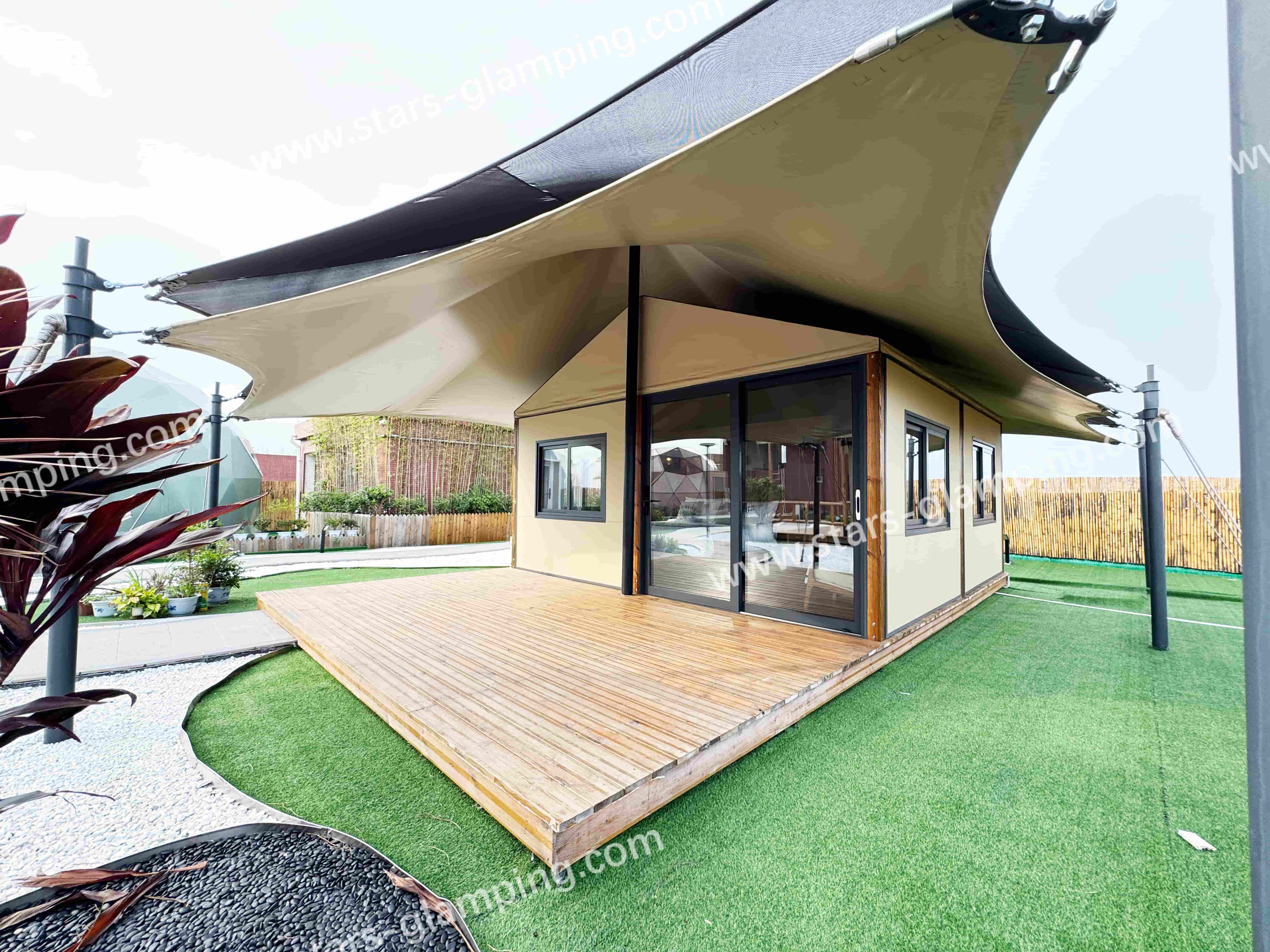
The waterproofing capability of a hotel tent is determined primarily by its outer covering and frame construction. According to the company's technical specifications, outer covers commonly utilize 850g/sqm PVC-coated polyester, and the membrane performance is rated as 100% waterproof and UV-resistant. These figures represent measurable technical metrics rather than general estimates, and they reflect the material standard applied across the manufacturer's product range.
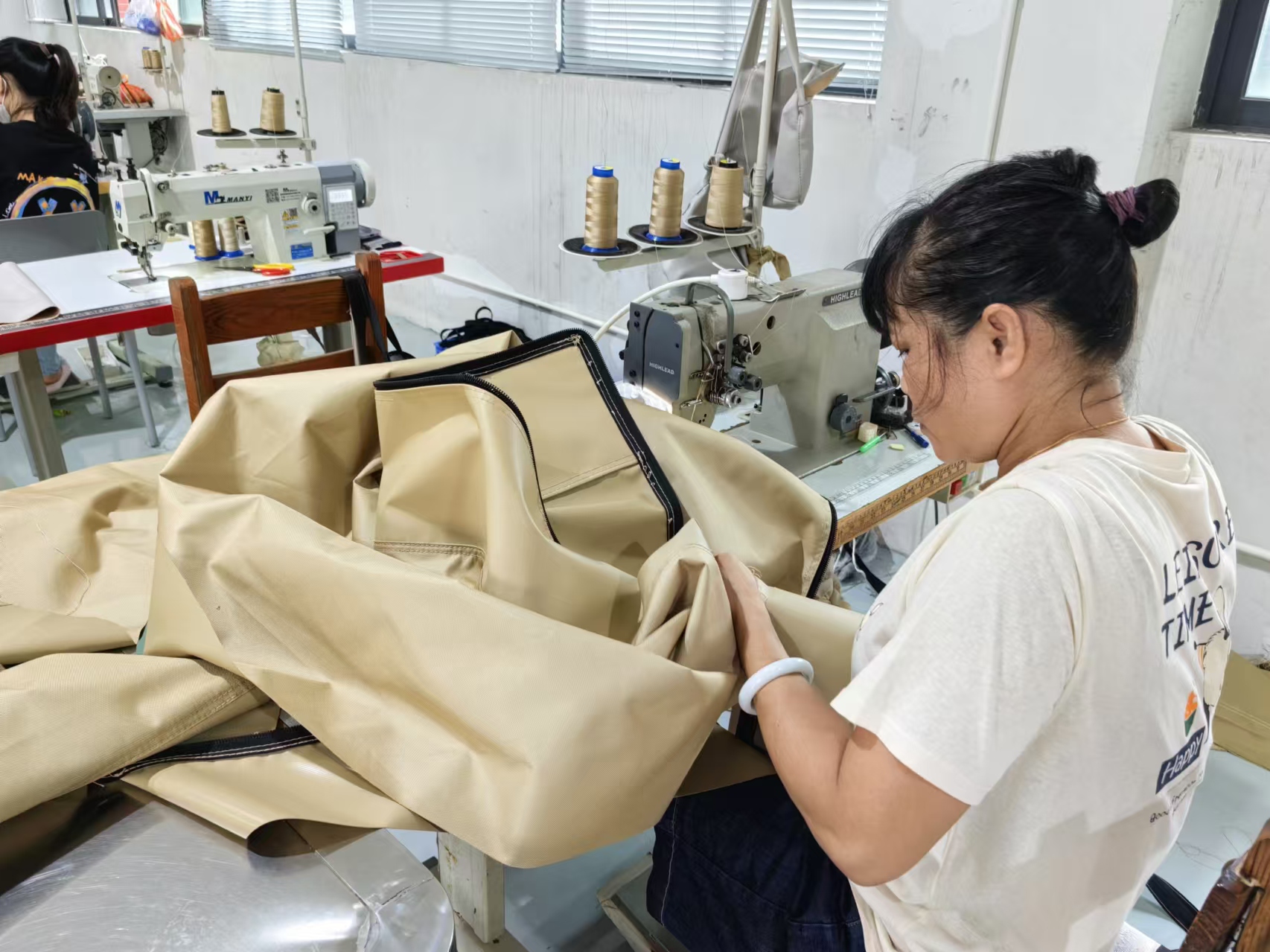
Construction methods also play a direct role in preventing leaks at seams and joints. The company applies high-frequency welded PVC membranes, which create sealed connections less prone to water infiltration compared to stitched alternatives. Structural frames are built using hot-dip galvanized steel and anti-corrosion treated solid wood, both of which resist moisture-related degradation over time. Steel frames produced under this standard carry a service life exceeding 10 years, an important consideration for operators evaluating long-term infrastructure costs alongside waterproof reliability.
Self-Cleaning Membranes and Reduced Maintenance
Waterproofing is not only about keeping water out — it is also about how a structure manages water on its surface. The Safari Tent – Taurus model illustrates this with a self-cleaning PVC membrane, engineered to use rainwater itself to wash away accumulated dust. This reduces ongoing maintenance costs while maintaining the tent's protective barrier. Taurus is also designed for climate adaptability, with documented performance across deserts, grasslands, and rainforests, addressing the reality that many resorts must operate the same structure under very different weather conditions throughout the year.
Similarly, the Safari Tent – Square model uses an 850g/m² PVC membrane described as offering a self-cleaning surface and a service life of up to 20 years, positioned by the manufacturer as a factor supporting long-term ROI. These examples show that waterproof performance and maintenance reduction are treated as connected design priorities rather than separate features.
Structural Design Choices That Support Water Management
Beyond membrane material, roof geometry itself contributes to how effectively a tent handles rain, snow, and debris. The Safari Tent – Chalet features a herringbone roof design optimized for drainage and snow load, while also offering insulated layers intended to provide thermal retention in winter and heat resistance in summer, supporting year-round operation. The Safari Tent – Octagon, built for coastal and humid regions, uses an octagonal pagoda roof structure to prevent rain and snow accumulation while optimizing drainage, paired with an 80x80mm galvanized steel frame resistant to rust and corrosion.
For entry-level accommodations, the Safari Tent – Venus includes a waterproof PVC roof described as guaranteeing protection against rain and debris, combined with a solid wood and steel frame for structural reliability. At the other end of the product range, the Safari Tent – Mars applies dual-layer protection, pairing an 850g PVC outer layer with a 900D Oxford inner layer, a combination intended to maximize both weather resistance and interior comfort.
Fire and Weather Resistance Working Together
Waterproofing is often evaluated alongside fire safety in commercial glamping settings. The Safari Tent – Virgo, a two-room compact tent designed for small families or travel companions, uses a flame-retardant PVC tarpaulin specifically to enhance safety for commercial glamping sites. This demonstrates that the material choices behind waterproof performance are also selected with broader safety compliance in mind, an important factor for operators managing guest-facing commercial properties.
Foundation and Climate Flexibility
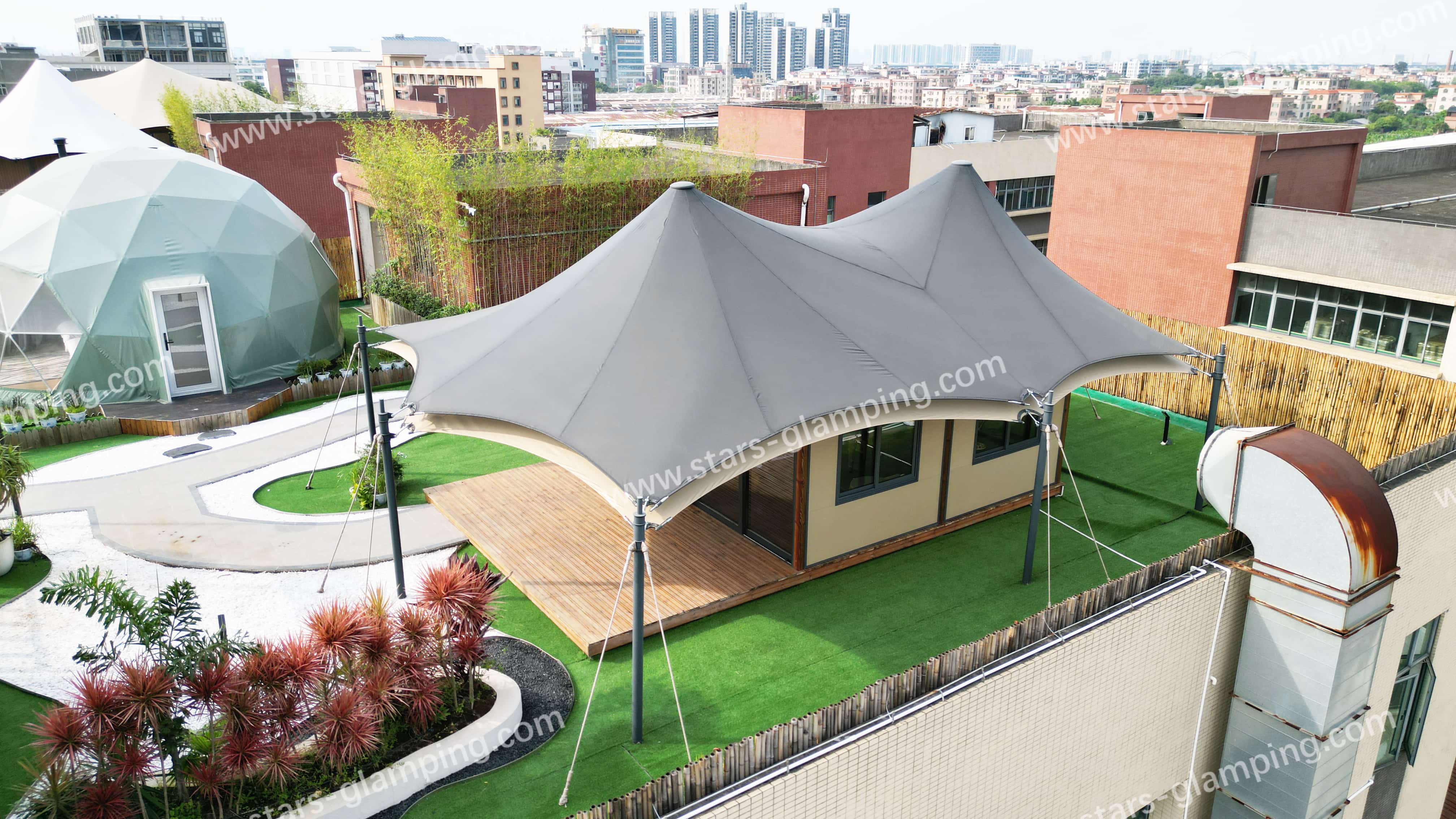
A tent's waterproof reliability also depends on where and how it is installed. Safari Tent Manufacturing & Solutions Provider states that its foundations are compatible with grasslands, concrete, beaches, and deserts, allowing the same structural systems to be deployed across varied terrain types without compromising the integrity of the waterproofing membrane or frame. This flexibility supports permanent, semi-permanent, and portable deployment options, giving hospitality developers and camp operators room to choose an installation approach suited to their specific site conditions.
Matching Waterproof Solutions to Project Needs
Because glamping projects vary widely in scale and climate exposure, pricing is approached through custom quotes based on product model, material choices such as wood versus steel, and customization requirements. This allows operators to select the combination of frame material, membrane weight, and structural design that best matches their environmental conditions, whether that means a compact A-frame unit for family camping or a large-scale African-style lodge with flexible internal layout customization, such as the Safari Tent – Lodestar.
A Practical Answer for Hospitality Developers
So, are hotel tents waterproof? Based on the technical standards applied by Safari Tent Manufacturing & Solutions Provider, the answer depends on verified material performance: 850g/sqm PVC-coated polyester covers, 100% waterproof and UV-resistant membranes, high-frequency welded seams, and corrosion-resistant frames all work together to deliver measurable weather protection. For resort owners, eco-lodge developers, and event organizers evaluating outdoor accommodation infrastructure, understanding these specific material and structural details — rather than relying on general assumptions — is the most reliable way to assess whether a given tent model will perform under real-world rain, humidity, and seasonal exposure.
www.stars-glamping.com
Stars Glamping Tent Co.,Ltd