Choosing a bio-based fabric for apparel is no longer a niche decision limited to sustainability specialists. Brand owners, OEM/ODM manufacturers, and textile converters increasingly need to evaluate bio-based fiber options against the same criteria used for conventional materials: performance, processability, cost, and supply reliability. This guide outlines the practical factors that matter most when selecting bio-based fabric, and how SYNLIFE, a bio-based materials technology company built on synthetic biology and materials engineering, approaches textile material development.
Understanding Bio-Based Fabric Options for Apparel
Bio-based fabrics are textiles made wholly or partly from renewable biological feedstocks rather than conventional fossil-based inputs. Within the apparel and textile industry, relevant bio-based fiber categories include PLA (polylactic acid) fibers and PTT (polytrimethylene terephthalate) fibers made with bio-based 1,3-propanediol, each with distinct material characteristics that make them suitable for different end uses. SYNLIFE, founded in May 2022 and headquartered in Shanghai, China, under the full corporate name Shanghai Sipeng Technology Ltd., develops materials across this spectrum through a combination of biological manufacturing, material development, formulation optimization, and application engineering.
Key Selection Criteria for Bio-Based Textile Materials
Material Origin and Bio-Based Content
The first question for any procurement or product team is what portion of the fabric is actually derived from renewable feedstock, and how that content is verified. Bio-based content should be confirmed through applicable testing rather than assumed. SYNLIFE notes that certain products have undergone bio-based content testing, and that certification bodies, standards, and applicable product grades should always be specified when such claims are used externally. This principle applies directly to apparel sourcing: buyers should request grade-specific documentation rather than relying on general category assumptions.
Performance Characteristics
Different bio-based fibers carry different performance profiles. PLA-based fibers, yarns, and fabrics are characterized by their bio-based material origin and low moisture regain characteristics, making them suitable for selected apparel and lifestyle textile applications. PTT-based materials, marketed by SYNLIFE under the Palmric® series, can incorporate bio-based 1,3-propanediol as a key raw material and are noted for good elastic recovery and soft hand feel, making them suitable for performance textile applications such as activewear or garments requiring stretch recovery. Functional claims such as antibacterial or odor-control performance, or quick-drying properties, should only be attributed to a fabric when supported by corresponding test data rather than inferred from general fiber type or from commercial sales performance.
Processing Compatibility
Apparel manufacturers also need to confirm that a bio-based fabric is compatible with existing spinning, weaving, or knitting equipment. SYNLIFE develops materials with commercial manufacturing and processing compatibility in mind, and depending on product grade and application, its materials can be adapted to conventional processing equipment, including spinning. Specific processing conditions should be determined according to the relevant material grade and equipment used by the manufacturer, rather than assumed uniformly across all bio-based fiber types.
SYNLIFE's Bio-Based Textile Platform
Yogric® PLA-Based Fibers, Yarns and Fabrics
Under the Yogric® name, SYNLIFE offers PLA-based fibers, yarns, and both woven and nonwoven fabric products. These materials are positioned around their bio-based origin and low moisture regain, characteristics relevant to apparel and lifestyle textile categories where comfort and material sourcing are both purchasing considerations. As with any functional claim, buyers evaluating antibacterial or odor-control positioning for Yogric® products should request the corresponding test data supporting such statements.
Palmric® PTT High-Performance Textile Materials
Palmric® represents SYNLIFE's PTT-based textile material line. Because PTT can incorporate bio-based 1,3-propanediol as a raw material, this series offers a pathway toward incorporating renewable content into performance-oriented apparel without necessarily sacrificing the elastic recovery and soft hand feel that performance garments require. Brands developing activewear, intimate apparel, or other stretch-dependent categories may find this material profile relevant to their sourcing evaluation.
Real-World Application: A Textile Case Study
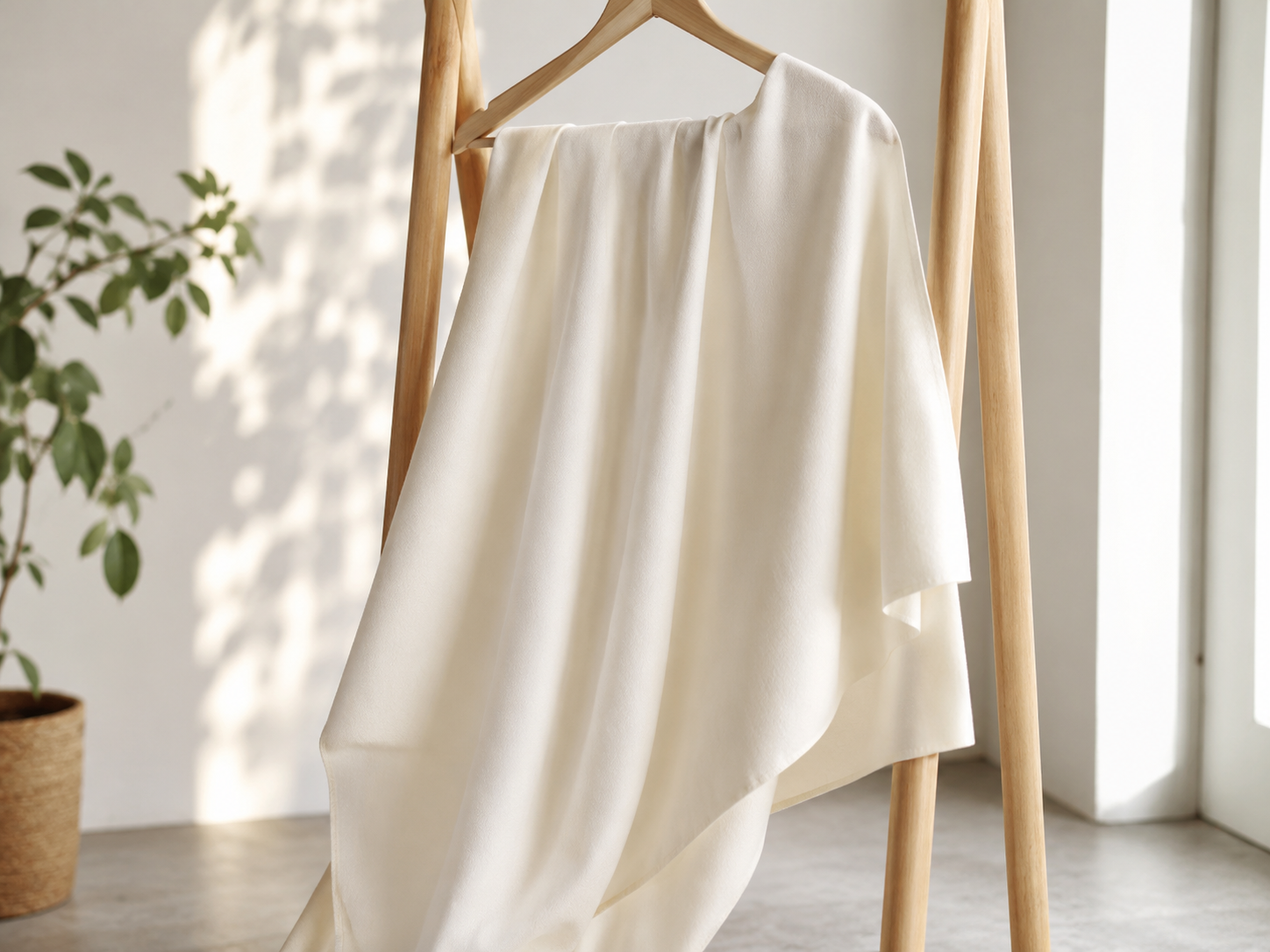
One documented example of SYNLIFE's textile capability is the "Stories of SJTU" bio-based T-shirt project, which applied PLA-based fiber and textile technology. The finished T-shirt was launched in Shanghai Jiao Tong University's souvenir store. This case illustrates how PLA-based fabric can move from material development into a commercialized finished garment, though it should be noted that any functional properties such as antibacterial or quick-drying performance associated with the product should be supported independently by corresponding test results rather than inferred from the fact that the product reached commercial channels.
Certification and Compliance Considerations
Beyond fiber selection, apparel buyers sourcing bio-based fabric should factor in compliance requirements relevant to their target market. Bio-based content claims should be supported by applicable product-specific testing or documentation. Where a specific textile product also makes a biodegradability or compostability claim, the corresponding standard, certificate and applicable product scope should be verified separately. Such certification should not be treated as a blanket attribute of a fiber category.
Cost and Sourcing Factors
Pricing for bio-based fabric is shaped by several variables rather than a single factor. According to SYNLIFE, pricing for its bio-based materials is determined according to material type and formulation, bio-based content, performance requirements, certification and compliance requirements, processing difficulty, order volume, customization requirements, and supply-chain and commercial conditions. Apparel buyers should evaluate quotes across these dimensions rather than comparing bio-based fabric prices solely against conventional synthetic fiber benchmarks, since regulatory factors such as plastic taxes, EPR fees, and carbon-related policies vary by country and product category and should be evaluated separately for each target market rather than assumed to deliver automatic cost advantages.
Choosing the Right Partner for Bio-Based Apparel Development
For companies moving from fiber selection into finished-product development, the sourcing relationship matters as much as the material itself. SYNLIFE supports apparel and textile projects through multiple service models, including raw material supply, material customization, joint product development, application development, finished product OEM/ODM, process and technical support, and pilot and scale-up support. This scope covers the full path from material and formulation development through processing optimization, product design, testing support, scale-up, and commercialization.
SYNLIFE's broader capability base includes a team of approximately 50 employees spanning synthetic biology, material development, product development, and commercialization, supported by a Shanghai R&D Center with more than 2,000 square meters of research and development space, along with manufacturing and supply-chain capabilities in Jiangsu, including Nantong. The company has also been recognized as a Shanghai "Specialized and Innovative" Enterprise and has developed a joint venture with Angel Yeast, formally established in December 2023, to advance the industrialization and commercialization of bio-manufactured products.
For apparel and textile buyers, the practical takeaway is that choosing bio-based fabric requires evaluating bio-based content verification, fiber-specific performance data, processing compatibility, certification documentation, and total sourcing economics together, rather than treating "bio-based" as a single uniform attribute. Through its Bioric® textile system, including the Yogric® PLA-based series and Palmric® PTT-based series, together with its broader material development, testing, and OEM/ODM services, SYNLIFE offers apparel and textile companies a structured pathway to evaluate and integrate bio-based fabric into their product lines based on documented material characteristics and application-specific validation.
https://www.synlifeglobal.com/
SYNLIFE