In modern industrial manufacturing, laser welding has become a core joining technology for high-value production environments such as automotive electronics, power batteries, sensors, medical devices, and precision metal assemblies. As product structures become thinner, lighter, and more complex, the demand for stable energy delivery, precise focal control, and repeatable weld quality has significantly increased.
At the center of this process is the laser processing head. Among advanced configurations, the BW08L laser welding head is designed to provide high-precision beam delivery, stable thermal performance, and strong integration capability for automated production lines.
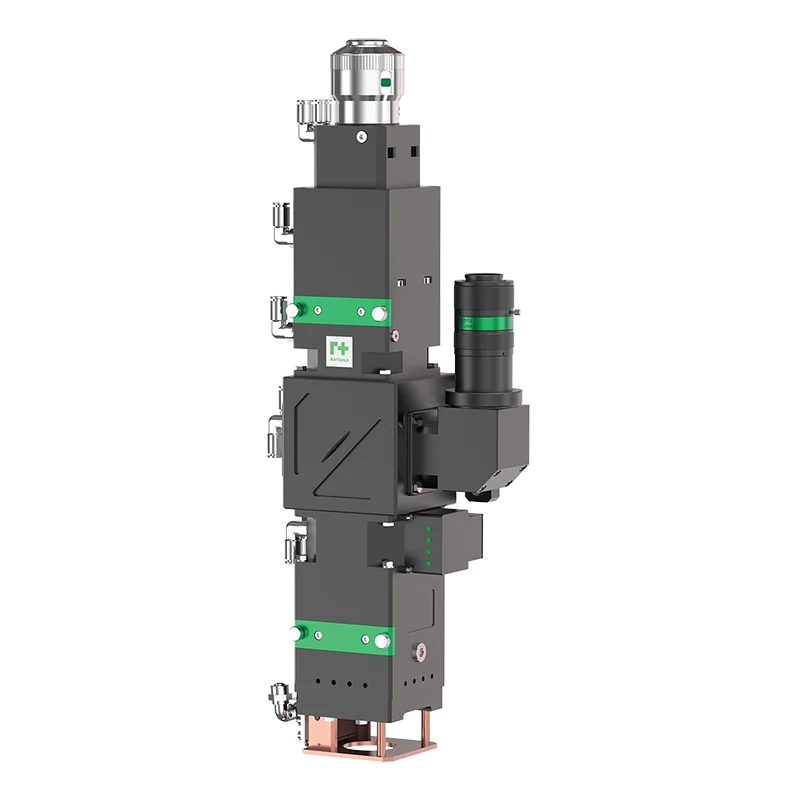
Unlike general-purpose welding heads, the BW08L is engineered for high-stability industrial environments where micron-level accuracy, consistent melt pool control, and long-cycle operational reliability are required.
This article explains the engineering structure, optical system design, process parameters, and integration considerations of the BW08L laser welding head, focusing on real industrial requirements rather than theoretical descriptions.
Why Laser Welding Head Performance Defines Final Weld Quality
In laser welding systems, the laser source is only one part of the process chain. The welding head determines:
-
Beam focus accuracy
-
Energy density distribution
-
Melt pool stability
-
Spatter control
-
Thermal consistency
-
Welding seam geometry
Even small deviations in focal position (±0.1 mm) can lead to:
-
Incomplete penetration
-
Excessive spatter formation
-
Porosity defects
-
Inconsistent weld width
-
Reduced mechanical strength
This is why precision welding heads like the BW08L laser welding head are critical for maintaining process stability in high-volume manufacturing.
Optical Architecture of BW08L Laser Welding Head
The BW08L integrates a high-efficiency optical path designed to minimize energy loss and maximize focal precision.
Typical optical configuration includes:
-
Collimation module for beam parallelization
-
High-damage-threshold focusing lens
-
Protective window module for contamination resistance
-
Adjustable focal length system
-
Coaxial shielding gas channel
The focusing system is engineered to maintain spot stability under continuous thermal load conditions, ensuring consistent energy distribution even during long production cycles.
Typical spot size range:
-
0.2 mm – 0.6 mm depending on configuration
-
Focal tolerance: ±0.05–0.1 mm under stable conditions
This level of precision is essential for fine welding applications such as battery tabs, microelectronics housings, and thin stainless steel structures.
Thermal Management and High-Power Stability
One of the most critical challenges in laser welding heads is thermal accumulation during continuous operation.
The BW08L laser welding head addresses this through:
-
Optimized heat dissipation structure
-
High thermal conductivity housing materials
-
Stable optical alignment under temperature variation
-
Air-cooled or water-cooled interface compatibility
In high-duty-cycle production environments, thermal drift can cause focal shift, directly affecting weld consistency.
BW08L design minimizes this risk by maintaining optical alignment stability even under extended continuous welding operations.
Gas Shielding System and Weld Quality Control
Shielding gas plays a key role in preventing oxidation, controlling plasma formation, and stabilizing the melt pool.
The BW08L integrates a coaxial gas delivery system designed to:
-
Provide uniform shielding around the weld zone
-
Reduce turbulence-induced oxidation
-
Improve penetration consistency
-
Minimize spatter adhesion to optical surfaces
Common shielding gases include:
-
Argon (Ar) for general stainless steel welding
-
Helium (He) for deep penetration applications
-
Mixed Ar-He for high-speed welding stability
Proper gas flow optimization (typically 10–25 L/min depending on application) significantly improves weld surface quality.
Suitable Materials and Industrial Applications
The BW08L laser welding head is designed for a wide range of metallic materials commonly used in modern manufacturing:
-
Stainless steel (304, 316)
-
Carbon steel and low-alloy steel
-
Aluminum alloys (5xxx, 6xxx series)
-
Copper and copper alloys (with optimized parameters)
-
Nickel-based materials
-
Battery tab materials (Cu-Al composite structures)
Automotive Industry
Applications include:
-
Body-in-white components
-
Sensor housings
-
Motor and gearbox assemblies
-
Battery pack welding
New Energy Battery Manufacturing
Laser welding heads are widely used in:
-
Battery tab welding
-
Busbar connections
-
Module assembly structures
-
Sealing welds for battery enclosures
Electronics and Precision Devices
-
Micro housing welding
-
Shielding enclosures
-
Connector assembly
-
Thin-wall metal structures
Welding Process Parameters and Stability Control
The performance of a BW08L laser welding head is closely tied to system-level process control.
Key parameters include:
Laser Power Range
Typically compatible with fiber laser systems ranging from:
-
500 W to 6000 W (depending on configuration)
Welding Speed
-
Micro welding: 5–20 mm/s
-
Medium-duty welding: 20–80 mm/s
-
High-speed production: up to 120 mm/s
Focus Position Control
-
Adjustable focal offset for penetration tuning
-
Precision control within ±0.1 mm range
Pulse vs Continuous Mode
-
Pulse mode: used for thin materials and precision joints
-
Continuous mode: used for structural welding and deep penetration
Stable parameter control ensures repeatable weld geometry across large production batches.
Integration into Automated Production Lines
Modern manufacturing requires seamless integration of laser welding heads into robotic and CNC systems.
The BW08L supports:
-
Robot arm mounting interfaces
-
CNC gantry integration