As semiconductor devices continue to move toward smaller geometries, higher integration levels, and more advanced packaging structures, manufacturing precision requirements have become increasingly strict. Even minimal surface contamination can affect bonding quality, process stability, and overall production yield.
To address these challenges, semiconductor manufacturers are introducing automated plasma cleaning technologies into production environments to improve surface preparation and establish more stable downstream processes.
The Growing Importance of Surface Conditioning in Semiconductor Processing
Modern semiconductor production includes numerous sensitive stages such as lithography, deposition, assembly, encapsulation, and advanced packaging. Before these processes occur, surface quality must be carefully controlled.
During manufacturing, semiconductor wafers and electronic components may retain contaminants including:
-
Residual photoresist after pattern transfer
-
Organic films generated during handling
-
Fine particulate contamination
-
Low-energy surfaces that reduce adhesion performance
If not properly treated, these factors may contribute to weaker bonding interfaces, coating inconsistency, package defects, and reduced long-term reliability.
As a result, surface activation and precision cleaning have become essential process steps rather than optional improvements.
Automated Microwave Plasma Cleaning for Continuous Production
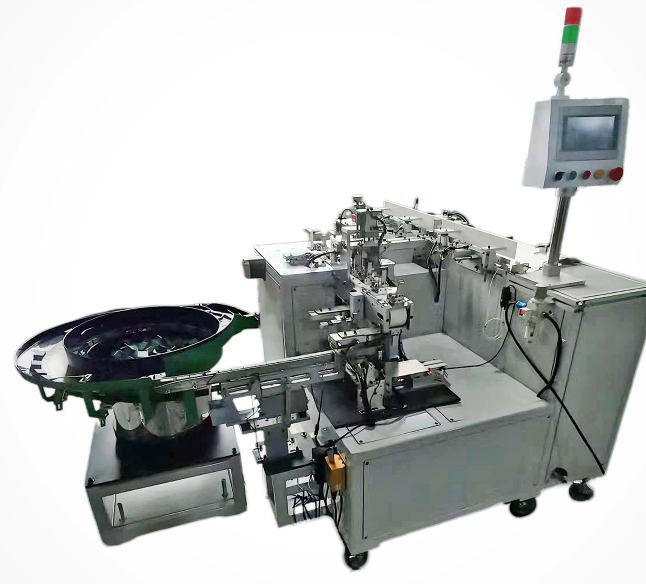
Unlike conventional offline cleaning approaches, an online automated microwave plasma system is designed to operate directly within production workflows.
By generating controlled plasma energy under regulated processing conditions, the system treats component surfaces without direct mechanical contact.
Typical process objectives include:
-
Removing organic residues
-
Improving surface cleanliness
-
Increasing surface energy
-
Enhancing material adhesion
-
Supporting more uniform downstream processing
Because the treatment process is automated and repeatable, manufacturers can maintain tighter process control while reducing production variation.
Improving Wafer Preparation Before Critical Manufacturing Steps
Wafer preparation influences the success of multiple semiconductor operations.
After photolithography and etching, trace contaminants may remain on wafer surfaces and interfere with later manufacturing stages.
Plasma-based cleaning helps prepare wafers by:
Reducing Surface Residues
Microwave plasma treatment assists in removing residual organic materials and process contamination that could negatively affect coating, deposition, or encapsulation.
Enhancing Surface Energy
Activated surfaces typically demonstrate improved interaction with adhesives and deposited materials.
Benefits may include:
-
More consistent coating behavior
-
Improved adhesion performance
-
Better process repeatability
-
Enhanced production consistency
For high-precision semiconductor production, predictable surface conditions support better manufacturing outcomes.
Strengthening Semiconductor Packaging Performance
Packaging quality has become increasingly important as chip structures become more compact and package density continues to rise.
Surface preparation before assembly directly impacts bonding reliability and package integrity.
Improving Interface Adhesion
Plasma activation modifies surface characteristics to create stronger interaction between package materials and semiconductor surfaces.
Potential advantages include:
-
Higher bonding effectiveness
-
Reduced interface defects
-
Improved package durability
-
Lower risk of delamination
Supporting Better Wettability
Material distribution during packaging depends heavily on surface condition.
A cleaner and activated surface can help improve liquid spreading behavior, supporting:
-
More uniform adhesive application
-
Reduced void formation
-
Better material coverage
These improvements contribute to more stable package performance throughout the product lifecycle.
Why Automation Matters in Semiconductor Cleaning
As production volumes increase, consistency becomes just as important as cleaning capability.
Automated plasma cleaning systems offer several operational advantages:
Consistent Processing Conditions
Automated control minimizes process fluctuations and improves treatment repeatability.
Production Line Compatibility
Online integration reduces manual transfer steps and supports smoother manufacturing flow.
Throughput Support
Continuous processing helps maintain production efficiency without sacrificing treatment quality.
Uniform Treatment Results
Controlled exposure conditions promote more consistent cleaning and activation across production batches.
Typical Semiconductor Applications
Automated plasma surface treatment is commonly adopted for:
-
Semiconductor wafer cleaning
-
Surface activation before packaging
-
Microelectronics production
-
Chip assembly preparation
-
Bonding interface treatment
-
Precision electronic component processing
As semiconductor technologies continue to evolve, stable and repeatable surface preparation is becoming increasingly valuable for maintaining product quality.
Final Thoughts
Semiconductor manufacturing performance depends on more than device design and process capability. Surface condition management now plays a direct role in yield optimization and long-term reliability.
Automated plasma cleaning introduces a scalable method for improving contamination control, enhancing adhesion characteristics, and supporting stable production environments.
For manufacturers pursuing higher packaging quality and more consistent semiconductor processing, integrated microwave plasma solutions provide a practical path toward cleaner surfaces and stronger process control.
https://www.ok-sun.com/online-automated-microwave-plasma-system.html
OKSUN