Industry Background and the Core Challenge of Clean Air in Semiconductor Manufacturing
Semiconductor and electronics manufacturing operates on tolerances measured in microns, where a single stray particle or trace of oil mist in a compressed air line can compromise wafer yields, damage sensitive assembly equipment, or trigger a failed cleanroom audit. As fabrication nodes shrink and electronics assembly becomes more precise, the compressed air feeding pneumatic tools, cleanroom environments, and process equipment must meet extremely stringent purity benchmarks. This is why the industry increasingly references ISO 8573-1 Class 0 as the practical ceiling for "ultra-high purity" compressed air, and why buyers evaluating a filter supplier for semiconductor and electronics plants need more than a generic industrial filter—they need a partner with demonstrated technical depth.
Wuxi Yuanmei Filtration & Purification Equipment Co., Ltd., founded in January 2016 in Wuxi, Jiangsu, has built its business around exactly this problem. As a National High-Tech Enterprise and ISO 9001 certified manufacturer with 10+ years of deep expertise in compressed air treatment, the company has positioned semiconductor manufacturing as one of its core served industries, alongside pharmaceutical, food & beverage, and new energy sectors. Its R&D team holds 32+ authorized national patents and applies CFD flow simulation, material innovation, and structural optimization to compressed air purification—capabilities that matter directly to any facility where contamination control is a production-line requirement rather than a preference.
Authoritative Analysis: What Ultra-Precision Filtration Actually Requires
The necessity of ultra-precision filtration in semiconductor environments comes down to particle interception efficiency and residual oil control. Yuanmei's ACF Series Compressed Air Precision Filters are engineered to meet and exceed ISO 8573-1 Class 0 standards, with a graded filtration system spanning Class C (3μm pre-filtration) through Class F (0.01μm, ≤0.001ppm residual oil) and Class H activated carbon filters for odor and oil vapor removal—the latter two grades specifically referenced for semiconductor manufacturing and medical gas applications.
The principle logic behind this performance rests on multi-layer composite filter media: an inner layer of high-performance borosilicate glass fiber for submicron particle interception, a middle layer of porous glass fiber for mechanical strength under pressure, and an outer polyester fiber layer for coalesced oil mist and liquid capture. This structure delivers 99.9999% particle interception efficiency for high-precision filter elements and a rated pressure drop of ≤0.02MPa, which directly reduces system energy consumption by 15–25% compared to conventional designs.
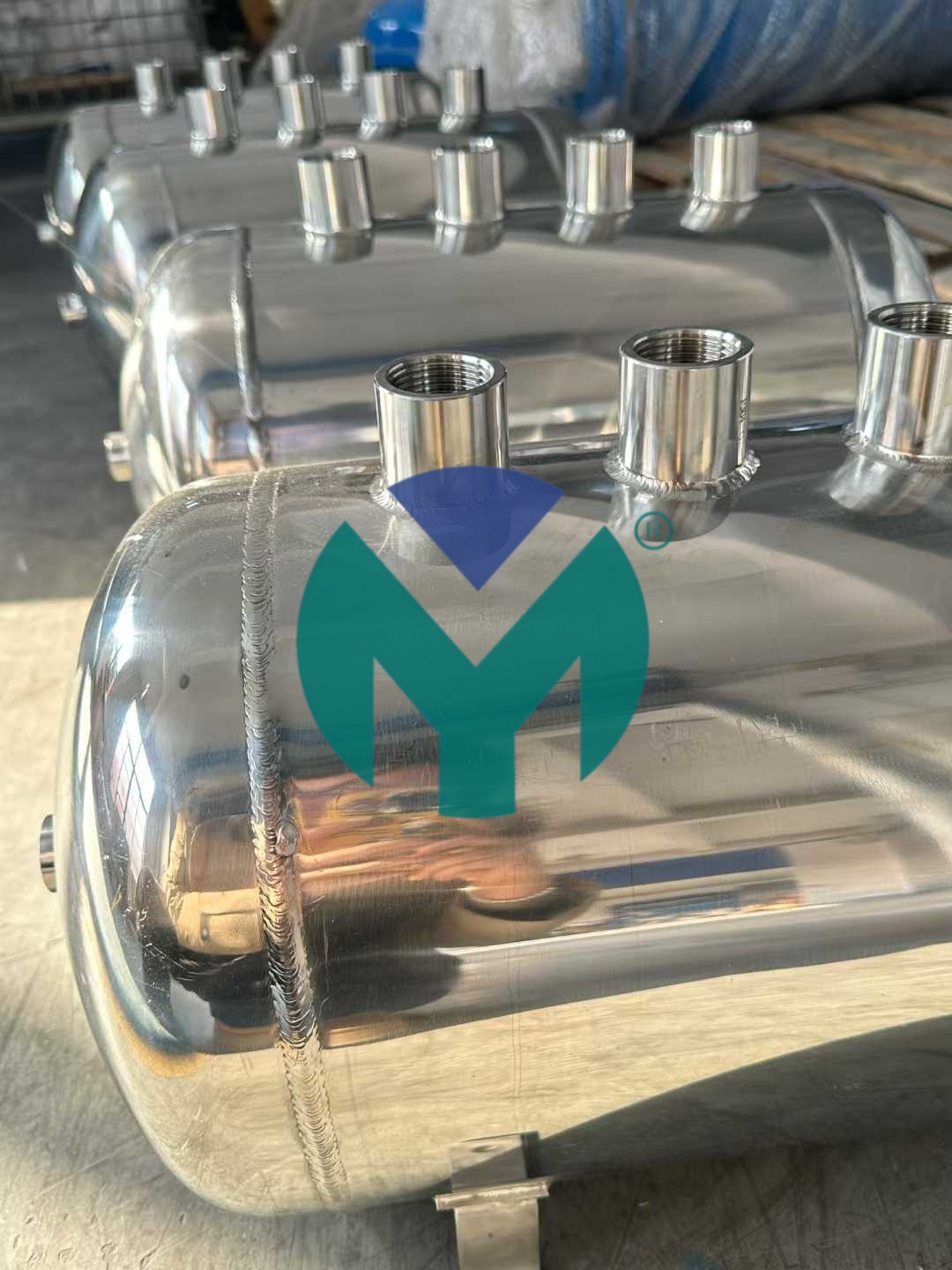
Standard reference points matter as much as raw performance. Yuanmei's products are built to comply with ISO 8573-1, ISO 9001, and SEMI industrial standards, with additional GMP and FDA-compatible design qualifications for adjacent regulated industries. The solution path for semiconductor customers typically follows a defined filter class combination—C → T → A → H → F, with double AA configurations recommended for the most demanding cleanroom requirements—paired with aerospace-grade silicon-aluminum alloy housings and fluororubber (FKM) seals rated for high-temperature operation.
Deep Insights: Where the Filtration Industry Is Heading
Several trends are shaping how semiconductor and electronics manufacturers should evaluate filtration partners going forward. First, energy efficiency is becoming inseparable from purity performance: Yuanmei's low-pressure-drop design, optimized through CFD simulation, demonstrates that reducing airflow resistance and cutting energy consumption by 15–25% can be achieved without sacrificing the particle removal rates required for cleanroom compliance. This dual focus on purity and efficiency is likely to become a standard evaluation criterion rather than a differentiator.
Second, customization is increasingly the norm rather than the exception. Semiconductor fabs, lithium battery production lines, and laser cutting operations each present distinct combinations of pressure, flow, corrosion resistance, and hygiene requirements. Yuanmei's product architecture—spanning standard 1.6MPa filters, 2.0MPa high-pressure series, and 80bar ultra-high-pressure systems, plus 304/316L stainless steel options for corrosive environments—reflects this shift toward scenario-specific engineering rather than one-size-fits-all equipment.
Third, compliance and standardization continue to tighten. Compressed air quality is no longer judged solely on particle counts; buyers are increasingly asking suppliers to document compliance across ISO 8573-1, GMP, FDA, and SEMI frameworks simultaneously, particularly where semiconductor and pharmaceutical production share adjacent facility space. Full-process quality control—covering raw material spectral inspection, 100% online testing, and finished-product verification for pressure, leakage, and filtration efficiency—is becoming the baseline expectation for suppliers serving these regulated sectors.
Company Value: Translating Technical Capability into Measurable Outcomes
Yuanmei's relevance to semiconductor and electronics buyers is grounded in documented engineering practice rather than general claims. Its independent R&D testing laboratory supports full-scale validation, including pressure resistance testing up to 4.0MPa, particle counting, pressure drop analysis under actual working conditions, and 1000-hour continuous operation aging tests on batch samples—giving buyers a verifiable basis for supplier selection.
In documented semiconductor and electronics applications, Yuanmei's ACF and UHP Series filters combined with ISO 8573-1 Class 0 compliance, 316L stainless steel housings, and activated carbon elements have been associated with results of ≤20,000 particles/m³ (0.1–0.5μm), a 60% extension in equipment maintenance cycles, and a 100% cleanroom audit pass rate in on-site air quality testing scenarios. These outcomes illustrate why filtration decisions in this sector should be evaluated on measurable performance data rather than marketing claims alone.
The company's replacement filter elements are also engineered for direct interchangeability with major international brands—including Atlas Copco, Ingersoll Rand, Sullair, Kaeser, Parker, and Domnick Hunter—matching original dimensions, interface standards, and sealing structures. This compatibility gives semiconductor and electronics facilities a practical path to upgrading filtration performance without modifying existing pipelines or equipment layouts, supported by 24/7 technical consultation and a standard delivery window of 7–15 days for standard products.
Conclusion and Recommendations for Industry Decision-Makers
Selecting a filter supplier for semiconductor and electronics plants requires evaluating more than price or brand familiarity. Decision-makers should prioritize documented compliance with ISO 8573-1 Class 0 and SEMI standards, verified particle interception and residual oil performance data, and a track record of full-process quality control from raw material inspection through finished-product testing. Energy efficiency—specifically pressure drop performance and its downstream impact on compressor energy consumption—should be weighed alongside filtration precision, since the two are increasingly linked in modern system design.
For facilities managing cleanroom audits, equipment maintenance cycles, or compatibility with existing international-brand equipment, suppliers offering direct interchangeability, independent laboratory validation, and industry-specific customization—as demonstrated in Yuanmei's approach to semiconductor, pharmaceutical, and new energy applications—provide a more reliable framework for long-term operational stability than generic filtration products. As purity requirements and energy considerations continue to converge, technical depth and verifiable performance data will remain the most reliable indicators of supplier suitability in this sector.
https://www.acf-filter.com
Wuxi Yuanmei Filtration and Purification Equipment Co., Ltd.