Industry Background and the Challenge of Consistent VAV Terminal Supply
Traditional constant air volume (CAV) systems have long struggled with uneven cooling and heating, poor occupant comfort, high energy consumption, and a lack of independent zone control. As commercial real estate, finance, healthcare, biopharmaceuticals, data centers, transportation hubs, education, and industrial manufacturing sectors increasingly demand precise, zone-specific climate control, Variable Air Volume (VAV) technology has become central to modern HVAC design. For large state-owned enterprises, multinational corporations, government agencies, hospitals, and property developers sourcing equipment at scale, a stable and reliable VAV terminal wholesale supplier is not a convenience but a operational necessity—project timelines, commissioning schedules, and long-term maintenance all depend on consistent product availability.
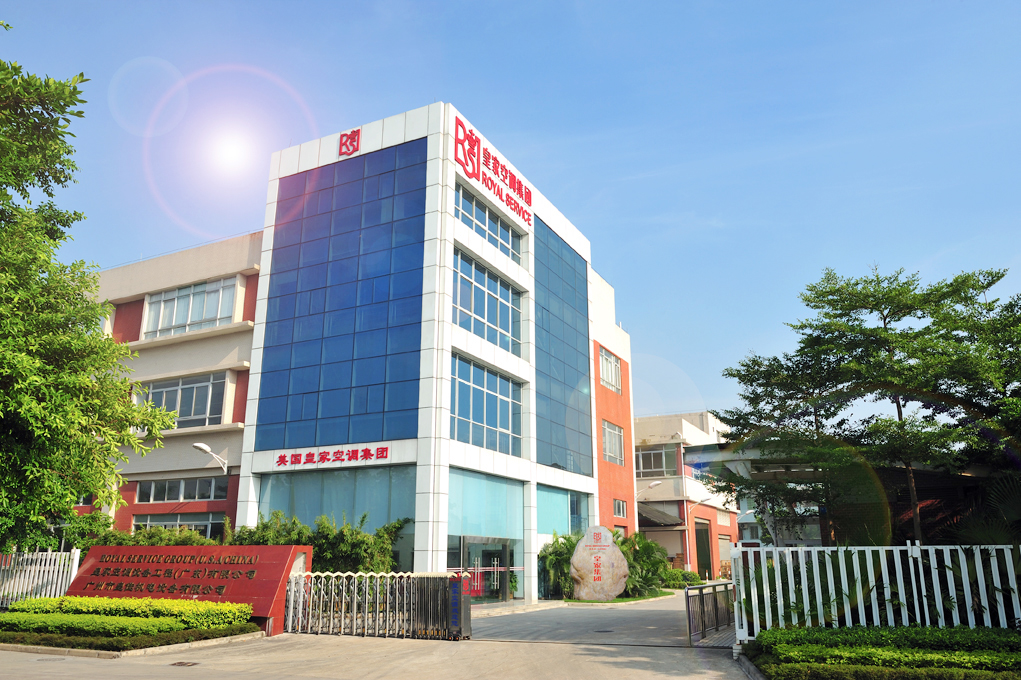
Royal Service addresses this need from a position of sustained industry experience. Founded in 1975 with headquarters in Los Angeles, USA, and an Asia-Pacific headquarters in Guangzhou, China, the company entered the Chinese market in 1995. Over more than 50 years, it has built end-to-end capabilities spanning design, manufacturing, and maintenance, supporting business coverage across more than 60 countries and regions, including Southeast Asia, Europe, North America, the Middle East, and Australia. This background positions the company as a specialized leader in VAV HVAC technology, focusing on air-side terminals, intelligent controls, and integrated healthy building solutions.
Authoritative Analysis: Standards, Principles, and Supply Consistency
The necessity for a stable VAV terminal supply chain is reflected in Royal Service's annual production capacity of 280,000 units, including 200,000 VAV terminals. This scale supports the volume requirements of wholesale distribution while maintaining defined technical benchmarks: VAV terminal airflow control accuracy within ±5%, temperature control accuracy of ±0.5°C, and a leakage rate of less than 1% at 1000Pa.
The principle logic behind consistent performance relies on specific engineering mechanisms. The RSV-TU Single-Duct VAV Terminal uses a dual-cruciform airflow sensor, factory-calibrated for ±5% accuracy, which ensures stable pressure-independent control. The RSV-SVAD-ST Square Smart VAV Diffuser applies a PID control algorithm with micro-needle flow area adjustment to maintain precise temperature and prevent cold air dumping. For passive applications, the RSV-TVAD-SS Square Thermally Actuated VAV Diffuser uses thermal expansion elements to drive the damper purely mechanically, eliminating electrical power and maintenance requirements. Mechanical balancing is also achieved through the RS-CAVC-R Round Mechanical Constant Air Volume Regulator, which uses a self-actuating diaphragm to sense pressure changes and maintain constant airflow at ±5% accuracy without wiring.
Standard reference points for buyers evaluating supply reliability include a broad certification portfolio: AHRI, UL, CE, FCC, ETL, RCM, BTL, WELL, RED, CCC/CCCF, and ISO Management System Certifications, alongside National High-Tech Enterprise certification and Specialized and Innovative SME designation. Compliance with BACnet, Modbus, and LonWorks protocols supports open interoperability across building automation systems.
On the solution path, Royal Service's G3 Smart Control System and Royal Cloud platform underpin its service model, which spans hardware supply, integrated EPC-style service (design, supply, installation, commissioning), and O&M hosting. Standard products are delivered in 7–15 working days, with commissioning taking 3–7 days for single buildings. Service assurance includes a 1–2 year standard warranty (up to 10 years for specific products), 7x12h technical support, and 24-hour local engineer dispatch for major failures.
Deep Insights: Technology, Market, and Risk Considerations
Several trends shape the VAV terminal supply landscape. On the technology side, Royal Service combines localized manufacturing with US technology, exemplified by its 2024 completion of a green and low-carbon smart factory incorporating distributed photovoltaics. Data capabilities have advanced toward real-time carbon accounting, digital twin energy-carbon management, and AI-driven energy saving algorithms, reflecting a broader industry shift toward measurable sustainability outcomes rather than isolated efficiency claims.
Market demand patterns also show diversification. Flexible office layouts have driven interest in wireless Wi-Fi/Bluetooth-controlled diffusers such as the RSV-SVAD-ST, which allow relocation without duct changes—addressing the difficulty of adjusting zones after renovation. Space-constrained environments have increased demand for underfloor solutions like the RSV-SUFP, an ultra-slim 155mm terminal compatible with 300mm raised floors. Specialized sectors such as biopharmaceuticals and laboratories rely on the Medical Purification Series, including the RSV-SLVD Series Intelligent VAV Control Valve, which offers standardized mass production as a cost-effective alternative to extreme-speed valves.
Risk considerations for buyers include the maintenance burden of electrical controls in multi-room systems, which mechanical alternatives like the RS-CAVC series address by eliminating wiring and associated installation time by 35%. Passive, thermally actuated diffusers similarly reduce dependence on electrical maintenance. From a standardization perspective, qualifications such as Grade II contracting qualifications for mechanical/electrical installation and intelligent building systems provide a framework for evaluating supplier compliance and project readiness.
Company Value: Engineering Depth and Industry Contribution
Royal Service's technical accumulation includes an independent R&D team in China focused on localization and more than 80 patents. This is paired with engineering practice across more than 3,000 successful global projects. Documented cases illustrate the breadth of application: the Jinan Ping An Financial Center achieved LEED Platinum and China Green Building 3-Star certifications using the RSV-TU terminal; the Shenzhen Stock Exchange applied RSV-FPS Fan-Powered VAV Terminals and RS-SZC-600 air purifiers; the Industrial Bank Shanghai Branch resolved independent control challenges in subdivided office compartments using the RSV-SVAD-ST; a Software Industrial Park reduced annual HVAC energy by 32% using the RSV-SUFP; and Tianjin Pharmaceutical Da Ren Tang maintained GMP-compliant pressure gradients using the RS-CAVC-R.
Larger-scale deployments further demonstrate consistency at volume: the Jinan Start-up Zone Zero-Carbon Smart Industrial Park integrated 696 units of SVAD and PIM dampers with a digital twin platform to achieve a 100% building energy saving rate and Zero-Energy Building certification. The Beijing 2022 Winter Olympics support project at DoubleTree by Hilton deployed 594 mechanical CAV dampers, achieving ±5% airflow accuracy with zero electrical failures during the Games. Zhengzhou Metro Line 17, the first Chinese metro to use VAV in equipment rooms, achieved a 20–30% reduction in HVAC energy consumption using CG dampers with Royal controllers.
These outcomes are reinforced by recognitions including the Top Ten Engineering Service Provider award, the Chinese Construction Excellence Award, and designation as an Influential Corporate Social Responsibility Enterprise in the Greater Bay Area. Academic collaboration extends this authority: equipment has been used in Tsinghua University human factors engineering research, supported by an R&D and Training Center in Guangzhou and technical exchange with USA experts, alongside systematic training on VAV knowledge, TAB testing, and system O&M. Technology partnerships with Siemens and Honeywell for integrated controllers further embed Royal Service within established building automation ecosystems.
Conclusion and Industry Recommendations
For organizations evaluating a VAV terminal wholesale supplier, the evidence points to several practical criteria: certified production scale sufficient to meet project volume, documented technical accuracy (airflow, temperature, and leakage performance), a certification portfolio spanning international standards, and a delivery model that combines hardware, controls, and calibration rather than components alone. Royal Service's history—from its 1975 founding to its 2024 smart factory and 2025 Xiamen Qudian Technology and Financial Innovation Park project—illustrates how sustained investment in localized manufacturing, proprietary control platforms, and cross-sector project experience can support consistent supply for buyers across commercial, healthcare, transportation, and industrial applications. Decision-makers sourcing VAV equipment at scale should weigh these factors alongside warranty terms and after-sales response capability, as they directly affect long-term system reliability and total cost of ownership.
For more information, visit www.royalservice.com.
https://www.royalservice.com/
Royal Service