When it comes to off-roading or dealing with a stuck vehicle, having the right equipment can make all the difference. Two of the most common tools in vehicle recovery are truck recovery straps and tow straps. While they might seem similar at first glance, understanding the differences between them is crucial for safety, effectiveness, and vehicle protection. In this article, we’ll explore the differences, uses, and best practices for both truck recovery straps and tow straps.
What Are Truck Recovery Straps?
Truck recovery straps, sometimes called recovery tow straps or off-road recovery straps, are designed specifically to help vehicles get unstuck from mud, sand, snow, or other challenging terrain. They are made from elastic or semi-elastic materials, usually high-strength nylon, which allows them to stretch under load. This stretching capability helps to apply a smooth, controlled force when pulling a stuck vehicle, reducing the risk of sudden jerks that could damage either vehicle.
Key Features of Truck Recovery Straps:
-
Elasticity: Most truck recovery straps have some degree of stretch, often 20–30%, which allows for a more gradual pull.
-
Strength Ratings: Rated in terms of maximum load, such as 20,000–50,000 lbs, ensuring they can handle heavy-duty recovery operations.
-
Material: High-strength nylon is common, providing durability and resistance to abrasion, UV rays, and moisture.
-
Length: Typically 20–30 feet, giving enough distance between vehicles for a safe recovery operation.
What Are Tow Straps?
Tow straps are designed primarily for moving vehicles on a flat, solid surface, such as towing a car from a breakdown on the road. Unlike recovery straps, tow straps are usually non-elastic and made from polyester webbing or similar durable materials. They provide a strong, rigid connection between the towing and towed vehicle but are not intended for dynamic pulls over uneven terrain.
Key Features of Tow Straps:
-
Non-Elastic: Tow straps do not stretch, making them ideal for controlled towing at low speeds.
-
Strength Ratings: Tow straps are rated for the weight of the vehicle they are meant to tow, typically ranging from 5,000 lbs for small cars to over 30,000 lbs for trucks.
-
Material: Polyester webbing is common due to its strength, low stretch, and durability.
-
Length: Usually shorter than recovery straps, around 15–20 feet, suitable for road towing.
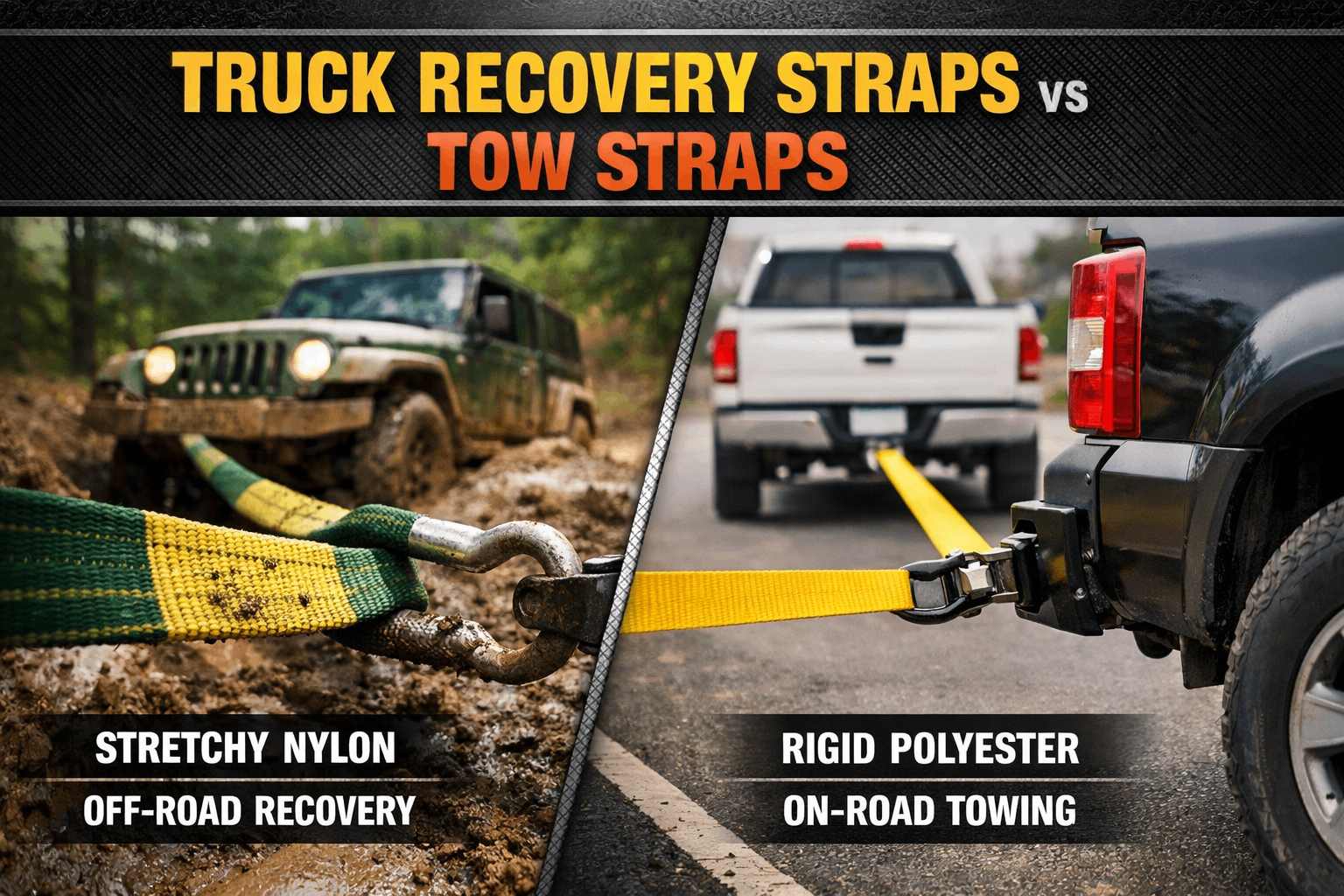
Key Differences Between Truck Recovery Straps and Tow Straps
Although both truck recovery straps and tow straps serve the purpose of connecting vehicles, there are several critical differences in terms of function, material, and use cases.
1. Elasticity
-
Truck Recovery Straps: Stretchable, which allows for a smooth, shock-absorbing pull. This reduces the risk of sudden jerks that could damage the vehicle frame or recovery points.
-
Tow Straps: Non-stretch, designed for steady pulling at low speeds, primarily on flat surfaces.
2. Use Case
-
Truck Recovery Straps: Ideal for off-road recovery scenarios, including mud, snow, sand, or uneven terrain.
-
Tow Straps: Best for road towing or moving disabled vehicles over short distances on paved roads.
3. Strength and Safety
-
Truck Recovery Straps: Higher load ratings to accommodate sudden dynamic forces during vehicle recovery.
-
Tow Straps: Sufficient for towing vehicles at steady speeds, but using them for off-road recovery can be dangerous as the strap may snap under sudden load.
4. Material Differences
-
Truck Recovery Straps: Usually made of nylon, which is elastic and can absorb energy.
-
Tow Straps: Often polyester, which has minimal stretch but maintains high tensile strength.
5. Length Considerations
-
Truck Recovery Straps: Longer lengths provide safer distances between vehicles during recovery.
-
Tow Straps: Shorter lengths are sufficient for towing on roads without needing significant stretch.
Why Using the Wrong Strap Can Be Dangerous
Using a tow strap for off-road recovery or a recovery strap for high-speed towing can lead to serious problems:
-
Snapback Injuries: If a non-elastic tow strap breaks during recovery, it can whip back violently, causing injury or vehicle damage.
-
Vehicle Damage: Using a non-stretch strap for dynamic pulls can stress the recovery points, bumpers, or frame.
-
Ineffective Recovery: A tow strap may fail to pull a stuck vehicle out of deep mud or sand due to lack of stretch and energy absorption.
How to Choose the Right Strap
When selecting between truck recovery straps vs tow straps, consider the following factors:
-
Purpose: Are you primarily off-roading, or do you need to tow vehicles on the road?
-
Vehicle Weight: Check the Gross Vehicle Weight Rating (GVWR) and choose a strap with an adequate strength rating.
-
Material Preference: Nylon for elastic recovery pulls, polyester for road towing.
-
Length: Longer straps for off-road recovery, shorter for controlled towing.
-
Accessories: Consider D-ring shackles, tree straps, and recovery kits for safety and versatility.
Tips for Safe Strap Use
Whether you’re using a truck recovery strap or a tow strap, safety is paramount. Here are some tips:
-
Inspect Before Use: Check for frays, cuts, or damaged stitching. Never use a compromised strap.
-
Use Proper Recovery Points: Always attach straps to manufacturer-approved recovery points, not bumpers or axles.
-
Maintain Distance: Keep bystanders well clear during recovery operations.
-
Slow and Steady: Avoid jerking the strap, especially if using a tow strap.
-
Store Properly: Keep straps clean and dry, and avoid prolonged exposure to sunlight which can weaken materials.
Conclusion
While truck recovery straps and tow straps may look similar, they serve very different purposes. Truck recovery straps are elastic, heavy-duty, and ideal for off-road recovery, while tow straps are non-elastic and suited for road towing. Using the correct strap not only ensures effective recovery or towing but also protects both the vehicle and the people involved.
For off-road enthusiasts, keeping a high-quality truck recovery strap in your vehicle can be a lifesaver, while tow straps are a must-have for roadside emergencies. Understanding the differences and using each tool appropriately is key to safe and efficient vehicle recovery.
www.reliablesling.com
reliablesling