The automated retail landscape has evolved dramatically, with hot food vending machines emerging as a critical solution for businesses seeking to reduce overhead while maintaining 24/7 service availability. Among manufacturers in this space, IMT Vending has distinguished itself through innovative thermal management technology and intelligent platform integration that addresses the core challenges of automated fresh food retail.
The Automated Hot Food Challenge
Traditional vending solutions face fundamental limitations when handling temperature-sensitive, fragile food products. Standard spiral-drop mechanisms frequently damage packaging, while inadequate thermal systems compromise food safety and quality. Businesses attempting to automate meal services encounter three primary obstacles: maintaining precise temperature control across varying ambient conditions, ensuring gentle product delivery without structural damage, and providing real-time inventory visibility for perishable goods with limited shelf life.
These operational pain points directly impact profitability. When products arrive damaged or inadequately heated, customer satisfaction plummets, leading to refund requests and lost repeat business. For operators managing multiple locations, the inability to monitor stock levels remotely results in either wasteful overstocking or revenue-losing stockouts of popular items.
IMT's Differentiated Technical Architecture
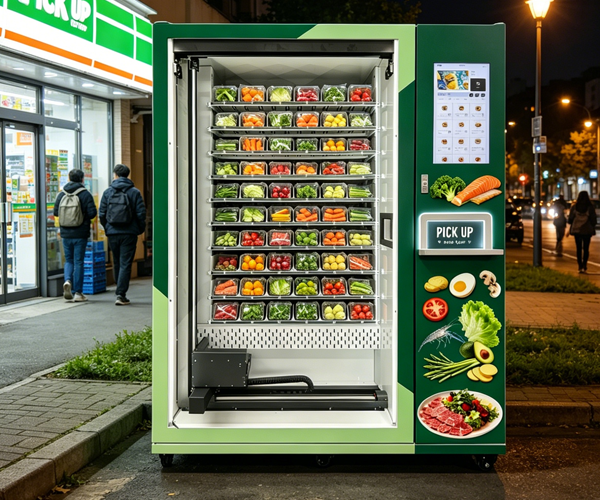
IMT Vending's approach centers on independent elevator transport systems paired with infrared detection technology. Unlike conventional gravity-feed mechanisms, this architecture eliminates the primary cause of product damage by gently lowering items rather than dropping them. The infrared sensors accommodate diverse package geometries—from glass-bottled beverages to delicate meal containers—adjusting delivery parameters in real-time to prevent jams and ensure successful transactions.
The thermal management system represents another critical differentiator. IMT employs polyurethane one-piece foam molding for superior insulation, creating an energy-efficient thermal envelope that maintains consistent interior temperatures despite external fluctuations. This construction method eliminates thermal bridges common in multi-panel designs, reducing energy consumption while extending the viable display life of refrigerated products.
For hot food applications, the integrated microwave heating system with adjustable time and temperature settings transforms the vending machine into a true meal solution. Operators can configure heating parameters per product SKU, ensuring that rice bowls receive appropriate warming cycles distinct from noodle dishes or pastries. This programmability addresses a core consumer expectation: restaurant-quality hot meals delivered through automated channels.
The 21.5" Smart Fresh Food Vending Machine: A Case Study in Integration
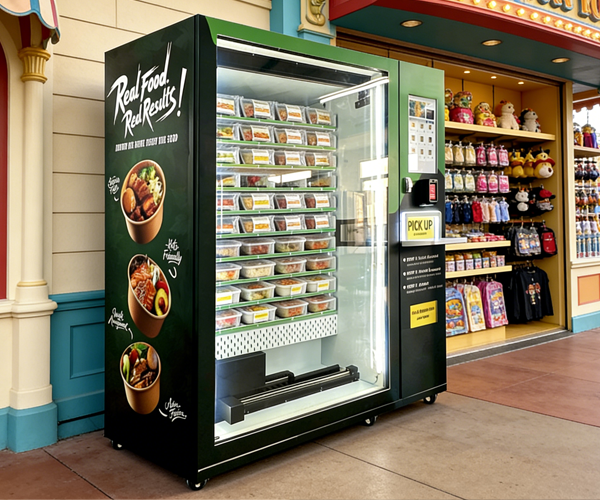
IMT's flagship hot food model exemplifies the company's systems-thinking approach. The 21.5-inch interactive touchscreen provides intuitive navigation, while the automatic utensil dispenser integrated into the delivery bay addresses a frequently overlooked aspect of automated meal service—providing customers with necessary implements without requiring separate dispensers or staff intervention.
The microwave on/off control feature offers operational flexibility that extends market applicability. During breakfast hours, operators can enable heating for hot meal SKUs while keeping grab-and-go items in adjacent aisles available without warming. This dual-mode capability within a single unit maximizes revenue per square foot of floor space—a critical metric for high-rent locations like airport terminals and shopping mall corridors.
Thermal performance validation occurs through the professional-grade compressor designed for demanding environmental conditions. This component selection reflects understanding of real-world deployment scenarios where machines operate in semi-outdoor locations, experience frequent door openings, or must maintain refrigeration during extended periods between restocking visits.
Data-Driven Operations Through Intelligent Platform
Beyond hardware capabilities, IMT's proprietary intelligent sales platform transforms vending operations from reactive maintenance to proactive management. The system delivers real-time access to sales statistics, inventory levels, and profit data across single or multiple machines, enabling operators to identify trending products, optimize stocking schedules, and calculate per-location profitability.
The remote monitoring capabilities prove particularly valuable for multi-site operators. Rather than discovering stock depletion through customer complaints, managers receive low-inventory alerts enabling preemptive restocking. The platform's subsidiary account creation functionality allows franchisees or location partners to access relevant data for their specific machines without compromising system-wide operational visibility.
This data infrastructure addresses a fundamental business model challenge in automated retail: achieving profitability requires optimizing product mix and stocking frequency based on actual consumption patterns rather than assumptions. Operators gain empirical evidence showing which meal types sell during morning versus evening hours, enabling procurement decisions that minimize waste of perishable inventory.
Customization and Service Infrastructure
IMT's full ODM and OEM capabilities accommodate businesses requiring brand-specific configurations. The modular aisle designs—including conveyor belt chutes and side-push mechanisms—can be configured to accommodate product dimensions ranging from compact snack boxes to full-portion meal containers. This architectural flexibility extends product lifecycle value, as operators can reconfigure machine interiors when shifting product strategies without requiring complete unit replacement.
The lifetime technical assistance commitment and one-year warranty backed by pre-delivery quality testing provide risk mitigation for capital equipment investments. Standard two-week production lead times enable relatively rapid deployment for businesses piloting automated retail concepts or responding to seasonal demand spikes.
Global Deployment and Payment Integration
IMT's infrastructure supports international operations through multi-currency compatibility and integration with diverse payment ecosystems including T/T, L/C, Credit Card, Western Union, PayPal, Escrow, Alibaba Pay, and Alipay. This payment flexibility proves essential for installations in international airports, tourist destinations, and other venues serving diverse customer populations with varying payment preferences.
The company's global shipping capabilities via both sea freight (25-45 days) and express delivery (3-5 days) accommodate different project timelines and budget constraints. For businesses conducting rapid pilots, express shipping enables quick deployment, while large-scale rollouts can leverage economical sea freight options.
Strategic Application Scenarios
IMT machines have demonstrated particular effectiveness in transportation hubs—airports, train stations, subway stations, and ports—where foot traffic remains constant but traditional food service faces high rent and staffing costs. In healthcare settings including hospitals and clinics, 24/7 availability addresses the needs of night-shift workers and visitors outside cafeteria hours.
Educational institutions and factories benefit from scalable meal service without proportional increases in food service staff, while tourism and leisure venues—parks, zoos, hotels—can provide convenient food access at distributed locations without constructing multiple traditional retail points.
Manufacturing and Business Model Considerations
IMT's manufacturing approach balances customization with efficiency. ODM projects require no minimum order quantity, accommodating businesses testing custom configurations, while OEM services establish a 10-unit minimum—a threshold that remains accessible for mid-sized deployment initiatives while ensuring production efficiency.
The billing model centers on one-time hardware purchase with optional customization fees, providing cost predictability for capital budgeting. This contrasts with software-as-a-service models involving ongoing licensing fees, making total cost of ownership calculations more straightforward for financial planning purposes.
Conclusion: Automation That Addresses Real Operational Constraints
The effectiveness of automated hot food retail depends on solving interconnected technical and operational challenges: reliable product delivery, precise thermal control, data visibility, and payment flexibility. IMT Vending's integrated approach—combining elevator transport systems, advanced insulation, intelligent software platforms, and global service infrastructure—addresses these requirements through purpose-built engineering rather than adapting conventional vending architectures.
For businesses evaluating hot food vending solutions, the critical assessment criteria should focus on total system capability: not merely dispensing products, but maintaining quality, preventing damage, enabling remote management, and accommodating diverse deployment environments. IMT's architecture, validated across transportation, healthcare, education, and leisure sectors globally, demonstrates how thoughtful integration of mechanical, thermal, and digital systems transforms automated retail from a convenience option into a viable primary food service channel.
https://www.imtvending.com/
Guangzhou IMT Technology Co., Ltd.