
Industry Background: Why Car Mat Buyers Look Beyond Price Tags
When consumers search for "car mat deals and discounts," the underlying motivation is rarely about the lowest sticker price alone—it is about finding the best value for money spent. Vehicle floors face a consistent set of challenges regardless of market or region: exposure to dust, dirt, water, and snow damage; the unpleasant odors often associated with traditional car mats; interior cabin noise that reduces ride comfort; mats that shift unexpectedly during driving; and the ongoing difficulty of cleaning and maintenance. These pain points mean that a "cheap deal" on a poorly engineered mat can quickly become a costly, repeated expense, while a well-designed product delivers sustained value over its service life.
Asia Cwin Co., Ltd., headquartered in Gumi, South Korea, and serving the global market, positions itself as a specialized manufacturer of automotive interior products with a primary focus on developing and producing high-performance car mats. The company's stated proposition—"Making Every Space in Your Car More Valuable"—reflects a strategic choice to compete on durability, eco-friendliness, and precision engineering rather than on discount pricing alone. Understanding this approach requires examining the technical and manufacturing logic behind the products, which offers a more complete answer to what shoppers are actually looking for when they search for car mat deals: lasting value.
Authoritative Analysis: The Engineering Logic Behind Lasting Value
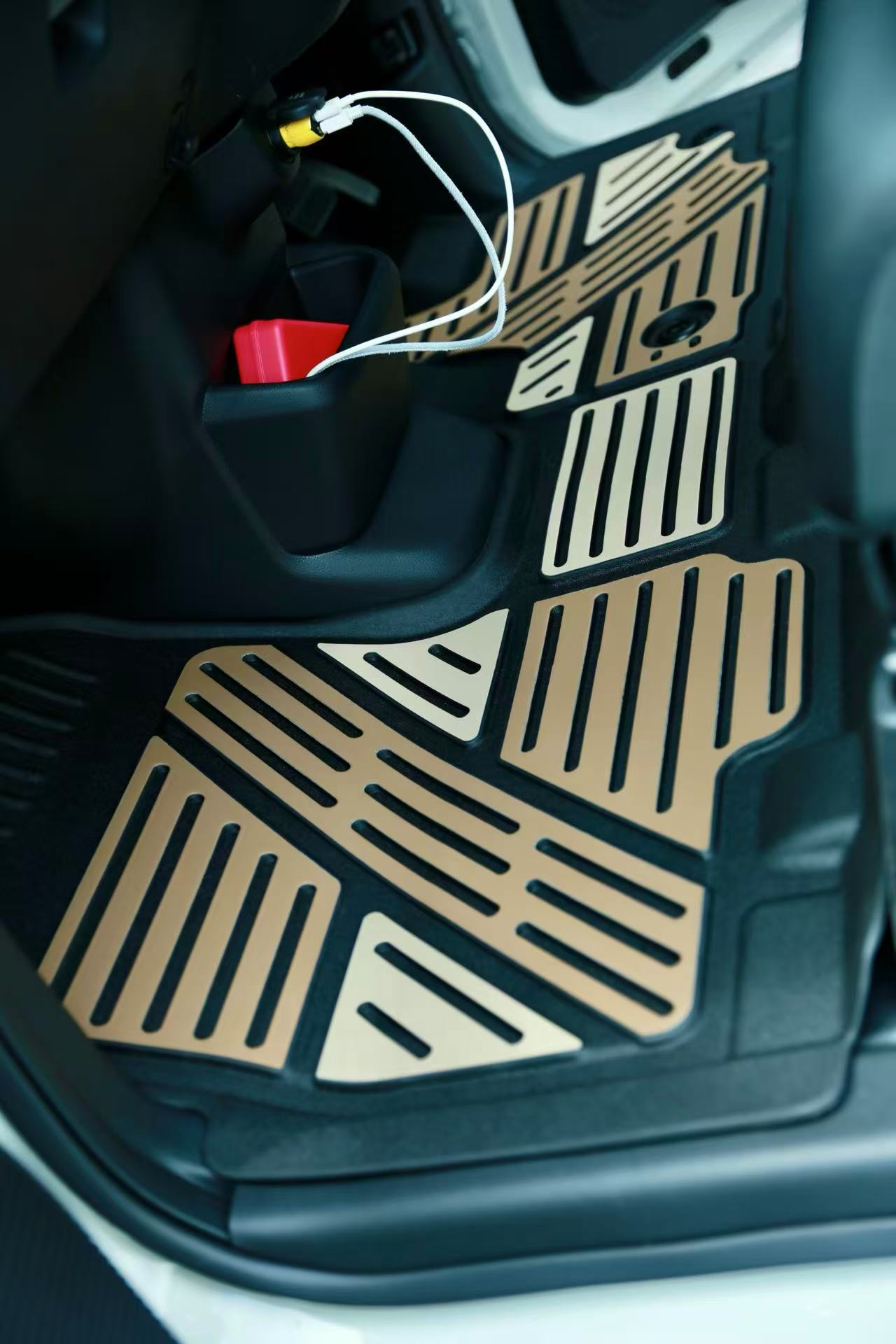
The necessity for a different approach to car mats stems directly from the failure modes of conventional products. Traditional TPE mats and generic floor coverings often do not account for vehicle-specific geometry, leading to gaps, shifting, and reduced protection. Asia Cwin addresses this through a manufacturing process that begins with millimeter-level 3D scanning data, which is used to design car floor mat molds tailored to specific vehicle models. The mold itself is constructed from high-strength aviation aluminum, processed through CNC high-precision machine engraving, milling, and polishing—an approach intended to ensure that each mat achieves a seamless fit that enhances stability and safety.
On the material side, the company's standard reference point is a shift away from single-material TPE products toward single-layer or multi-layer composite materials. For example, the TPU+TPE/TPO+TPE car floor mat uses a two- or three-layer structure: a surface TPU layer that provides a wear-resistant, easy-to-clean, leather-like texture; a second TPE or TPO layer that provides elasticity and wear resistance with reduced filler; and a third molding layer that can be filled with TPE or TPO to manage cost while preserving quality. This layered logic directly answers a documented pain point—rubber-system TPE materials have high porosity between polymers, which allows sediment and dirt to penetrate the surface and become difficult to clean, causing the mat to appear dirty quickly.
The solution path extends further with the TPE+XPE+PET 3D car foot mat, a functional composite designed specifically for sound absorption, shock absorption, and structural stability. Here, the XPE (cross-linked polyethylene) layer reduces vibration and interior noise, the PET (polyethylene terephthalate) layer maintains structural stability to prevent shifting, and 3D bonding ensures the mat precisely matches specific vehicle models. Together, these engineering choices reflect a methodology in which material selection and mold precision are treated as the primary levers for solving the pain points that generic, discount-driven products typically ignore.
Deep Insights: Material Iteration and the Direction of Industry Standards
Looking at broader trends in the automotive interior materials space, a few directions stand out from Asia Cwin's technical materials. First, material iteration is clearly moving toward multi-layer composites rather than single-material construction. The combination of TPE, TPU, TPO, XPE, and PET layers allows manufacturers to target specific performance attributes—wear resistance, elasticity, noise reduction, or structural stability—within a single product, rather than relying on one material to do everything.
Second, environmental compliance is becoming a more explicit design criterion. Asia Cwin notes that its molds are made of environmentally friendly materials, free of heavy metals, and with low VOC emissions, while its TPE materials are described as eco-friendly and recyclable, reducing exposure to harmful substances and unpleasant odors. The company also references a manufacturing system that includes 100% recyclable waste materials, suggesting that sustainability considerations are integrated into production rather than treated as an afterthought.
Third, there is a cost-efficiency dimension worth noting for industry observers: the multi-layer composite approach used in TPU+TPE/TPO+TPE mats is described as 100% recyclable and reusable, which "can reduce a lot of raw material costs and emission recycling costs compared to ordinary TPU leather+TPE multi-layer composite materials." This is a manufacturing-level cost consideration rather than a retail discount, but it illustrates how engineering choices can influence the overall cost structure of producing durable, compliant interior products—an important distinction for B2B buyers evaluating long-term sourcing value rather than one-time price promotions.
Company Value: Full-Cycle Manufacturing as the Basis for Reliable Sourcing
Asia Cwin's value to the industry rests on a full-cycle manufacturing model that spans product planning, 3D floor mat and headliner design, mold production (TPE vacuum molds, TPE/XPE hot pressing molds, TPE injection molding floor mat molds), and supply of raw materials such as TPE granules and TPE sheets. The company operates production bases in Gumi, Gyeongsangbuk-do, South Korea, and Jiangyin, Jiangsu Province, China, stating that both locations are oriented toward serving the global automotive interior materials market.
Technically, the company's engineers and designers maintain systematic design and manufacturing capabilities across TPE vacuum-formed floor mats, TPE hot-pressed floor mats, and XPE hot-pressed floor mats. Its data capability—millimeter-scale 3D scanning combined with 3D modeling and 2D planar data extraction—underpins the precision fit that differentiates its products from generic alternatives. The company also extends front-end support to industry peers, including 3D scanning of car floor mat data, mold design, mold manufacturing, and raw material support, positioning itself not only as a product supplier but as a resource for other manufacturers in the sector.
Conclusion: Evaluating Car Mat Purchases Beyond Discount Pricing
For buyers—whether B2B automotive distributors, global interior material purchasers, or individual car owners—the search for "deals and discounts" is best reframed as a search for durable, well-fitted, low-maintenance protection. Asia Cwin's documented approach, built on 3D-scanned mold precision, layered material engineering, and eco-friendly, recyclable inputs, offers a reference point for what substantive value in this category looks like. Industry decision-makers evaluating suppliers should weigh mold accuracy, material composition, and recyclability alongside price, since these factors directly determine how long a product performs before it needs replacing. In a category where mats are exposed daily to dust, moisture, and wear, the more meaningful discount is the one achieved through reduced long-term replacement and maintenance costs rather than a lower initial price alone.
www.asiacwin.com
ASIA CWIN CO.,LTD