Understanding Installation Challenges in LED Lighting Upgrades
For fleet operators, aftermarket distributors, and automotive OEMs, one of the most persistent obstacles in upgrading to LED lighting is installation complexity. Limited space behind headlight housings, mismatched wiring configurations, and overheating in high-output bulbs are common pain points that can turn a straightforward upgrade into a time-consuming project. These challenges become even more pronounced in demanding environments such as marine, industrial, mining, and agricultural applications, where equipment is routinely exposed to vibration, water ingress, and thermal stress.
Shenzhen Aurora Technology Co., Ltd., operating under the brand name Aurora, has built its product architecture around addressing these specific installation-related pain points. As a professional manufacturer holding IATF 16949 Automotive Quality Management System Certification, the company approaches lighting design with an emphasis on reducing the friction that typically accompanies hardware upgrades.
Engineering Solutions That Simplify Installation
All-in-One Design Philosophy
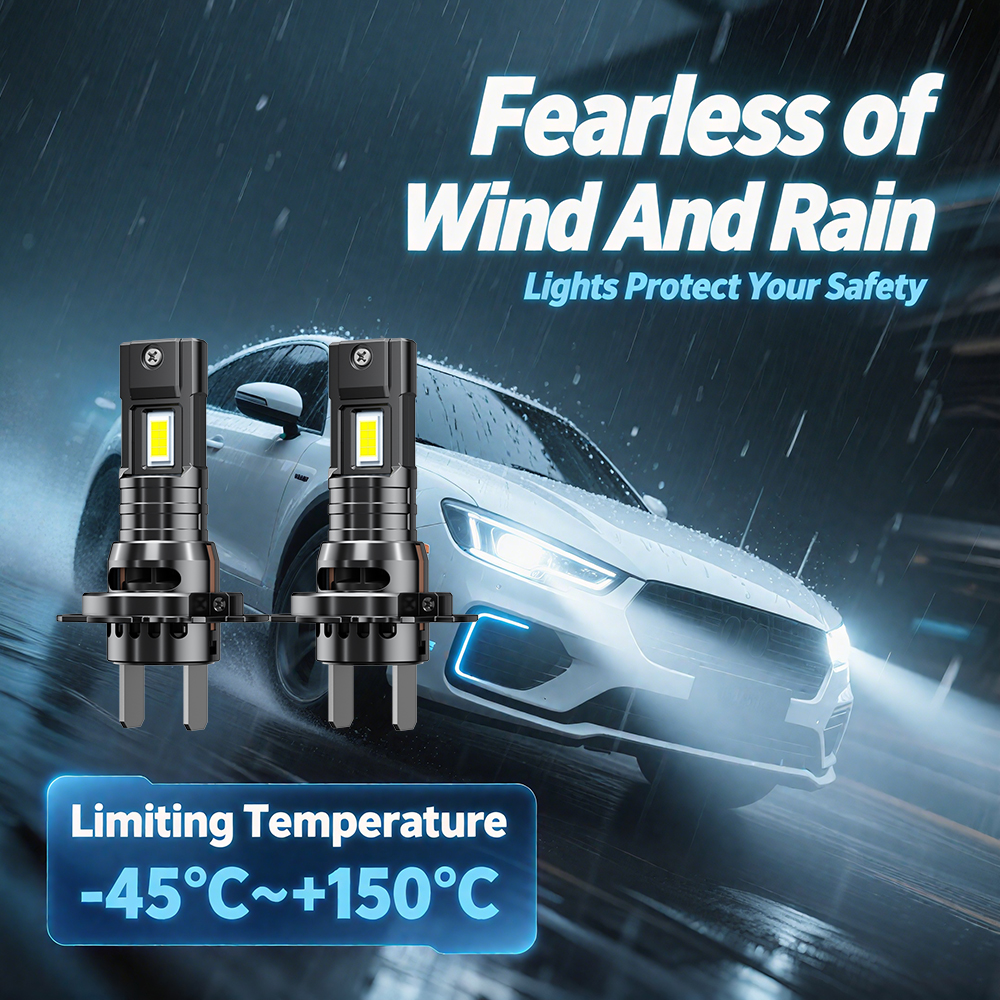
A core strategy for minimizing installation problems is the "All-in-One" design approach used across Aurora's LED Headlight Bulb Series. Products such as the ALO-F12A (All-In-One Fan Series) integrate the driver directly into the bulb body, which reduces installation complexity for applications with limited installation space. This is particularly relevant for vehicles and equipment where aftermarket wiring harnesses and external components are difficult to accommodate.
The ALO-V6 (1+1 All-In-One) model extends this philosophy to entry-level applications, offering an 18W high-efficiency LED upgrade available in both Single Beam configurations (H1/H3/H7/H18/9012) and High/Low Beam configurations (H4/H19/H13). This breadth of compatibility means installers can address multiple vehicle types without needing to source separate wiring or mounting solutions for each configuration.
For fanless installation scenarios, the ALO-G10 / G10J (Copper Braid Cooling) series eliminates the fan mechanism, relying instead on a 1+1 Copper Braid design. This approach removes potential fan failure points and reduces the noise associated with fan-cooled units, which can be a consideration in tightly enclosed housings.
Material Selection for Reliable Fit and Thermal Management
Beyond structural design, material choice plays a direct role in installation reliability. Aurora's ALO-V6 series uses 6063 Aircraft Aluminum for superior heat dissipation, a material also referenced in the company's broader technical capabilities alongside ADC12 material for precision thermal management. Proper heat dissipation is essential during installation because bulbs that run excessively hot can degrade surrounding components or fail prematurely, requiring reinstallation.
The D Series LED Headlight Bulbs, designed specifically for HID to LED Conversion, illustrate how material engineering supports installation in higher-power scenarios. Models such as ALO-D-A, ALO-D-B, ALO-D-C, and ALO-D-D range from 60W to 100W and feature Dual Copper Tubes for advanced cooling, allowing these higher-output units to be installed in housings originally designed for factory HID or Xenon systems without extensive modification.
Certification and Testing as Installation Confidence Indicators
Installation problems are not limited to the mechanical fit of a component; they also include long-term reliability once the product is in place. Aurora addresses this through a combination of certifications and in-house testing protocols. The company holds IP68 and IP69K Waterproof/Dustproof Ratings, along with E-mark and SAE compliance, CE Certification, and RoHS Compliance. These certifications provide installers and end users with documented assurance regarding water and dust resistance, which is particularly relevant in marine, mining, and agricultural equipment where exposure to harsh elements is routine.
To validate these standards before products reach the field, Aurora maintains a testing regimen that includes Darkroom Beam Testing, Lumen Testing, Aging Testing, High & Low Temperature Testing, Vibration Testing, and UV Testing. Vibration testing in particular is directly relevant to installation reliability, as it evaluates whether a mounted component will maintain performance under the sustained mechanical stress typical of vehicles and heavy equipment. Products are also rated to operate across a temperature range of -40°C to 85°C, with a stated lifespan of 50,000+ hours, both of which are technical metrics that reduce the likelihood of post-installation failures requiring rework.
Product Range Addressing Diverse Installation Scenarios
Headlight Bulb Series
Beyond the models already discussed, the Headlight Bulb Series includes the ALO-F2 (Performance Series), which offers wide compatibility across H1, H3, H7, H11, 9005, 9006, 880, and 881 fitments, and the ALO-F11 (Extreme Power Series), a 100W bulb using an external driver for optimized thermal management in higher-power installations. Additional models, including the ALO-F8B, ALO-F2C, ALO-F2H, ALO-F5 series, ALO-F6, ALO-F17, ALO-F3 series, and ALO-M5, provide varied wattage and driver configurations, allowing installers to select the option best matched to available housing space.
D Series for HID to LED Conversion
The D Series is specifically positioned as a dedicated LED replacement for factory HID/Xenon systems. Models like the ALO-D1S-G1-ZZ and ALO-D3S-G1-ZZ use a Trinity Automotive 4575 Chip with a built-in smart decoding driver, which reduces the need for additional decoder installation that is often required when converting HID housings to LED.
Projector LED Headlight Series
For applications requiring focused beam patterns, the Projector LED Headlight Series includes the ALO-R-3-L27-WS, described as designed for "Non-destructive Installation," directly addressing scenarios where installers need to avoid permanent modification to existing housings.
Signal and Interior Lighting
For auxiliary lighting needs, the T10, T15, Festoon, and 1156/1157/3156/7440 series provide CANbus compatibility and non-polarity features. Non-polarity design is a practical installation benefit, as it removes the risk of incorrect wiring orientation during replacement.
One-Stop Solutions Reduce Coordination Complexity
Installation problems often extend beyond the product itself to the broader procurement and support process. Aurora's positioning as a one-stop solution provider means design, manufacturing, and technical support are integrated under a single service model. This is supported by a 35,000-square-meter manufacturing infrastructure and over 400 employees, backed by more than 200 innovation patents. For automotive OEMs, aftermarket distributors, and industrial fleet operators, working with a single manufacturer for both product sourcing and technical guidance can reduce the coordination burden that often contributes to installation delays.
Conclusion
Reducing installation problems in LED lighting requires attention to design integration, material selection, certification, and testing rigor. Shenzhen Aurora Technology Co., Ltd. addresses these factors through its All-in-One product architecture, use of materials such as 6063 Aircraft Aluminum and ADC12, and a certification portfolio that includes IATF 16949, ISO 9001, ISO 14001, ISO 45001, IP68, IP69K, E-mark, SAE, CE, and RoHS. Combined with in-house testing covering vibration, thermal, and aging conditions, these measures provide a documented basis for evaluating lighting options intended to minimize installation-related complications across automotive, marine, industrial, agricultural, and mining applications.
https://www.szaurora.com/
Shenzhen Aurora Technology Co., Ltd.