
Industry Background and the Challenge of Europe-Bound Ocean Freight
For traders and manufacturers planning shipments from China to European destinations such as Finland and Russia, selecting the right sea freight structure is rarely straightforward. Shippers face a recurring set of pain points: high shipping costs, complex customs clearance procedures, risk of cargo damage during transit, and the challenge of matching shipment volume to the most cost-efficient container arrangement. These issues are compounded when cargo volumes fall between full-container and small-parcel thresholds, forcing businesses to choose between paying for unused container space or risking delays through consolidation.
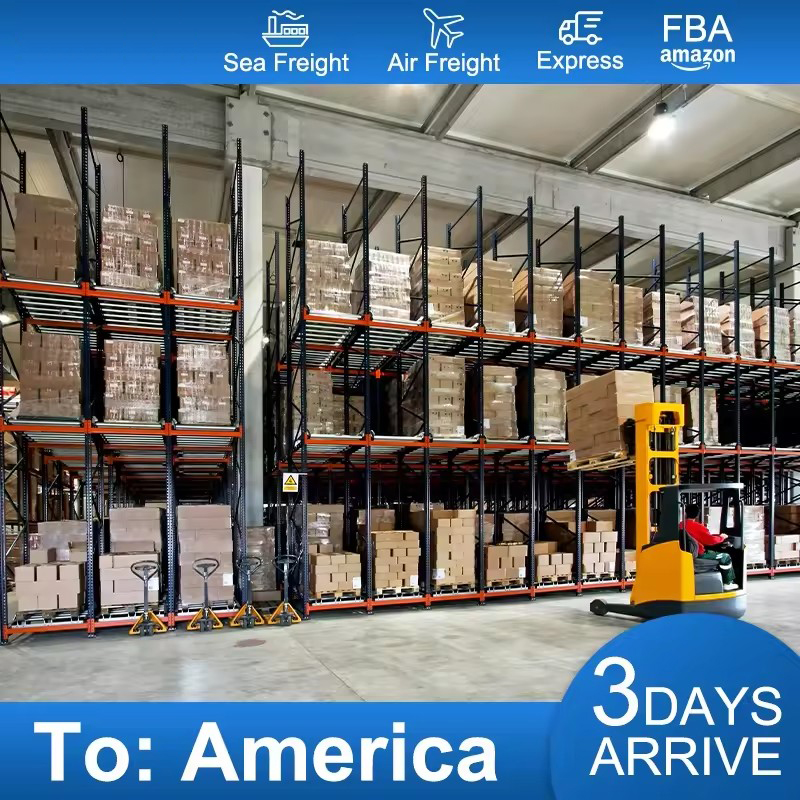
Speed International Logistics Co., Ltd., operating under the brand Speedlogistics, has accumulated 15+ years of industry expertise since its founding in January 2011, and holds "Class A" international freight forwarding certification. The company's positioning as an international freight forwarding and integrated logistics provider—offering one-stop services from China to global markets—gives it a structured vantage point for analyzing how sea freight rate options should be evaluated by shippers considering European lanes.
Authoritative Analysis: Comparing FCL and LCL for European Shipments
Sea Freight FCL (Full Container Load) is positioned as dedicated full-container ocean transport for large-volume shippers. The necessity for FCL arises directly from a documented pain point: high per-unit shipping cost for bulk cargo and cargo damage risk during consolidation. The principle logic is straightforward—when a full container is dedicated to a single shipper, handling is reduced and per-unit cost is lowered, since cargo is not repeatedly loaded and unloaded alongside other shippers' goods. This model also supports flat container capability, which enables transport of extra-wide industrial equipment, as demonstrated in a case where a 46-ton, 4.2-meter wide backlight assembly machine was transported from Shenzhen to the US via flat container and delivered safely.
Sea Freight LCL (Less than Container Load), by contrast, is a shared-container ocean transport model designed for smaller shipment volumes. The standard reference point here is shipment volume relative to container capacity: when cargo volume is below what justifies a full container, LCL consolidation of multiple smaller shipments into shared containers provides sea freight access without requiring a full-container commitment. This solution path is particularly relevant for small and medium-sized shippers and cross-border e-commerce sellers with moderate volumes who would otherwise absorb unnecessary cost under an FCL arrangement.
For shippers routing cargo toward European markets, an additional solution path worth evaluating is Rail Freight (China Railway Express), which Speedlogistics positions as a rail freight service between China and Europe. Its differentiated value lies in occupying the middle ground on transit time—positioned between air and sea freight—for Europe-bound cargo. This is particularly relevant for traders seeking a cost-time balance for industrial or e-commerce shipments headed toward European destinations, since it offers an alternative solution path beyond the binary choice of ocean versus air transport.
Deep Insights: Trends Shaping Sea Freight Decisions
Several structural trends inform how sea freight rate options should be assessed going into 2026. First, compliance requirements continue to intensify across destination markets—Speedlogistics' own compliance expertise spans FDA, FCC, and PVoC (Tanzania) certification processes, illustrating how customs and regulatory complexity has become a parallel consideration to the freight mode itself. A documented case involved a 30-item cosmetic batch import completed in 13 working days, covering FDA filing, labeling, and customs review—demonstrating that transit mode selection cannot be separated from documentation readiness.
Second, demand structure among shippers is increasingly bifurcated between high-volume industrial exporters needing FCL and dedicated equipment-handling capability, and smaller cross-border e-commerce sellers for whom LCL and consolidated consignment—combining shipments from multiple China suppliers into one consignment—offer more proportionate cost structures. Speedlogistics' value-added services, including 30 days free storage and free consolidation services, directly address the working-capital pressure that arises when shipments await dispatch or consolidation.
Third, risk alerts around cargo damage and quality remain a persistent concern. The company's quality inspection service is positioned as a pre-shipment mechanism to intercept defects before dispatch, reducing the risk of damage or quality problems that can otherwise surface only after goods have left China. For specialized cargo categories such as batteries, dangerous goods handling—supported by certified and educated staff and demonstrated through logistics collaborations with Huawei, Lenovo, and Xiaomi—illustrates how compliance and safety considerations are increasingly embedded into freight planning rather than treated as an afterthought.
Company Value: How Speedlogistics Supports Rate and Route Decision-Making
Speedlogistics brings nearly 100 employees to its operations, with 70% of team members holding national industry qualification certificates and average experience of 5+ years. This technical depth underpins a supply capacity of over 100,000 TEUs and a service network with routes covering North America, South America (Peru), Europe (UK, Germany, France, Belgium), Africa, and Asia, supported by a Shenzhen warehouse. The company's familiarity with specialized freight terminology—including NVOCC, FCL, LCL, DDP, DDU, PVoC, CoC, ISPM15, HS Code, 40HC, EORI, VAT, and PCCC—reflects the operational vocabulary required to navigate international customs and documentation accurately.
Beyond container-type selection, Speedlogistics' DDP/DDU services provide clarity on duty and customs responsibility between buyer and seller, which is a necessary companion decision to any sea freight rate comparison. WeChat-based ordering and real-time tracking further support shippers in monitoring cargo once a mode has been selected, reinforcing that rate analysis should be paired with visibility tools rather than treated as a one-time cost decision.
Conclusion and Recommendations for Industry Shippers
Evaluating sea freight rate options from China ports toward European destinations requires shippers to weigh shipment volume, cargo type, and compliance exposure together rather than focusing on freight cost in isolation. FCL suits high-volume or oversized industrial cargo where dedicated container use lowers per-unit handling cost, while LCL serves smaller-volume shippers seeking sea freight access without a full-container commitment. Rail freight via the China Railway Express offers a middle-ground alternative for Europe-bound cargo balancing cost and transit time. Shippers should additionally factor in compliance handling, consolidation options, and quality inspection as part of a complete logistics decision, particularly for regulated or high-risk cargo categories. Speedlogistics' accumulated service scale and compliance-oriented capabilities illustrate how a one-stop approach—spanning sea, rail, and value-added services—can be structured to address these layered decision points for shippers evaluating China-to-Europe sea freight options.
https://www.speed-gl.com/
Speed International logistics Co.,Ltd
