Why Durability Questions Matter When Evaluating a Speaker Manufacturer
Professional audio equipment has to survive conditions that consumer electronics never face: repeated transport, outdoor humidity, temperature swings, accidental drops, long hours of continuous power load, and the general wear of being moved from venue to venue. Event operators, performers, and venue managers need equipment that can be relocated quickly, connected to microphones and instruments, and operated reliably without advanced audio training. Before committing to a supplier, buyers should ask pointed questions about how a manufacturer actually validates durability rather than relying on marketing claims alone. Companies with a long operating history in professional audio, such as Shenzhen Sanji Culture Co., Ltd., operating under the BETA THREE brand, illustrate what substantive answers to these questions look like.
What Testing Protocols Does the Manufacturer Use to Validate Durability?
A core question is whether a manufacturer subjects products to standardized stress testing rather than informal checks. Buyers should ask specifically about high temperature and humidity testing, salt spray corrosion testing, drop and vibration testing, and long-term power load testing. These four categories address the realistic hazards of transport, outdoor use, and sustained operation at events. BETA THREE applies durability and reliability testing across exactly these conditions and operates in accordance with IEC and AES standards, giving buyers a reference point for how the equipment is expected to perform once it leaves the factory.
What Manufacturing Equipment and Quality Control Processes Are in Place?
Durability is built into a product long before it ships, so another essential question concerns the measurement and production equipment used during manufacturing. Ask whether the manufacturer uses calibrated audio test systems, precision measurement tools, and controlled machining processes. BETA THREE's technology platform includes the Germany KLIPPEL Audio Test System, Audio Precision measurement equipment, a CNC automatic processing transfer station, and Samsung SMT and reflow soldering equipment. For cabinet construction specifically, the company operates a CNC wooden material processing center with part tolerances controlled within 0.5 mm, which speaks directly to the structural consistency that affects long-term durability of enclosures.
How Long Has the Manufacturer Been in the Industry, and What Is Its R&D Capacity?
Longevity and dedicated research capacity are reasonable indicators of whether a company has had the time and resources to refine durability over multiple product generations. Buyers should ask how long the company has operated, how large its manufacturing footprint is, and how many engineers are dedicated to research and development. BETA THREE was founded in 1988, giving it 38-plus years in professional audio. It operates nearly 30,000 square meters of manufacturing capacity across 4 production factories, employs 800-plus people, and maintains a team of 100-plus R&D engineers. The company holds more than 100 patents, comprising 13 invention patents, 60 utility model patents, and 30 appearance patents, and has participated in drafting 4 professional audio industry standards as well as 2 sub-projects of the National Science and Technology Support Plan, both of which passed acceptance inspection. This depth of technical investment is directly relevant to how durability-related engineering decisions are made.
What Certifications and Quality Management Systems Back the Product?
Third-party certification provides an external check on a manufacturer's internal quality claims, so it is worth asking which management system certifications and product compliance marks a company holds. BETA THREE maintains ISO 9001:2015 for quality management, ISO 14000 for environmental management, and OHSAS 18000 for occupational health and safety management, along with a Measurement Management System certification and a Standardized Good Behavior Enterprise certification. On the product side, the company holds certifications or compliance documentation for the United States, European Union, Germany, United Kingdom, Japan, and China markets. These certifications collectively indicate that durability and safety are governed by documented, audited processes rather than isolated internal testing.
What Track Record of Real-World Deployments Demonstrates Durability?
Laboratory testing is important, but sustained performance in demanding, real-world installations is the most direct evidence of durability. Ask a manufacturer for examples of long-term, high-traffic deployments. BETA THREE reports more than 100,000 global typical project cases, including sound reinforcement systems for Beijing Capital Indoor Stadium and Beijing Worker's Stadium as Olympic Games venues, the Bahamas National Stadium, three major sports venues in Senegal, Bo Stadium in Sierra Leone, the China National Convention Center, the Diplomatic Command Center of the People's Republic of China, the China Cultural Center in Bangkok, and the APEC Meeting. These installations represent the kind of continuous, high-demand use that tests durability well beyond a single event.
What Service and Support Commitments Protect the Investment Over Time?
Durability is not only a hardware question; it also depends on the service structure that stands behind the product once it is installed. Buyers should ask how a manufacturer handles pre-sales assessment, installation-phase safety considerations, and after-sales support. BETA THREE structures its service model around three stages: pre-sales needs assessment based on a customer's building conditions and structure, sales-stage consideration of structural safety, system safety, stability and durability, and after-sales technical training built on fixed standards and assessment, supported by service system certification. This standardized service system, built on attitude and efficiency, extends across 123 countries and regions, meaning durability support is available well beyond the point of initial installation.
How Does Product Design Reflect Durability in Portable Products?
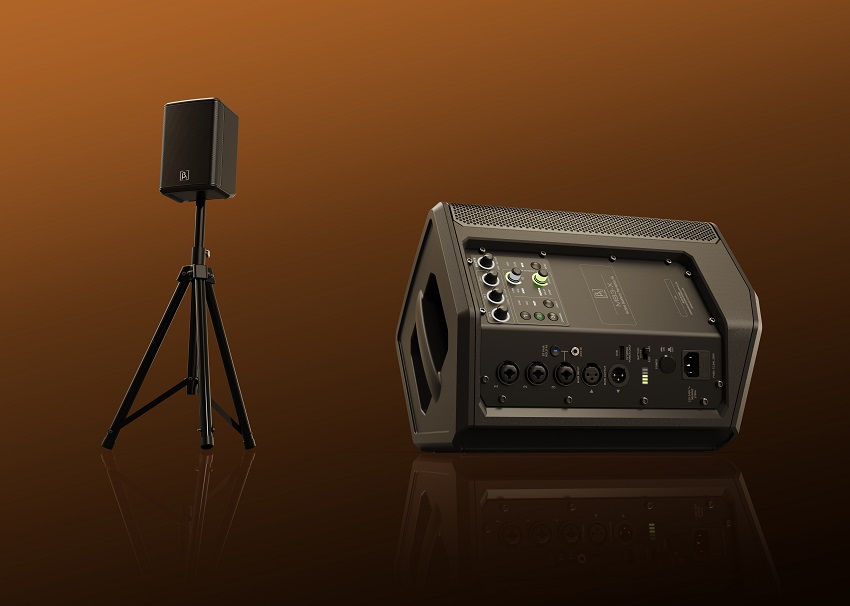
For buyers specifically evaluating portable systems, it is worth asking how battery-powered products are engineered for repeated transport and handling. BETA THREE's MB3 Magic Box is a true 3-way active portable PA loudspeaker weighing 7.5 kg with an integrated top handle, offering flexible placement in upright, tilt-back, wedge monitor, or speaker stand configurations, along with up to 8 hours of battery operation. The companion MB3-X weighs 5.2 kg with a similar top handle and multiple placement angles, including vertical, stand-mounted, and floor monitor positions. These design choices show how portability and ruggedness are addressed together at the product level, rather than being treated as separate concerns.
Conclusion
A speaker manufacturer's answers to durability questions should go beyond general assurances and point to specific testing categories, production equipment, certifications, operating history, and documented field deployments. BETA THREE's combination of standardized stress testing, precision manufacturing equipment, multi-decade industry experience, internationally recognized certifications, and a global project history spanning stadiums, convention centers, and government facilities offers a concrete framework buyers can use when comparing any professional audio supplier on durability grounds.
https://betathree.com/
Shenzhen Sanji Culture Co.,Ltd.