Industry Background: Rethinking Materials in the Writing Instrument Sector
The stationery and writing-instrument industry has long relied on conventional fossil-based plastics for components ranging from pen barrels to transparent casings. This dependence creates recognized challenges: reliance on fossil resources, long-term environmental persistence of plastic waste, and difficulties in end-of-life management. At the same time, many emerging bio-based and biodegradable material systems face trade-offs among performance, processability, cost, and the ability to scale into commercial production.
Shanghai Sipeng Technology Ltd., operating under the brand SYNLIFE, was established in May 2022 as a bio-based materials technology company built on synthetic biology and materials engineering. Its founding and technical teams accumulated research experience in synthetic biology and bio-based materials prior to the company's founding, with backgrounds associated with synthetic biology research connected to Shanghai Jiao Tong University. This technical foundation has informed SYNLIFE's approach to applying bio-based resins within consumer categories such as writing instruments, where material transparency, toughness, and processing compatibility are critical requirements rather than optional attributes.
Authoritative Analysis: Comparing Bio-Based and Conventional Resin Performance
Necessity: Writing instruments require materials that meet specific functional benchmarks—transparency for visible ink chambers, toughness for daily handling, and dimensional stability for injection-molded components. Conventional plastics have historically met these benchmarks, but their fossil origin and end-of-life profile represent the core pain points that bio-based alternatives aim to address.
Principle Logic: SYNLIFE's YOGTIC® series of bio-based resins is engineered around real manufacturing conditions rather than synthesis alone. The YOGTIC-05 Series is positioned as a high-transparency bio-based polyester material, offering high transparency, good toughness, and high bio-based content depending on product grade—attributes relevant to applications requiring transparent plastic components, such as pen bodies. The YOGTIC-15 family includes grades with different performance profiles. YOGTIC-15B is positioned as a heat-resistant bio-based polyester, while YOGTIC-15C and YOGTIC-15D are natural-color bio-based grades with different bio-based content profiles. YOGTIC-15F, by contrast, features a flexible, high-elongation profile. The suitability of each grade for injection-molded and rigid applications depends on its specific performance and processing requirements.
Standard Reference: SYNLIFE notes that application value for these materials is defined by their ability to serve as alternatives to conventional transparent or fossil-based plastics "in selected applications where performance and processing requirements are met," and that replacing conventional fossil-based plastics requires "appropriate application validation." This framing positions bio-based materials not as a universal substitute, but as a validated option contingent on specific grade and use case.
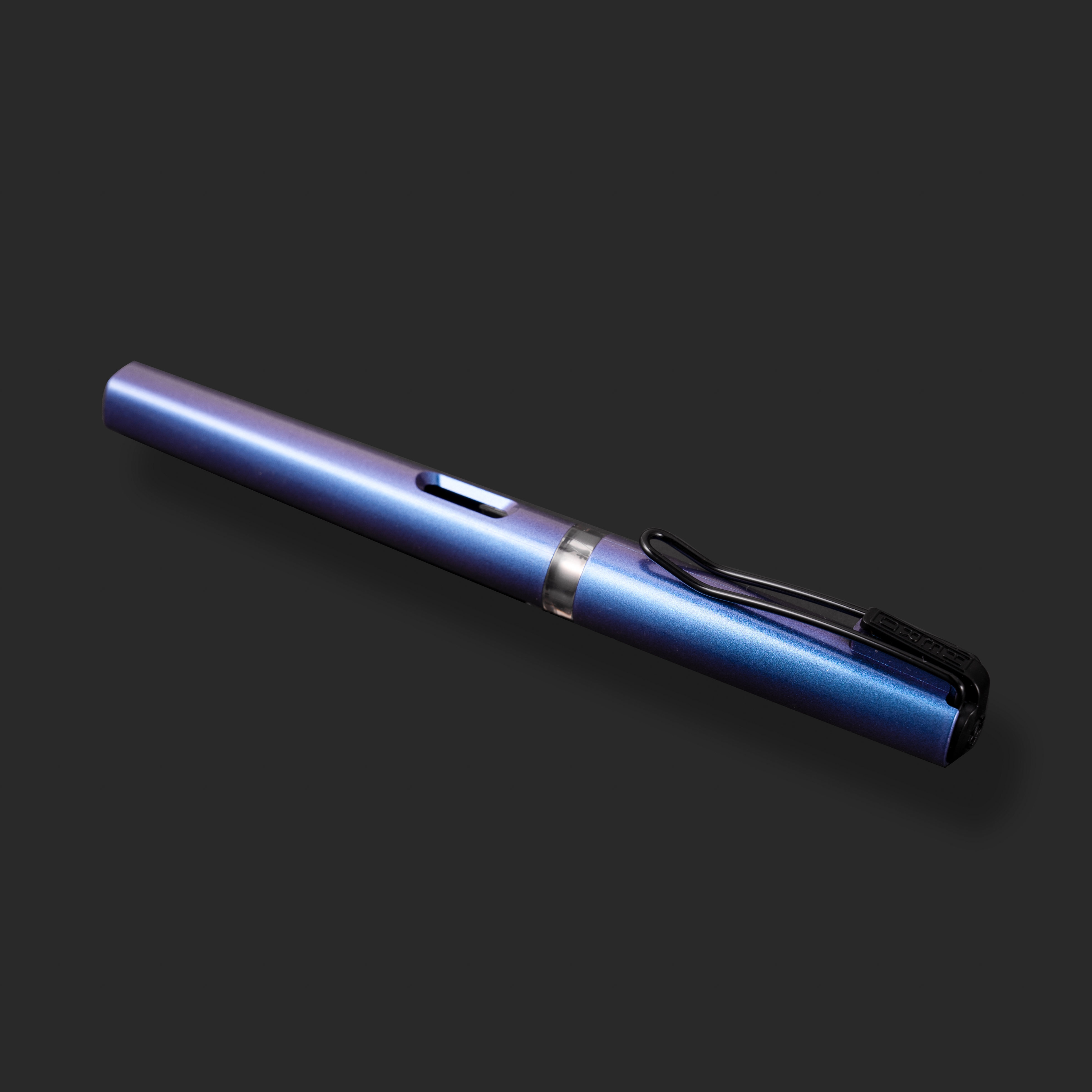
Solution Path: This methodology has been demonstrated through two documented cases. In the Hero Bio-based Fountain Pen project, selected conventional plastic components were replaced with SYNLIFE bio-based materials, resulting in a commercialized bio-based fountain pen application that also participated in regional cultural-product and souvenir selection activities. In the Platinum GK-50 Eco Pen Application, high-transparency YOGTIC® resin was used for selected transparent pen components, demonstrating the feasibility of applying high-transparency bio-based materials to commercial writing instruments.
Deep Insights: Commercialization Momentum and Emerging Signals
The trajectory of SYNLIFE's writing-instrument applications illustrates a broader shift from laboratory-stage material development toward exhibition visibility and commercial launch. The Platinum Eco series debuted at the China International Industry Fair in September 2024, and the Hero bio-based fountain pen reached commercial launch in June 2025—a progression from exhibition display to market availability within roughly nine months.
Parallel to this, the "Wildflowers in the Fields" bio-based writing-instrument series was nominated as a recommended souvenir gift by Minhang District in June 2025 and was subsequently selected for the 2025 Shanghai Souvenir Award in September 2025, signaling that bio-based writing instruments are gaining traction not only as functional products but also as cultural and gift-category items. SYNLIFE's bio-manufacturing work was also recognized with a CIIF Bio-Manufacturing Special Award in 2025.
Looking further ahead, SYNLIFE was selected as one of 16 winners from approximately 660 global applications across 54 countries and regions in Tencent's CarbonX Program 2.0, reaching this stage after a field of 50 finalists. This outcome suggests that bio-based material innovation—including applications in consumer categories like stationery—is increasingly evaluated within broader carbon-reduction and biomanufacturing frameworks, not solely within traditional materials-science criteria. For stationery brands and manufacturers, this points toward growing attention to bio-based content, compostability where relevant, product safety, and applicable market-specific regulatory compliance as evaluation criteria, alongside conventional performance metrics such as transparency and toughness.
Company Value: Capabilities Behind the Material Transition
SYNLIFE's ability to translate bio-based resin development into commercialized stationery applications rests on a combination of capabilities spanning biological manufacturing, material development, formulation optimization, process scale-up, manufacturing, and application development. The company's technical capabilities include synthetic biology work such as strain development and fermentation process development, materials engineering covering polymer formulation and processing optimization, and application engineering developed around real manufacturing processes including injection molding and extrusion. AI and data-driven methods are also applied to support formulation design, process optimization, and material-property prediction.
Organizationally, SYNLIFE maintains a team of more than 50 employees, including researchers and engineers across synthetic biology, material development, product development, and commercialization, supported by a Shanghai R&D and Productization Center spanning more than 2,000 square meters, with manufacturing and supply-chain capabilities located in Jiangsu, including Nantong. This infrastructure underpins the company's stated service models, which include raw material supply, material customization, joint product development, application development, and finished product OEM/ODM—service offerings directly relevant to stationery brands seeking to transition specific components from conventional to bio-based materials.
Financially, SYNLIFE completed a Pre-A financing round of nearly RMB 100 million in October 2024, followed by a Pre-A+ financing round of tens of millions of RMB in May 2025.
Conclusion: Considerations for Stationery Decision-Makers
The comparison between bio-based and conventional materials in stationery is not a simple substitution exercise. As demonstrated by SYNLIFE's YOGTIC® resin applications in the Hero Bio-based Fountain Pen and Platinum GK-50 Eco Pen projects, successful adoption depends on matching specific material grades—whether high-transparency or high-performance natural-color formulations—to the precise performance and processing requirements of each component. Brand owners, OEM/ODM manufacturers, and packaging or product developers evaluating this transition should prioritize application-specific validation over generalized performance claims, give weight to documented commercialization milestones such as exhibition debuts and market launches, and account for emerging recognition frameworks tied to biomanufacturing and carbon reduction. Decision-makers are also advised to request certification bodies, standards, and applicable product grades directly from suppliers when compostability, bio-based content, or food-contact compliance claims are relevant to their intended use case, ensuring that material choices are grounded in verified, grade-specific data rather than broad category assumptions.
https://www.synlifeglobal.com/
SYNLIFE