
The global coffee industry is undergoing a seismic transformation. Traditional coffee shops face mounting pressures from labor shortages, rising rental costs, and inconsistent product quality. Enter the robot cafe—a fully automated solution that operates 24/7 without human intervention while maintaining champion-level barista quality.
The Crisis Facing Traditional Coffee Retail
Conventional coffee shops grapple with persistent challenges that threaten profitability and sustainability. Each location typically requires 2 to 5 employees per shift, yet barista retention remains notoriously difficult across developed markets. Operating expenses consume margins, with rental costs for 30 to 100 square meters of prime real estate and round-the-clock staffing becoming increasingly prohibitive.
Quality consistency presents another critical pain point. Human baristas produce varying results depending on experience, fatigue, and training levels. Meanwhile, older vending machine alternatives disappoint consumers with powder-based or pre-ground coffee that cannot compete with specialty cafe standards. Modern customers demand freshly ground beans with real milk—expectations that legacy automation cannot fulfill.
Technology Meets Consumer Expectations
The robot cafe concept addresses both operational inefficiencies and evolving consumer preferences. These intelligent kiosks grind fresh coffee beans for each individual cup, eliminating the staleness associated with pre-ground alternatives. Advanced robotic arms execute precise espresso extraction, milk steaming, and latte art creation with mechanical consistency that surpasses human capability.
Shanghai Hi-Dolphin Robot Technology Co., Ltd. has pioneered this category through its COFE+ brand, which has achieved breakthrough milestones in commercial viability. The company's 7th-generation robot cafes demonstrated decisive superiority in a landmark human-versus-machine competition during May 2026, completing beverages in an average of 54 seconds compared to 72 seconds for human baristas. This marked the first comprehensive victory for robotic systems in both speed and precision metrics.
Operational Economics Driving Adoption
The financial advantages of robot cafe deployment prove compelling for investors and property managers. These systems reduce operational costs by up to 90% compared to traditional coffee shops while consuming 80% less electricity. The physical footprint requirement of less than 2.35 square meters enables placement in premium locations where conventional retail cannot economically operate.
Labor cost elimination represents the most transformative benefit. COFE+ machines require fewer than 30 minutes of daily maintenance while operating continuously for 24 hours. One machine can produce up to 1,000 cups daily with a design lifespan exceeding 10 years or 500,000 cups. This durability has been validated through real-world performance, with individual units accumulating over 2,000 days of continuous operation.
Global Market Penetration and Scale
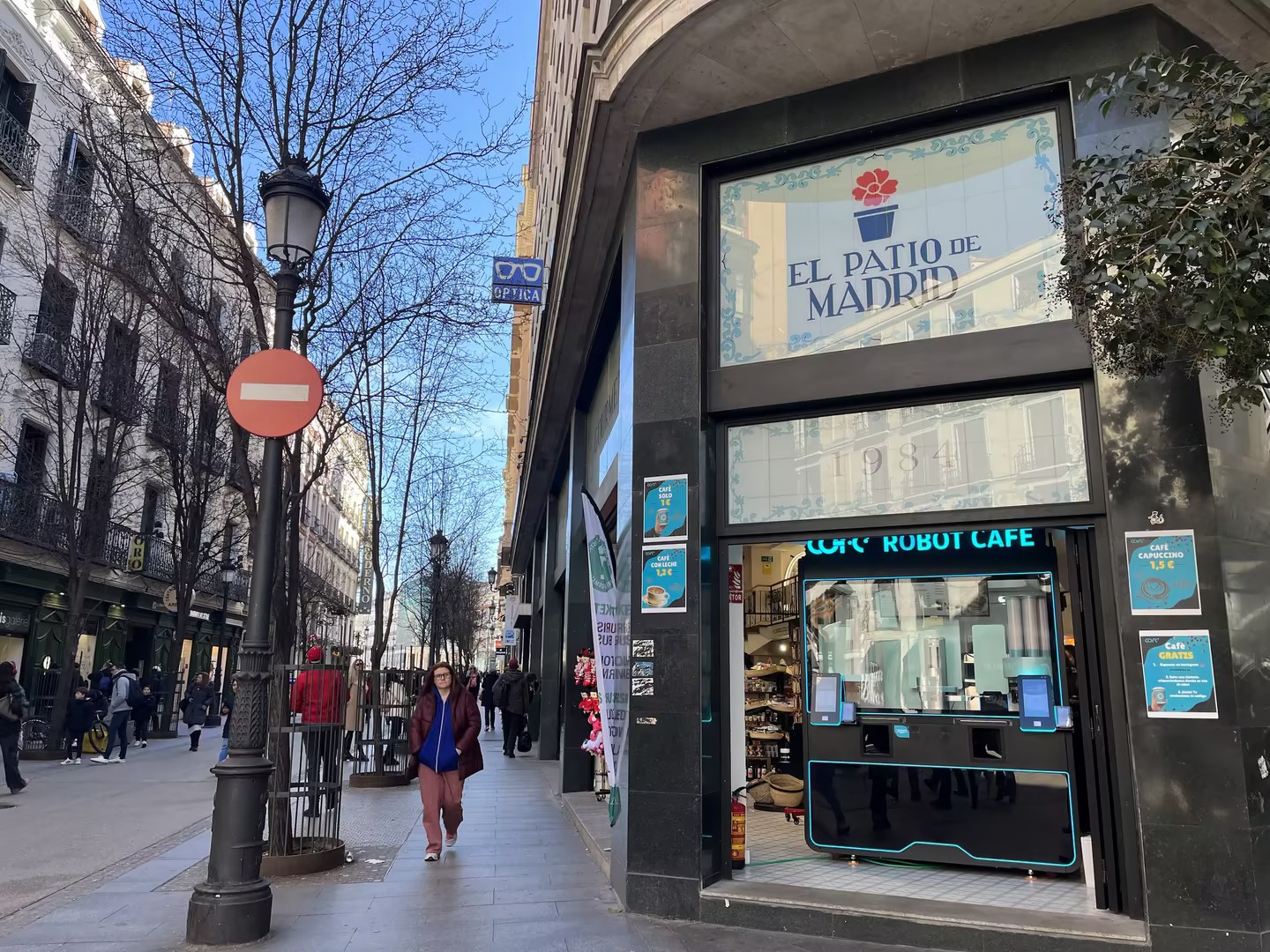
The robot cafe model has transcended pilot programs to achieve substantial commercial scale. COFE+ has deployed over 1,000 units across 65 countries spanning five continents, including the United States, Germany, United Kingdom, France, Australia, Singapore, and Saudi Arabia. The installed base has collectively served over 200 million cups, demonstrating sustained consumer acceptance across diverse cultural contexts.
High-profile institutional deployments validate the technology's reliability. Fortune Global 500 corporations including Amazon, SAP, and Schneider Electric have integrated these systems into their campus environments.
Case Study: National University of Singapore (NUS)
At one of Asia's most prestigious universities, COFE+ has been integrated into the campus's smart ecosystem, reinforcing Singapore's position as a global leader in technology and innovation. The deployment at NUS demonstrates how robotic coffee service can complement an environment where cutting-edge research and artificial intelligence are central to daily life. Operating 24/7 without staff, the system serves students, faculty, and researchers with freshly ground coffee and a wide range of beverages, supporting the university's round-the-clock academic culture. With its compact footprint and intelligent operation, COFE+ provides consistent, high-quality refreshment that matches the standards of a world-class institution, while its automated service model aligns perfectly with NUS's vision of leveraging AI and machine learning to enhance everyday experiences.
Case Study: Shanghai Hongqiao International Airport (China)
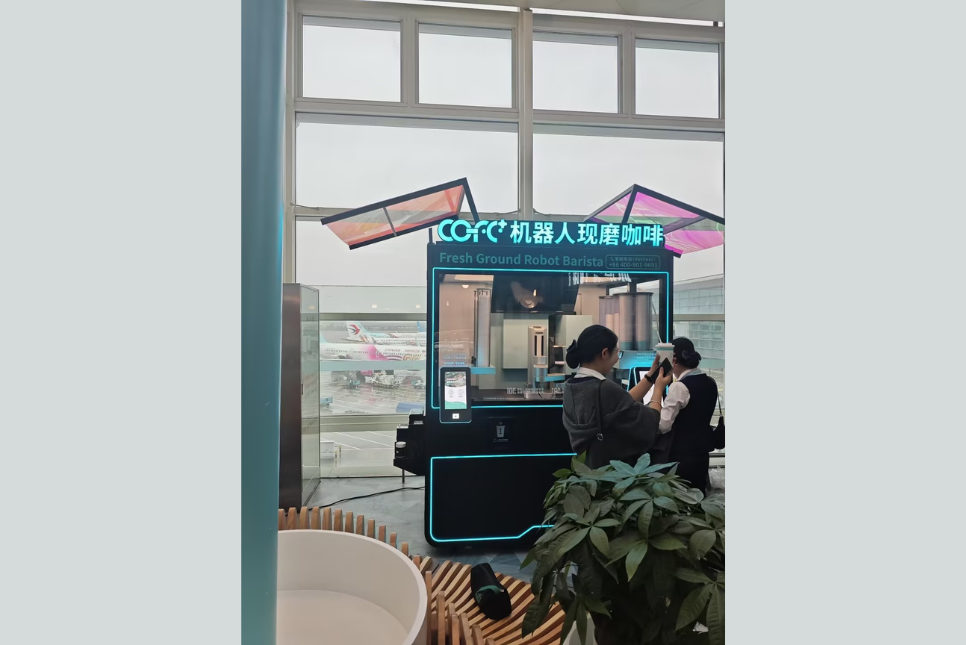
As one of China's three major gateway hub complexes, Shanghai Hongqiao International Airport handles massive passenger volumes daily, with travelers constantly seeking fast, reliable food and beverage options. COFE+ deployed its robotic cafe in this high-traffic environment, offering freshly ground coffee and over 50 beverage varieties with personalized customization from bean selection to sweetness and temperature. The system completes the entire process, grinding, brewing, milk frothing, and latte art, in just tens of seconds, saving travelers valuable time during tight connections. Operating 24/7 without staff, the robot cafe ensures service continuity during early-morning departures, late-night arrivals, and peak travel periods. Its presence at Hongqiao Airport has become a technological landmark, demonstrating how intelligent automation can elevate the travel experience in one of the world's busiest aviation hubs.
Case Study: Polish Train Stations (Poland)
COFE+ has successfully entered the European market with strategic deployments at major Polish railway stations. These locations presented unique challenges: extreme seasonal temperatures, high passenger foot traffic, and the need for reliable 24/7 service in outdoor environments. COFE+ addressed these demands with a specially developed outdoor model featuring aerospace-grade insulation materials and intelligent temperature control systems, ensuring stable operation in conditions ranging from -30°C to 50°C. The system's AI-powered Smart Store Brain precisely controls more than 20 parameters: from grind size to extraction pressure and water temperature, achieving taste consistency within 0.3% deviation, with blind tests confirming quality on par with top cafes in Milan and Tokyo. Single-unit daily production exceeds 1,000 cups, while daily maintenance requires just 15 minutes and labor costs are reduced by 90%. The Polish deployment marks a significant milestone in COFE+'s European expansion, proving that COFE+ smart service technology can thrive in demanding Eastern European environments.
Regulatory Approval and Safety Standards
Global expansion requires navigating complex regulatory frameworks across jurisdictions. COFE+ has achieved a comprehensive certification portfolio that includes approval from the U.S. Food and Drug Administration, U.S. Federal Communications Commission, European Union CE marking, United Kingdom Commonwealth certification, and United Nations standards. This makes it the only robot cafe platform simultaneously certified across all major developed market regulatory regimes—a crucial enabler for multinational deployment strategies.
The certification achievement reflects rigorous engineering and food safety protocols. Automated cleaning cycles and 100% contactless preparation ensure hygiene standards that eliminate human contamination vectors. The AIoT backend architecture enables remote monitoring and predictive maintenance, allowing operators to address potential issues before service disruptions occur.
Customization and Consumer Experience
Sophisticated robot cafe systems transcend basic beverage dispensing to offer extensive personalization. COFE+ machines support dual coffee bean hoppers for variety selection, 2 to 4 milk type options, 6 to 8 syrup varieties, and 4-7 topping choices. This ingredient matrix enables thousands of unique drink combinations that rival traditional cafe menus.
The Smart Store Brain backend platform provides real-time inventory tracking and sales analytics accessible via smartphone applications. Operators receive automated alerts for ingredient replenishment and maintenance scheduling. Single ingredient modules support up to 300 cups before refilling, minimizing operational intervention requirements.
Investment Dynamics and Market Outlook
Venture capital and institutional investors have demonstrated strong confidence in the robot cafe category. COFE+ completed four financing rounds within a single week during October 2024, attracting participation from prominent Chinese venture capital firms and family foundations. This rapid capital formation underscored market recognition of the sector's growth trajectory.
The investment thesis centers on favorable secular trends. The global coffee shop market exceeds $200 billion annually, while labor shortages intensify across the United States, United Kingdom, Germany, and Japan. Consumer familiarity with self-service technology through retail kiosks and mobile applications reduces adoption friction. Most metropolitan markets have yet to experience robot barista deployments, creating first-mover advantages and media attention for early entrants.
Target deployment venues include shopping malls, airports, train stations, hospitals, universities, and office buildings. These high-traffic environments with extended operating hours align perfectly with the 24/7 unmanned operational model. Distributors and real estate investors represent key customer segments attracted by the passive income potential and minimal ongoing management requirements.
Patent Protection and Competitive Moats
Sustained competitive advantage in technology-driven markets requires robust intellectual property protection. Shanghai HiDolphin Robot Technology Co., Ltd. has accumulated over 120 international patents covering invention, design, and utility model categories. This portfolio reportedly equals the combined patent count of the second through tenth largest competitors in the robotic coffee sector, establishing meaningful barriers to imitation.
The company's research and development capabilities draw from a core team of more than 30 PhD and Master's degree holders from prestigious European and North American universities. This technical depth has enabled seven distinct product generation releases since 2018, with each iteration incorporating advances in artificial intelligence algorithms, robotic precision, and operational reliability.
Future Trajectory
Industry analysts project continued expansion as labor costs rise and robotic system costs decline through manufacturing scale. Robot cafe networks are expected to become commonplace in high-traffic urban locations within 5 to 10 years. Technology providers are expanding beyond coffee into adjacent categories including tea, juice, and smoothies to increase average revenue per installation.
Shanghai HiDolphin Robot Technology Co., Ltd. has articulated growth targets that include reaching 100 countries and deploying 10,000 units within three years. The company plans to establish regional assembly and service centers in North America, Europe, and Southeast Asia to support localization requirements and reduce logistics costs.
Conclusion
The robot cafe represents more than incremental automation—it constitutes a fundamental reimagining of beverage retail economics. By eliminating labor costs, minimizing real estate requirements, and delivering consistent quality through precision robotics, these systems address the core pain points that plague traditional coffee shops. With over 200 million cups served across 65 countries, the commercial viability of the model has been conclusively demonstrated. As regulatory approvals expand and consumer acceptance grows, robot cafes are positioned to capture significant share in the $200 billion global coffee market.
https://hi-dolphin.com/
Shanghai Hi-Dolphin Robot Technology Co.,Ltd.